George Rossman Oral History Interview
Interviewed by Heidi Aspaturian
Interview Sessions from 2022 to 2023
- April 12, 2022
- April 20, 2022
- May 6, 2022
- January 27, 2023
Abstract
Professor of Mineralogy, Emeritus, George Rossman (1944–2026), whose history of having “no formal training whatsoever in geology” never stood in the way of his becoming an internationally renowned authority in the field of mineralogy, talks about his life and career in this four-part interview series.
Raised in Eau Claire, Wisconsin, Rossman was still in grade school when his early fascination with the infinite variety of color he found in rocks and minerals developed into a more mature understanding that “the rocks I was picking up were part of chemistry.” He experimented with explosives and corrosives and some less hazardous substances at home in a makeshift laboratory, won prizes in science competitions, and earned his BS degree in chemistry and math at Wisconsin State University, where his professors encouraged him to pursue graduate study at a place “I’d never heard of” in Pasadena, California. At Caltech, where he did thesis work in inorganic chemistry, his self-taught expertise in rock and mineral science caught the eye of the Institute’s geologists, from whom he often borrowed samples for his research. His advisor, Harry Gray, put him in charge of his instrumentation lab and made him his TA in a gonzo reinvention of Caltech’s introductory chemistry course that combined boisterous, high-powered instruction with showstopping demonstrations of chemical reactions. Rossman quickly gained a reputation as a dynamic, inspiring teacher. He turned down multiple job offers to instead accept a temporary position as a Caltech instructor in mineralogy because “it sounded like fun”—a trial run that evolved into more than fifty years on the professorial faculty.
Throughout his career Rossman returned to the question that had intrigued him since childhood—what accounts for the diversity of color in gems and minerals. He drew on his training in chemistry, introducing optical and infrared spectroscopy to address these and other problems that mineralogy’s traditional reliance on crystallography “was unable to answer easily or satisfactorily.” He describes how these techniques enabled him and his students to conduct atomic-level investigations of how phenomena such as trace elements, radiation, and temperature changes bestow color on tourmaline, sapphire, topaz, diamond, and rose quartz, among others, and how reproducing these conditions artificially has become commonplace in the gem industry. His spectroscopic methods also enabled the detection of hydrogen and water in minerals long assumed to be “dry”—a finding with significant implications for understanding the hidden reservoirs of water contained in earth’s upper mantle and crust—and extended to studies of lunar materials and Martian meteorites. He discusses collaborations with Caltech colleagues, gemologists, and above all decades of students, whose contributions he singles out for special credit.
Other topics include his role as curator of Caltech’s gem and mineral collection, his interactions with beleaguered Ukrainian mineralogists, and a detective-like foray into the somewhat dubious origins of the official gemstone of the 2008 Summer Olympics. Field expeditions near and far, from Pala, California—a rich source of Rossman’s favorite gem, tourmaline—to gold and ametrine deposits along the Amazon, to the remote jade and ruby mines of Myanmar—add a touch of Raiders of the Lost Ark adventure to this retrospective.
Archival record in collection guide
PDF version of transcript [2.26 MB]
Preferred Citation
George Rossman Oral History Interview, interviewed by Heidi Aspaturian, Caltech Archives Oral History Project, April 12, 2022, April 20, 2022, May 6, 2022, January 27, 2023, http://resolver.caltech.edu/CaltechOH:OH_Rossman_G.
Oral history interviews provide valuable first-hand testimony of the past. The views and opinions expressed in them are those of the interviewees, who describe events based on their own recollections and from their own perspective. They do not necessarily reflect the views of the Caltech Archives and Special Collections or of the California Institute of Technology.
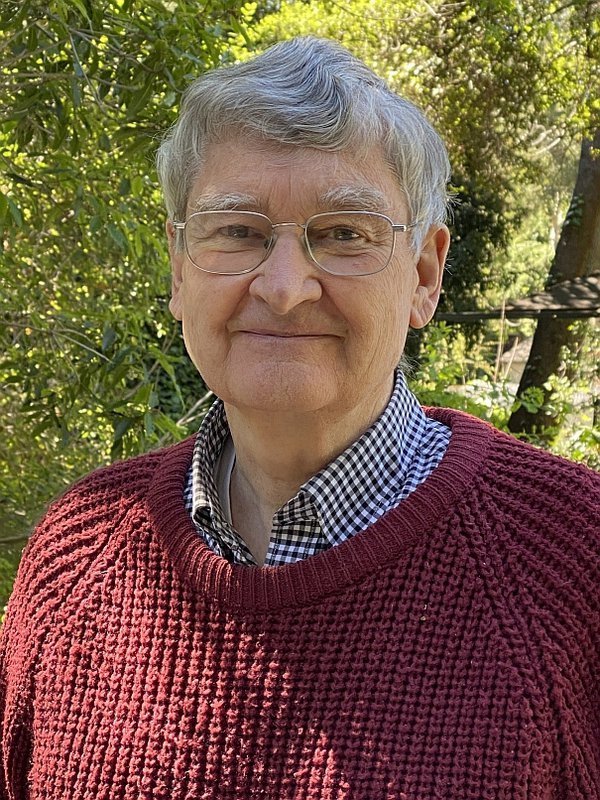
George Rossman Caltech Archives Oral History Interview George Rossman, 2020 Interview in Four Sessions by Heidi Aspaturian 2022–2023 ABSTRACT Professor of Mineralogy, Emeritus, George Rossman (1944–2026), whose history of having “no formal training whatsoever in geology” never stood in the way of his becoming an internationally renowned authority in the field of mineralogy, talks about his life and career in this four-part interview series. Raised in Eau Claire, Wisconsin, Rossman was still in grade school when his early fascination with the infinite variety of color he found in rocks and minerals developed into a more mature understanding that “the rocks I was picking up were part of chemistry.” He experimented with explosives and corrosives and some less hazardous substances at home in a makeshift laboratory, won prizes in science competitions, and earned his BS degree in chemistry and math at Wisconsin State University, where his professors encouraged him to pursue graduate study at a place “I’d never heard of” in Pasadena, California. At Caltech, where he did thesis work in inorganic chemistry, his self-taught expertise in rock and mineral science caught the eye of the Institute’s geologists, from whom he often borrowed samples for his research. His advisor, Harry Gray, put him in charge of his instrumentation lab and made him his TA in a gonzo reinvention of Caltech’s introductory chemistry course that combined boisterous, high-powered instruction with showstopping demonstrations of chemical reactions. Rossman quickly gained a reputation as a dynamic, inspiring teacher. He turned down multiple job offers to instead accept a temporary position as a Caltech instructor in mineralogy because “it sounded like fun”—a trial run that evolved into more than fifty years on the professorial faculty. Throughout his career Rossman returned to the question that had intrigued him since childhood—what accounts for the diversity of color in gems and minerals. He drew on his training in chemistry, introducing optical and infrared spectroscopy to address these and other problems that mineralogy’s traditional reliance on crystallography “was unable to answer easily or satisfactorily.” He describes how these techniques enabled him and his students to conduct atomic-level investigations of how phenomena such as trace elements, radiation, and temperature changes bestow color on tourmaline, sapphire, topaz, diamond, and rose quartz, among others, and how reproducing these conditions artificially has become commonplace in the gem industry. His spectroscopic methods also enabled the detection of hydrogen and water in minerals long assumed to be “dry”—a finding with significant implications for understanding the hidden reservoirs of water contained in earth’s upper mantle and crust—and extended to studies of lunar materials and Martian meteorites. He discusses collaborations with Caltech colleagues, gemologists, and above all decades of students, whose contributions he singles out for special credit. Other topics include his role as curator of Caltech’s gem and mineral collection, his interactions with beleaguered Ukrainian mineralogists, and a detective-like foray into the somewhat dubious origins of the official gemstone of the 2008 Summer Olympics. Field expeditions near and far, from Pala, California—a rich source of Rossman’s favorite gem, tourmaline—to gold and ametrine deposits along the Amazon, to the remote jade and ruby mines of Myanmar—add a touch of Raiders of the Lost Ark adventure to this retrospective. NOTE TO READERS Oral history interviews provide valuable first-hand testimony of the past. The views and opinions expressed in them are those of the interviewees, who describe events based on their own recollections and from their own perspective. They do not necessarily reflect the views of the Caltech Archives and Special Collections or of the California Institute of Technology. TABLE OF CONTENTS Session 1 April 12, 2022 …………………………………………………………………………………………………………………… 7 Family background & childhood in Eau Claire, Wisconsin; early interest in the natural world…………………………… 7 Grade-school realization that “the rocks I was picking up were part of chemistry” …………………………………………. 9 “I had some chemistry books. I started making firecrackers & little, teeny rockets” ……………………………………… 10 “I was writing to the US Geological Survey asking them about analyses of minerals” ……………………………………. 12 “As a high school kid, I would help the college kids with their chemistry” …………………………………………………….. 13 “Little slice of tourmaline” sparks lifelong fascination with the origin of color in minerals ……………………………… 14 Magnesium-infused science experiments & high school dramatics ……………………………………………………………… 16 “It was the beautiful shapes & colors of minerals that got me. I had no formal training whatsoever in geology”17 “They gave me the run of the lab”: double-major math & chemistry studies at Wisconsin State University ……… 19 Personal invitation from geology division chair clinches the case for grad study at Caltech……………………………. 22 “I was at Caltech three months before I saw there were mountains north of Pasadena” ……………………………….. 25 Embarks on graduate study with Professor “Harry—never heard of him—Gray” ………………………………………….. 26 “I wanted to know exactly how much cyanide was toxic because I was working with it routinely” …………………. 28 “Harry had me put on a Chem 1 demonstration every week”: showmanship, spectacle & “packing the room” … 31 “When I came to Caltech there were five female students”………………………………………………………………………… 35 Writing a multi-component thesis & becoming the lab’s “instrument person” ……………………………………………… 36 Interactions with faculty as a graduate student ……………………………………………………………………………………….. 38 “I got to go out into the field—and that was fun”: mineral collecting, faculty collaborations & flying lessons ….. 39 “George, would you consider teaching mineralogy for us before you take a real job?”………………………………….. 43 Session 2 April 20, 2022 ………………………………………………………………………………………………………………… 45 Reflections on H. Gray as mentor & colleague ………………………………………………………………………………………….. 45 Begins teaching Caltech mineralogy course; recollections of B. Kamb, L. Pauling………………………………………….. 46 Bringing a chemical & spectroscopic perspective to mineralogy in the 1970s–80s ………………………………………… 49 Fieldwork in southern California; gemstone prospecting in Pala region with B. Larson of Pala International ……. 52 International travel; interactions with Ukrainian mineralogists in Soviet era; ongoing collaborations with B. Larson………………………………………………………………………………………………………………………………………………….. 55 Spectroscopic research into mineral properties; studies of anhydrous minerals, manganese oxides & tourmaline …………………………………………………………………………………………………………………………………………………………… 58 Work with graduate students on tourmaline color, feldspar water & earth’s hidden hydrogen reservoirs ……….. 61 Consulting work at DuPont with R. Shannon on dielectric properties of minerals for electronic applications ……. 62 Irradiated calcite, red light, a last-minute dash to campus & a glowing public demonstration ……………………….. 64 “I’m an explorer at heart. Throw it in and see what happens”; turquoise & topaz research: distinguishing natural from irradiated gem color………………………………………………………………………………………………………………………. 66 “There’s a lot of interesting science in the gems”; gemological labs adopt research techniques pioneered at Caltech ………………………………………………………………………………………………………………………………………………… 70 Seeing the world through a geologist’s eyes; gratitude for graduate students ……………………………………………… 72 Session 3 May 6, 2022 …………………………………………………………………………………………………………………. 74 Debunks rumors of involvement in Shroud of Turin investigation ……………………………………………………………….. 74 The road to Mandalay: ruby & jade expedition to Myanmar (Burma) in 2002………………………………………………. 75 Gem & mineral research expeditions in Brazil & Bolivia …………………………………………………………………………….. 79 Gems’ many facets: geologic, historic, scientific, aesthetic ………………………………………………………………………… 80 Research relationship & collaborations with G. Wasserburg ………………………………………………………………………. 81 Studies of water in garnet yields new insights into hydrous properties of minerals & their impact on geologic processes ……………………………………………………………………………………………………………………………………………… 82 Collaborations with GPS colleagues J. Westphal, H. Lowenstam, A. Albee, B. Kamb, J. Kirschvink …………………… 85 Reflections on role within GPS division as option representative, teacher & lone mineralogist ……………………….. 87 Rose quartz by any other name . . . . how the gemstone got its color ………………………………………………………….. 88 Diamond studies prompt investigation into minerals under deep-earth conditions……………………………………….. 91 How natural & commercially applied radiation affects gemstone color ……………………………………………………….. 92 Rossmanite, Feynmanite & other minerals named for Caltech faculty …………………………………………………………. 94 Future directions for mineralogy …………………………………………………………………………………………………………….. 95 Reflections on GPS division & its future ……………………………………………………………………………………………………. 96 Varied interactions with Caltech faculty …………………………………………………………………………………………………… 98 Educating students in effective & accessible science communication ………………………………………………………….. 99 Session 4 January 27 2023 ………………………………………………………………………………………………………….. 101 “Anything can be interesting if you sound excited & can bring it down to a level mom & pop can understand” 101 Research into water in moon rocks & Martian meteorites ……………………………………………………………………….. 103 Building—and rebuilding—the GPS gem & mineral collection: origins, theft & recovery………………………………. 105 Heating a rare chameleon diamond to illuminate its color-change behavior………………………………………………. 108 Kyiv center for mineralogical spectroscopy: collaborations with Ukrainian scientists in post-Soviet era…………. 110 The rise & fall of a once-thriving Soviet science city …………………………………………………………………………………. 112 JPL institutional culture “never recovered” from 9/11; relationship with Caltech chemist J. Gordon ……………… 114 Five decades of GPS chairs: colleagues, characters & leadership styles ……………………………………………………… 116 The Beijing Olympics red feldspar controversy: forensic analysis, scientific findings & commercial fallout……… 119 “In many ways Caltech has been just a marvelous place to work” …………………………………………………………….. 124 Investigating chemically bound water in nominally anhydrous minerals; mineral properties under deep-earth conditions…………………………………………………………………………………………………………………………………………… 125 Session 1 April 12, 2022 Family background & childhood in Eau Claire, Wisconsin; early interest in the natural world HEIDI ASPATURIAN: I usually start by asking a little about your family history and family background: Your parents, where the family originated—to the extent that you know—that kind of thing. GEORGE ROSSMAN: My mom and dad both originated in West Central Wisconsin. And the history I don’t know a whole lot about, quite frankly. My dad was a dental technician who made dentures and braces and false teeth. My mom, I’m told, for a short time did some school teaching, probably grade school, but basically, she was a house mom. I was born in La Crosse, Wisconsin, where my dad was during the World War II period. ASPATURIAN: He was stationed there? ROSSMAN: He wasn’t in the military. I think he may even have been 4-F, but he applied to a dental program rather than active service. Within a few months of my being born, we moved to Eau Claire, Wisconsin, which in former times was a large lumber center, with many sawmills, along the Chippewa and Eau Claire rivers. And there I grew up and went to grade school in Eau Claire. I went to high school in Eau Claire. And I went to college in Eau Claire. I spent a lot of my life as the only child living on a lake in the summertime, often by myself, at Lake Eau Claire, where I enjoyed fishing, swimming, water skiing, looking at the critters in the water, taking row boats out to the back bayous, and looking at the birds and all the little things like that. ASPATURIAN: Was there any interest in science in your family, aside from the fact that your father had these technical skills with dentistry? ROSSMAN: There was no obvious interest whatsoever. I became interested in science as a kid, because I was collecting agates, originally on the shores of the lakes in Wisconsin. ASPATURIAN: How old were you when you started doing this? ROSSMAN: It was grade school, early grade school. ASPATURIAN: Six, seven? ROSSMAN: Something like that. I got a few little—teeny—quartz crystals, and then some of my friends that had been to Illinois brought me back some fluorite pieces from the fluorite mines in Rosiclare, Illinois. ASPATURIAN: So they knew you were interested in this sort of thing from an early age? ROSSMAN: Right. And then as we gravitated on, in late grade school, I was working with minerals. ASPATURIAN: What is late grade school? ROSSMAN: That would be like seventh and eighth grade. ASPATURIAN: Let me step back for a minute. How about earlier in elementary school? Did you have any science classes as such? ROSSMAN: Well, no, none whatsoever. ASPATURIAN: So, it was basically the three-Rs type of curriculum, then. ROSSMAN: Correct, right. I went initially to a grade school at our local university, which was a teacher’s training college at the time, so they had the kids march five blocks to the school and march back home, that sort of thing. But no, there was no major training in the early days. I developed it largely, like I say, from just picking up the rocks and becoming interested in them and in looking at nature. ASPATURIAN: Do you recall what it was that particularly caught your attention? ROSSMAN: It was in part just the beauty and the fact I could find these little delicate shapes—the crystals—in some of the rocks in the local area. When I started going to the lakes with parents, I became obviously interested in fishing—I’ve killed a thousand fish in my life. Well, I ate them; I didn’t just kill them for the fun of it. But I became interested too in just watching the wildlife; watching the nature of the birds, the animals, the fish, the plants. And for some reason that kind of fascinated me, looking at what was out there in the real world. Grade-school realization that “the rocks I was picking up were part of chemistry” ASPATURIAN: Did your parents encourage you? Were they aware of your interest? ROSSMAN: They didn’t discourage me, but I wouldn’t say they actively encouraged me either. By late grade school, I was becoming more interested in my minerals, and I started to do some analysis. That started in part because our next-door neighbor was taking college chemistry courses at the local university, about five or six blocks from my house. But apparently, she didn’t really like chemistry all that much because as soon as she got done with the course, she gave me all her chemistry books. ASPATURIAN: You were in junior high school; she was in college; and she gave you her— ROSSMAN: I was in late grade school. Chemistry was very interesting to me. ASPATURIAN: It was a college textbook! ROSSMAN The college textbook was less important than something called Lange’s Handbook of Chemistry. The thing that interested me about the Handbook of Chemistry was that it had a list of all known minerals at the time and their chemical formulas. ASPATURIAN: And that gave you a whole new way of looking at specimens? ROSSMAN: It gave me a whole new perspective to realize suddenly that these rocks I was picking up were part of chemistry. If I became interested in them, I had to understand the chemistry. And here we had this book with the periodic table—all the different chemical elements and the listing of the elements of all these different minerals I was starting to pick up. So early on in grade school, I believe it was, I asked my parents for a chemistry set—a Gilbert chemistry set—and they refused to buy me one. ASPATURIAN: Did they give a reason? ROSSMAN: Probably, too dangerous. I don’t know. but they wouldn’t buy me one. But my dad, the dental laboratory person, worked with hydrochloric acid routinely to clean molds and with carbon tetrachloride to dewax things—gold-casting blowtorches and stuff like that. And he had no concerns at all about me playing with these things. ASPATURIAN: But a chemistry set was off limits? ROSSMAN: Yes, but it’s amazing what you can do with bleach. Sani-flush, hydrochloric acid, household ammonia, baking soda, and bleach—that became my early introduction into chemistry. ASPATURIAN: Did you have experiments you read about in these books that you attempted to duplicate? ROSSMAN: Not so much. In those days the web didn’t exist. ASPATURIAN: No, of course not. “I had some chemistry books. I started making firecrackers & little, teeny rockets” ROSSMAN: I had some chemistry books I was looking at. I started making firecrackers. [Laughter] And little, teeny rockets; I would make little six-inch-long rockets. Back in those days you’d go to a drug store, and you could buy potassium nitrate, sulfur, stuff like that. There was a company in Waupaca, Wisconsin, called the Central Rocket Company; you could buy fuses, ammonium perchlorate, asphalt, zinc dust, sulfur—all of the things you needed for rocket fuel— from them. ASPATURIAN: They just put it in the mail to you. ROSSMAN: Yeah, it was very easy. And then I learned about hydrogen. ASPATURIAN: How old were you when all this was taking place? ROSSMAN: This was late grade school, early high school, when things were really developing. ASPATURIAN: Adolescence, basically. ROSSMAN: Yes, right. And the thing I learned—I think it was late grade school—was that I could take aluminum scrap like aluminum foil or aluminum pie tins and add it to sodium hydroxide, and hydrogen gas would bubble out in great diffusive quantities. I would take laundry bags like the kind that suits and dresses and shirts and pants came in, and I would close the end to a little nozzle, and I would fill those bags full of hydrogen, and make giant balloons full of hydrogen gas. ASPATURIAN: Did you have friends who shared your interest, or who at least were interested in what you were doing? ROSSMAN: We’ll get into this mostly in high school. ASPATURIAN: Okay, I’ll ask another question. How about teachers at this point? Any input there? ROSSMAN: Well, no, looking back, my teachers both in grade school and high school, compared to what I see with the Caltech students coming in, did a minimal job of encouraging this, quite frankly. I participated in the Wisconsin Junior Academy of Science in high school. I did some really minimal experiments in high school. Primarily what I did was sit at home in my little home basement chemistry set-up, where my dad gave me a bench, grinding equipment, and some high-voltage transformers. ASPATURIAN: So he did play a role in all this. ROSSMAN: Sure, because the hydrochloric acid that he used routinely in the lab was “no harm.” It was routine stuff, and I could play with it all I wanted. ASPATURIAN: I like the reasoning that goes into that. ROSSMAN: So back to Wisconsin, where the winters are cold and colder and even colder than that. I would take household bleach from the grocery store, and I would add ice to it to make it cold. And I would throw in hydrochloric acid, and I would precipitate chlorine gas hydrate. It’s a clathrate compound, and I would get many inches thick of this gelatinous chlorine hydrate, which is stable at something like four degrees Celsius and below, and then I would store it in the outside stairways during the Wisconsin winter, where it was perfectly stable. So I had gotten interested in that, and it kind of fascinated me—the thing about clathrates in the elements. I was really interested in elements. ASPATURIAN: Were you reading books—fiction, nonfiction, biography, popular science magazines, anything that kind of stimulated your interest? ROSSMAN: I subscribed to Popular Electronics, primarily. I did not have any chemistry books, except those textbooks that were given to me early on. And then when I went to high school, I took high school chemistry, of course—one semester. And I kept growing my analytical facility at home. “I was writing to the US Geological Survey asking them about analyses of minerals” I took a summer program at Bemidji State in Minnesota, and also a summer program like a SURF [Caltech’s Summer Undergraduate Research Fellowship program] at Corvallis, Oregon, devoted to analysis of minerals. Essentially, in each of these high school programs, I went to the local college. Both of these colleges were in the process of converting from macrochemistry to microchemistry, and they were getting rid of a lot of the big test tubes and a lot of the chemicals they used in the macrochemistry classrooms. They said to me, “Help yourself, kid.” And I took hundreds of big test tubes full of various chemicals back home with me from these summer programs. I was taking mostly analytical chemicals so I could improve my ability to analyze my minerals at home in my little analytical facility. Today you couldn’t do that. ASPATURIAN: No, I don’t think so. ROSSMAN: You’d get arrested for carrying those things on the airplanes. I had a lot of very interesting things I was carrying on airplanes back in those days. It was a tremendous opportunity doing those SURF-like things. ASPATURIAN: How old were you? Fourteen, fifteen? ROSSMAN: This is high school. Second year of high school, I think Bemidji was. Corvallis, Oregon, was the next year. And both of those were phenomenal experiences. At Oregon I got involved taking all the geology field trips. Not only did they have a chemistry SURF-type program, they also had a geology program, and I weaseled my way into all the geology field trips—to Crater Lake, to Bend, Oregon, and to Coos Bay, which is a beach city where they had a lot of cavities in basalt lined with copper and zeolites. So it was just fascinating for me to do that, and of course I brought back a whole suitcase full of chemicals. So back at home, I was writing to the US Geological Survey [USGS] asking them about analyses of minerals. ASPATURIAN: Do you recall to whom you wrote? ROSSMAN: I wrote a generic letter. And I got an answer back from someone, in a sense. My high school science fair project was about how a metal detector reacts to minerals. From Popular Electronics magazine I learned how to make a metal detector, which I did, and I found out that some of the minerals in the mineral collection I was assembling would set off the metal detector. Back in those days, I didn’t find any articles explaining why that was, so I set forth on a science fair project looking at the minerals that responded to a metal detector and then analyzing those minerals to see what’s in them chemically. ASPATURIAN: So you analyzed them using this makeshift chemistry apparatus and the supplies that you had collected. “As a high school kid, I would help the college kids with their chemistry” ROSSMAN: Yeah. Now, also, when I was in high school, I lived in a college town. The school was Wisconsin State University at the time I attended, and it became University of Wisconsin Eau Claire after I graduated. As a high school kid, I would go to the college chemistry labs in the late afternoon and early evening, and I would help the college kids with their chemistry problems. ASPATURIAN: How did that happen? How did that come to pass? ROSSMAN: I was interested in chemistry, so I just walked in. ASPATURIAN: You just walked in and said, “Does anybody need help?” ROSSMAN: And I just realized that I knew a lot more about chemistry than some of the college kids did. So, I was kind of helping them, and the professors knew I was there, and they got to know me a little bit, and they were willing to give me a few chemicals for my analytical things at my home chemistry lab. ASPATURIAN: What did you have to look at home? What range of minerals had you collected by then? ROSSMAN: My parents and I took a trip to California, and I demanded we stop everywhere— anywhere we could—to pick up rocks along the side of the road. I had friends that were giving me samples of ores, samples of minerals, from different places. “Little slice of tourmaline” sparks lifelong fascination with the origin of color in minerals And, very importantly, when I decided to polish one of my agates from Wisconsin, I had to get grinding and polishing compounds, and I ordered them by mail order from a company called Grieger’s, which was located in Pasadena, California. And because my order was over 25 dollars, which was pretty big money back in those days, in the 1960s, they gave me a free bonus of a little slice of a tourmaline crystal that was multicolored and transparent. ASPATURIAN: I saw the video where you talk about this, but I’m going to ask you to tell the story again, because it’s pretty incredible. [“Mineral Talks Live: George Rossman”; https://www.youtube.com/watch?v=Acuzp08JeCE] ROSSMAN: So this little slice of tourmaline came to me. I had no idea what it was. It was a hunk of rock as far as I was concerned. I had to get my books out and read about tourmaline, which was very complicated chemically. I took it to school, and I asked my teacher if she could explain to me how I got all these different colors in the tourmaline crystal. And teacher didn’t have a clue. Absolutely no idea what to answer me, and that really got me curious about color. Where did the color come from in these beautiful minerals—the fluorite and the tourmaline, and some of the quartz crystals I was picking up, and other things that people were giving to me as presents? Now, this really got me going into microanalysis: I borrowed a microscope from high school, and I set it up at home to do microchemistry. ASPATURIAN: You had not had a sophisticated microscope before then? ROSSMAN: No, not at all. Then I bought from the US Geological Survey a book on the microchemical analysis of minerals—one of their USGS Bulletin type things—and I started to follow the procedure, and then I got a book called Spot Test in Chemical Analysis. ASPATURIAN: Which I will note for the record is being shown to me right now. ROSSMAN: I didn’t buy it; it was given to me in college as a gift. ASPATURIAN: So we’re getting a little ahead. ROSSMAN: We’re getting a little bit ahead. But once I got this book, I got really serious about rigorous analysis of my minerals because I stayed in Eau Claire, Wisconsin, for college. I was thinking about Ames, Iowa, because I was interested in rare earths, but the parents, I think for financial reasons, wanted me to stay home. ASPATURIAN: Was that Grinnell, in Iowa? ROSSMAN: No, no. Iowa State University. I had a scholarship of, I think, about $500 dollars or something, to Wisconsin State, which was big money back in those days, and living expenses were at home, and the parents took in other college kids as borders for a little bit of extra money. And like I say, home was six blocks from the college, so it was an easy commute. ASPATURIAN: Going back to high school for a minute, I assume you were a good student. ROSSMAN: Salutatorian of the class. ASPATURIAN: Math must have come pretty easily to you, yes? ROSSMAN: Yeah. I was very good in math and chemistry and physics. What I wasn’t good in was Phys. Ed. I was a skinny little runt, and I got a B in Phys. Ed. So that’s why I wasn’t the valedictorian. But in high school, for two years I was participating in the Wisconsin Junior Academy of Science. Photo Courtesy of George Rossman And my project was always about metal detectors reacting to minerals and the chemical analysis of minerals. Inevitably I came out number two in the state contest, but that was fine. A gal researching cancer came in first one year, and a person working on building computers got it for the second year. I was also elected the student president of the Junior Academy a couple years, so that was all again very good, participating in that. Magnesium-infused science experiments & high school dramatics ASPATURIAN: You mentioned something when I asked about friends who shared your interests, and you said, “Oh, there’s a story there.” ROSSMAN: Okay. I’m coming now to high school time. One of my friends worked summers as a stock boy in Milwaukee in a chemical supply house. And whenever there was a chemical container with a torn label or a cracked cap or some other defect, it would be discarded. And back in those days, they would simply let him have it. So he was feeding me chemicals that I wanted from the supply house. Also, coming back now to grade school, we had outside of the boundary of my hometown Presto Industries, which made Presto cookers. During World War II they did a lot of military work, including work on magnesium metal, and by the end of the war they had a lot of surplus magnesium, which they stockpiled against the back fence of their facility. Which was easily reached for someone reaching through the fence to get ingots of magnesium. ASPATURIAN: Did you like putting it into test tubes of pure oxygen? That’s what I remember most vividly from my high school chemistry labs. ROSSMAN: I didn’t have pure oxygen back then. It was only when I got to Caltech and occasionally helped the TA who was conducting the Physics II demos that I got to work with pure liquid oxygen. But I was getting ingots of magnesium, and since my dad gave me a dental lathe from his office, I was able to grind the magnesium into magnesium dust, which can be very fun to play with if you if add a match to it. ASPATURIAN: Yes, I can imagine. ROSSMAN: [Laughter] So yeah, I was into that. And then in high school I took drama and public speaking. I was in one play where I was, like, a witch, a bad person, and I decided to poke a big piece of magnesium ribbon inside a cauldron and light it, so a big burst of fire came out during the performance. ASPATURIAN: Special effects. Any other performances from the dramatic program that stand out in your mind? ROSSMAN: Not really. The thing that I most remember about high school was taking an oral presentation class, which I was a little bit nervous about. ASPATURIAN: Kind of a public speaking class? ROSSMAN: Kind of a public speaking class, and I decided I was going to really do it well. And I rehearsed, and I rehearsed, and I rehearsed for almost a solid week on a talk I was going to give. And when class time came I kind of volunteered to go first. I gave my talk, and everybody in the audience just stood there in odd silence. And after that I felt very comfortable talking. ASPATURIAN: What was the subject? ROSSMAN: I’ve totally forgotten. I think it was about President Kennedy. Something like that. But I totally forgot the details. I didn’t really think, compared to what I’ve learned about Caltech students, that my science background in high school was anything comparable to what some of the kids get here. “It was the beautiful shapes & colors of minerals that got me. I had no formal training whatsoever in geology” ASPATURIAN: It sounds like you were largely self-taught, with a certain amount of ad hoc enrichment from friends and family. ROSSMAN: Absolutely. Now, also, as I said, I lived on a lake. During the summertime, during my high school period and a little bit in grade school, I would go there. So I had a water ski boat. I was the top guy in the water ski pyramid because I was a skinny little runt. And I did a lot of fishing and just a lot of exploring the backwaters and the bays and whatnot, or collecting agates on the shores of the river. I was kind of a loner for much of my life, being an only kid, but it didn’t bother me because I had all this fascination with nature in the world about me. ASPATURIAN: But it seems to have been the inorganic side of nature that kind of gripped your imagination from a scientific standpoint. ROSSMAN: It was the beautiful shapes and the beautiful colors of minerals that really got me. ASPATURIAN: Yes, apparently; because someone else with your interests might have gravitated toward biology, for example. ROSSMAN: Yes, in fact, my first high school project was taking photographs of microorganisms under a microscope, but I found working with the rocks and the minerals much more satisfying, personally. And then realizing that they were chemicals and then understanding all the different chemical elements and becoming fascinated with learning about these elements in the chemical compounds that make the minerals. ASPATURIAN: At that time, had you much interest in the geological processes that gave rise to some of these minerals in rocks, or was it more the chemistry? ROSSMAN: I had no formal training whatsoever in geology. I mean I saw the sandstone in the rivers, but that’s all I did. In college I really had no significant geology. ASPATURIAN: This was undergrad. ROSSMAN: Undergrad at Wisconsin, so no, no, I was strictly—I was a chemistry and math major, and I almost got a physics major too, but I had a time conflict with one of the required courses, so I couldn’t get a triple major. ASPATURIAN: You had to settle for a double major. ROSSMAN: Yes, right. So, no, geology was not really part of it. They didn’t call it geology per se; it was environmental science or something like that. I knew one of the profs. He was a Boy Scout instructor who I got to know. My dad was a Cub Scout master, and I was in the Boy Scouts—I was into merit badges and all that stuff. So, I knew a person that had minimal geology background—an instructor—but I never really got into geology until I got out west and started buying the books and looking at the marvels that we have out here to see. ASPATURIAN: Did you have reading interests outside science? I mean, for example, explorers or biographies of scientists. ROSSMAN: No, I did not. Early on I was into Popular Electronics magazine because I was making metal detectors and doorbells and stuff like that. I took literature, but I didn’t like literature all that much. I didn’t really care how many times Romeo kissed Juliet, quite frankly. ASPATURIAN: It wasn’t taught very well if that’s what you remember. ROSSMAN: It was mostly about vocabulary, grammar, and stuff like that, and that came easy to me, so I didn’t find it difficult. ASPATURIAN: The mechanics were no problem. But the other stuff was not interesting. ROSSMAN: No, not at all. And, again, history classes I found kind of boring, memorizing who the presidents were and what year something took place. Now I’m more interested in history since I see the bigger picture. ASPATURIAN: You know, a lot of scientists have said that to me. That they really didn’t like history as it was taught in the schools, but now it’s become much more interesting. ROSSMAN: Yeah, you don’t care that so and so was born in 1832. It’s different when you can see the connections—how events gave rise to very big movements or popular activities or conflicts or societal changes or inventions. ASPATURIAN: Right. You can read good writing about it and hear good speakers— ROSSMAN: But I think that comes with the maturity that you don’t have when you’re in high school and grade school. “They gave me the run of the lab”: double-major math & chemistry studies at Wisconsin State University ASPATURIAN: That can be very true. So graduating from high school, you went straight to what is now— ROSSMAN: University of Wisconsin Eau Claire, six blocks from my house. ASPATURIAN: Where you majored in— ROSSMAN: —Both chemistry and math and, almost, physics. ASPATURIAN: Since you had gotten to know some of the chem professors before you went in, what was your relationship with them like at the university? ROSSMAN: They gave me the run of the lab. I always got more than 100 percent on the tests; almost always. Anything I wanted, they would let me do. In the analytical lab, I would take all the silver chloride from the titration reactions where you did chloride titrations, for example, and they’d let me just play in the lab converting the silver into ingots of silver metal from the chemicals. Just let me play. They had no problem with me doing that. They knew I was good, and they basically trusted me to do what I wanted. If I wanted a little snitch of a chemical that I could not buy in the drug stores, they would let me have it. ASPATURIAN: At Wisconsin State, was there a graduate program? ROSSMAN: There was a master’s program, mostly for teachers. ASPATURIAN: Because it sounds to me like you were treated as a graduate student in certain respects. ROSSMAN: In many ways I really had the run of things. I was the person they asked to grade the homework as a TA for the calculus course. Yes, so I was grading calculus homework, and I had the run of the mill in the chem labs, helping people. And then they had a summer SURF-type program at Wisconsin for one year where, basically, I was setting up new equipment for them. When I was there, Wisconsin got the first-ever computer system for the university, an IBM computer, I think, with 32K memory, and there were only two people at the whole university that knew how to use it. My math instructor knew how to use it, and he brought me over for the summer to play with the computer. So I had the entire university’s computer system all to myself. ASPATURIAN: What did you do with it? ROSSMAN: Fortran programming, simulating titrations, stuff like that. Carrying big stacks of cards around. So I got to play with computers back in 1965, maybe. ASPATURIAN: Did you have an opportunity to do anything equivalent to a senior thesis or a senior project as a university student? ROSSMAN: That was basically my summer project. During the senior year, no, I didn’t. It wasn’t like Caltech. I was taking courses. Math, chemistry, social science, history, all that sort of stuff. I basically had summer projects. ASPATURIAN: And the other summer projects focused on— ROSSMAN: The last one I did was analyzing, basically, carbon monoxide titration—how to analyze carbon monoxide in chemical systems. I remember very clearly one of the silly things I did was that I wanted to see if there was any carbon monoxide sneaking out of my system into the room. I took a flask with a cork in it and attached it to an exit vent, and I put a fly inside the flask. If there was any gas in my apparatus, it would go through the chamber and I figured if the fly died, it meant I was leaking carbon monoxide into the room. I wanted to protect myself. What “young chemist” forgot to recognize was the fact that he was purging the system with nitrogen gas, so the little cylinder the fly was in was being purged with nitrogen, and the fly had no oxygen, and the fly died. So that was kind of a rude awakening to me to see the fly lying dead there, before I realized that I basically had killed the fly. It wasn’t the carbon monoxide. ASPATURIAN: At what point did you start thinking about a career in science? ROSSMAN: I was enamored with science from the time I was a sophomore in high school. It was the thing that really interested me. My collection of minerals interested me, my study of the color of the minerals interested me, my analyses of the minerals interested me, and I was starting to collect elements—samples of elements—and that interested me because somehow the fact that the world was made of elements, I found fascinating. So by the time I was in junior in high school, science was the way I wanted to go. Same thing as a senior: I loved science. And then by the time I made it to college, chemistry was my love in life. Physics was important. Not as nice as chemistry, but I liked physics, and you needed math to do science, obviously. So I was a math major as well. ASPATURIAN: Did you ever think of applying for major scholarships to any of the name universities in science as an undergraduate? ROSSMAN: Pretty naïve about those sorts of things. Unfortunately, the parents were not college grads. And I wasn’t really getting what I would call good advice about that. I mean, I really aced the SATs. ASPATURIAN: I’m sure you did. ROSSMAN: And the GREs. ASPATURIAN: In a later decade, I would think you would have been flooded with solicitations from universities. Maybe it was just a little early, and they hadn’t gotten their act together. ROSSMAN: And again, the parents were not encouraging me to leave home. ASPATURIAN: But well, you were an only child, right? They probably wanted you to stay around. ROSSMAN: Well, I think there was a financial aspect. They didn’t want to pay for college. Ames, Iowa, I was really interested in because they had a big rare-earth program, and I was kind of leaning toward wanting to go to Ames, but that was kind of put down somewhat by the parents, I think. Personal invitation from geology division chair clinches the case for grad study at Caltech ASPATURIAN: So you attended Wisconsin State. When did you start thinking about Caltech? You said you had a story, so— ROSSMAN: I’ve got a good story here. When the time came in my senior year to apply to grad school, I applied to MIT, Harvard, and UC Berkeley, because I knew that they all had good chemistry programs. I got admitted to all three of them. UC Berkeley wanted a loyalty oath through the Vietnam era, and that just rubbed me the wrong way. ASPATURIAN: Berkeley?! Oh, my goodness. How incongruous. ROSSMAN: So I turned down Berkeley, primarily because I just found that so obnoxious. Harvard, when I looked into it in a big way, was more organic chemistry focused. ASPATURIAN: And you were inorganic. ROSSMAN: But I was more inorganic, so I accepted MIT. I got dorm space at MIT and then one of my Wisconsin professors said, “Why didn’t you apply to Caltech?” And I said, “Never heard of it.” So, I got out my physics book, which was an optics book for a course I was taking at the time, and as I paged through it, I noticed a large number of the pictures in the physics book were courtesy of Caltech. So, I figured Caltech was worth applying to. Nobody in the Midwest knew what Caltech was. It was just a total blank screen. I applied to Caltech, and they very quickly accepted me. ASPATURIAN: You applied to the chemistry program, I assume. ROSSMAN: I applied to the chemistry program at Caltech. I had like 100 points above the 99th percentile on the GRE subject test, so that kind of helped, probably. Here’s the book, Optics, by Bruno Rossi. You’ll see a number of the pictures are Caltech ones, not all of them, obviously, but many of them. So, I was accepted rather quickly in chemistry, and the thing that really amazed me was in the mail came a seven-page handwritten letter from Bob [Robert] Sharp, division chair in geology [Robert P. Sharp Professor of Geology, Emeritus; d. 2004], stating that he had seen my application. He invited me to come to Caltech, and he invited me, as a chemistry student, to come over and work with the geology people because he knew I was interested in minerals. ASPATURIAN: Needless to say, you’d seen nothing like this from Berkeley, MIT, or Harvard. ROSSMAN: You better believe it. That was very impressive. ASPATURIAN: Yes. Not uncharacteristic, either, of the Institute at that time. ROSSMAN: Yes, so here I was. And I’m sure I was one of the best students Wisconsin ever had, in all modesty, and I’m sure the letters of recommendation said that. So I applied, and the response was very quick and very positive. But I had already accepted at MIT, had made arrangements for a dorm and all that, and MIT was famous back in Wisconsin. It was a great school. Well, it was Christmas vacation when I had to make a decision about Caltech—I hadn’t turned them down yet. And I was sitting at home watching a TV program called The Man from UNCLE. ASPATURIAN: Oh, I know that program: Napoleon Solo and Illya Kuryakin. ROSSMAN: Yes, exactly. Well in this particular episode I was watching that evening, the evil agents of THRUSH captured young boy geniuses and sent them to a place to learn the evil ways of THRUSH, which they named Caltech. My decision was made. I wrote a letter turning down MIT, and I accepted the Caltech offer. ASPATURIAN: Did you get your deposit back from MIT? I am just curious. ROSSMAN: I have no remembrance if I did or didn’t. So there I had accepted Caltech, for the most frivolous of reasons you could possibly think of. Parents had no idea what it was. Some of the locals, friends of my parents, asked, “What’s Caltech?” and my dad said, “Someplace he learns how to make surfboards out West.” ASPATURIAN: Understandable. ROSSMAN: Caltech—my college professors knew what it was, and that’s why they wanted me to apply there. Professor Al Denio, a chemistry professor, in particular, was the main person that really encouraged me. ASPATURIAN: I should ask, were there any professors at Wisconsin who were particularly influential in your development? ROSSMAN: Mainly Al Denio, the professor with whom I did my summer research. He left Wisconsin; I think he went to Delaware. And then he became the head of the ACS [American Chemical Society] program out east. He invited me out to give talks when I was consulting with DuPont for 20-some years. ASPATURIAN: So you stayed in touch? ROSSMAN: Yeah, stayed in touch. He still emailed me occasionally right up to the time of his death. ASPATURIAN: He was your mentor. ROSSMAN: And he headed the summer projects. He was an inorganic chemist. Okay, so here it is 1966: I take my first ever airplane ride, from Eau Claire, Wisconsin, to Minneapolis, Minnesota. On a little twin propeller plane with Northwest Airlines. And then I get on a jet and take a puddle jumper, stopping at every possible intermediate city on the way to LA because then I could see scenery. You fly a lower altitude, and you get to land in all these different places and see geology, see the Black Hills, see the monuments, see the Four Corners region, see Monument Valley, all that sort of neat stuff. I really enjoyed that. I get to Los Angeles; I arrive at the airport. I take the shuttle that lets me off at what was then the Huntington Hotel, now the Langham Hotel. “I was at Caltech three months before I saw there were mountains north of Pasadena” ASPATURIAN: Now, you said you’d been to California once before. ROSSMAN: The parents drove to meet my father’s two sisters, one of whom lived in Wilmington, one in Vista, California. ASPATURIAN: Is that also Southern California? ROSSMAN: Yeah, both in Southern California, so I’d been to Southern California but never to Pasadena. But I knew about Pasadena because every year we’d watch the Rose Parade on TV. ASPATURIAN: And also where you got that particular set of minerals from Grieger’s with the complimentary tourmaline. ROSSMAN: Okay, so I get to the hotel. It’s nighttime. And it turns out the Langham Hotel, then the Huntington Hotel, is sort of like in a V-shape and right at the intersection of the two arms, they have a little pie-shaped room that they gave to students that came off the bus and for fourteen dollars a night I had a room at the hotel. Next morning, I walked up to Caltech, talked to the various people there, and found out that I would have a dorm room that night. I had no idea where to eat because I was kind of late running around, so I went to a drug store on the corner of Lake and Colorado Boulevard on the northwest side, where there now stands a mattress store, and that’s where I had my first meal in Pasadena. ASPATURIAN: How smoggy was it? ROSSMAN: It was horrible. ASPATURIAN: Because I’m thinking, you have this consuming interest in rocks and minerals. And then I thought, maybe you couldn’t even see the San Gabriels? ROSSMAN: I was literally—I kid you not, literally—here for three months before I saw that there were mountains to the north of Pasadena. The smog was abominable, terrible, irritating as all get- out. It just burned your nose. Sometimes you couldn’t see two blocks ahead of you, because of the haze from the smog. You could see the orange cloud of nitrogen oxide in the sky. It was horrible during that period, absolutely horrible, and it kind of burned out my sense of smell. I had a very acute sense of smell back in Wisconsin as a chemist, but it clearly was diminished here, living in the smog in LA. Embarks on graduate study with Professor “Harry—never heard of him—Gray” Let me get back to being a student here for the very first time. On Monday morning, I walked over to the chemistry department, and I met with Richard Dickerson, I think it was. He was the academic officer for chemistry at the time and we had this kind of chat, chat: “Here I am; I’m George.” “Okay, well, what are you interested in? Hey George, you know we just hired Harry Gray [Beckman Professor of Chemistry] here.” I looked at him with a blank stare and thought to myself, “Harry—never heard of him.” No idea who Harry Gray was. ASPATURIAN: Hot-shot young chemist. ROSSMAN: Yeah, never heard of him. So then we had a visit to the professors—John Michael Smith, I think it was, and Harry Gray. Two inorganic chemists, and I talked to them. Harry was very engaging. He was, “Welcome to the world, so happy to see you.” And I found that the work that Harry was doing was more interesting than working with carbon monoxide with the other guy—he was only here a small number of years before he left. ASPATURIAN: I’m jumping ahead, but I did an oral history with Harry Gray too, and he shared your fascination with the colors of minerals and so on. I’ll let you tell the story. ROSSMAN: So I signed up with Harry. I was his first Caltech student, and Harry was in some ways an absolutely marvelous advisor in the sense of “Here is money, here is a lab. Do what you want; let me know if I can help you.” ASPATURIAN: His personality must have been a bit of a revelation too. ROSSMAN: Yeah, right. Yes, very magnanimous, but he wasn’t a lab person, and I remember playing tricks on him once with some of my fellow students. This is three or four years into my grad studies. There was a critical experiment he was extraordinarily interested in, and we set the Cary UV-visible spectrometer up to run the most critical experiment at the time—and he was absolutely consumed with knowing what the answer was. We had him come into the lab and said, “Harry, you get to run the experiment.” Harry didn’t know how to turn the machine on. So we all kind of had our little laugh about that. [Laughter] Experimenting at the Cary Spectrometer, early 1970s. Photo courtesy of George Rossman ASPATURIAN: Not a bench scientist. ROSSMAN: Harry is not a bench scientist, but as a supporter of the students, as a fund-raiser, as a person willing to get the equipment you need, the machines you need, and the access and the collaboration, he was just absolutely marvelous. It was a very, very enjoyable period of my life when I was a grad student here. I finally was with people like me that liked the things I liked, and I remember a number of students that were friends of mine. One was Kwong Chu [Kwong Wah Chu]. I think he went into the military ultimately. He and I would take trips out into the desert, and we’d find, identify, and photograph different lizards and snakes and stuff like that. Bob [Robert] Smithson, who was a physics student with [Robert] Leighton [Valentine Professor of Physics, Emeritus; d.1997], was also a very good friend of mine, and we’d travel all over the place on camping trips and stuff like that. Lee Casperson, electrical engineering—I did a lot of stuff with him. When I came to Caltech, I did not know that Caltech had been an all-men’s college. I was totally unaware of that fact. But it wasn’t totally alien to me because in Wisconsin there were very few women in the sciences, so I didn’t have a lot of female students in my classes. A few, but not many. One other story about Wisconsin I got to tell you. Getting off the track here. ASPATURIAN: No problem. ROSSMAN: In physics, I had to go to, I think, a Wisconsin Academy of Science presentation. On the day I was gone, they announced they would be having like a midterm exam in the next class period, and all the students kept that a secret from me. So I walk into class totally unprepared for the fact that there was an exam handed out because nobody gave me the warning. It was an intentional thing that they did. It kind of amused me in some way that all these students and the professor kind of ganged up on me not to tell me there was a midterm exam. ASPATURIAN: Why? ROSSMAN: I don’t know. For the fun of it. ASPATURIAN: Did the students hope that, you know, maybe you would bring down the curve a little bit for once? ROSSMAN: I don’t know. I did find out eventually. They were just having fun and were not worried that it would “hurt” me. It didn’t bother me; it more amused me that they were willing to do that. “I wanted to know exactly how much cyanide was toxic because I was working with it routinely” Aspaturian: What did you start out working on with Harry? ROSSMAN: Initially, Harry gave me a compound that was a heptocyano-molybdate compound. ASPATURIAN: I’m going to ask you to talk in layman’s terms at this point. ROSSMAN: It was a chemical compound that had cyanide ions bound to a molybdenum ion. And it had molybdenum in an unusual oxidation state, a very reduced oxidation state. ASPATURIAN: I see; something not typical. ROSSMAN: And the question was, could I characterize this? Harry apparently got this from someone else, and what Harry didn’t know, and what I didn’t know, was that it had already decomposed at the time it was given to me. So it took me a while to figure out that I was working with a totally decomposed material unrelated to the problem at hand. Then, when I dug into the literature, I realized that to make this compound I had to go to extreme anaerobic conditions. There could be no oxygen in the system whatsoever because this is a highly reduced molybdenum(III) compound that instantly decomposes on exposure to air. So I got to set up a big vacuum system. I worked with things called Schlenk tubes and Schlenk lines, which are a way of handling compounds either in vacuum or under inert atmospheres like nitrogen. Then I was able to make the compound. I was able to make crystals and characterize them in a variety of ways, both independently and collaboratively, with some of the other people that were around. That was one major part of my thesis. They even still have vials of that chemical up here in the lab. I’ll show you. [Brief Demo] Now I’m holding a vial of this extremely oxygen sensitive molybdenum compound, which was part of my thesis. ASPATURIAN: I assume this is still sitting in a vacuum. ROSSMAN: It’s sitting in vacuum, and these are Schlenk tubes. So, I still have this compound which after more than 40 years is still perfectly stable under the vacuum. Want to take a photograph of that? Stand by. ASPATURIAN: For the record, I am now taking a photograph. Five decades of vacuum-sealed molybdenum compound stability. Photo by Heidi Aspaturian ROSSMAN: There’s another one I was going to show you for the fun of it; here it is. I was working with cyanide. These are all cyanides, and all my work was with cyano compounds. ASPATURIAN: This was also as a graduate student? ROSSMAN: This is grad student work with Harry. I had three main projects as a grad student, and this is one of the three. I made a little vial containing what’s now called LD50, the lethal dose for half the population if they eat that much cyanide. I wanted to know exactly how much cyanide was toxic because I was working with it routinely, so I knew the amount of cyanide that was deadly. I knew what hydrogen cyanide smelled like. I was able to smell it at a sub-lethal concentration, so I was able to work with these things and not have to worry about not really understanding the potential hazards. I think that’s very important, of course, that we all understand what we work with if we work with hazardous chemicals. ASPATURIAN: Of course. ROSSMAN: In Harry’s lab I was the—oh, here it is. [Second Brief Demo] This is the amount of cyanide it would take to kill half the people that ate it. ASPATURIAN: Only half. ROSSMAN: Uh-huh. Fifty percent of people will die if they ingest that much. ASPATURIAN: And the other half? ROSSMAN: Well, they’ll get very unhappy. ASPATURIAN: But you won’t know who’s who until you actually do the experiment. ROSSMAN: So that’s the sort of thing I was concerned about as a scientist. “Harry had me put on a Chem 1 demonstration every week”: showmanship, spectacle & “packing the room” ASPATURIAN: Harry talks about you in his oral history; I don’t know if you’ve read it. But you became his teaching assistant quite early on. ROSSMAN: I became his teaching assistant in charge of the demonstrations for the Chem I class, which I profoundly enjoyed. I was a hands-on chemist even back in grade school, and I did all sorts of things then. I made little firecrackers and stuff in rockets, in very small quantities to keep it safe. I was into all sorts of analytical experiments. I was sort of into spectacular things. ASPATURIAN: Yes, there were these helium things that you produced. [Session One] ROSSMAN: Right, right. So, Harry had me as the person that every week had to put on a demonstration for the Chem I class. That was an incredibly enjoyable experience for a TA to work on. ASPATURIAN: What kind of demos did you do? He also mentioned costumes. ROSSMAN: Harry the Horse. ASPATURIAN: Apparently also [President Richard] Nixon, a Saudi sheikh, and something else that escapes my memory. Oh, a leopard. He said you wore costumes as well. ROSSMAN: He made me. [Laughter] Yes, and I actually may have a picture here I can show you. Harry Gray (left) and his TA deconstruct chemistry’s intricacies in a deconstructed leopard costume. Photo courtesy of George Rossman I would have experiments. For example, the iodine aluminum reaction: You had to drop water into it; a tremendous cloud of iodine vapor comes out of the stack, emptying in the room in the process. I did polymer reactions, making urethane where I’d add the chemicals together and this giant volume of urethane foam would come out of the container. I did a reaction where I’d put a UV light on a balloon and explode gas mixtures—hydrogen, chlorine, oxygen, hydrogen. I’d do catalytic gas explosions. I had a number of chemiluminescent reactions—things that would change light intensity, would glow in the dark, and I invented one called the double chemiluminescent clock. It went like this: We would come into a very darkened room, and we would pour chemicals together in a flask, and then at the right instant Harry would say, “Let there be light.” The two-liter flask would light up with a beautiful blue light glow. ASPATURIAN: What he told me was— ROSSMAN: Wait, it gets better. Then in another ten seconds he would say, “Let there be more light,” and this brilliant flash of light would come out of the flask. ASPATURIAN: Pyrotechnics? ROSSMAN: No, not pyrotechnics. It was strictly light emission. Side trip—once he had me do this for the [Caltech] Alumni Association. ASPATURIAN: As a grad student? ROSSMAN: No, I think I was an assistant professor at the time. He said, “George, double the amount of reaction to make it brighter.” We’d never practiced that. We’d never tested that before. I said, “Are you sure?” He said, “Sure, do it.” So I did it. And that was the one that exploded in my hand, blowing the bottom of the flask out and sending a spray of solution up, staining the ceiling of one of the lecture halls over in the gateway between Gates [Chemical Laboratory] and Crellin [Laboratory of Chemistry]. It was very spectacular. ASPATURIAN: What was the reaction from the audience? What did Harry have to say about it? ROSSMAN: Shock and embarrassment! ASPATURIAN: [Laughter] I see. ROSSMAN: Yes, so always test your reactions ahead of time; don’t do what your professor tells you to do to spoof it up a little bit. But there was a very spectacular chemiluminescent reaction that we did. I only had one demonstration that went afoul. I made very finely divided iron metal by decomposing— ASPATURIAN: This is, again, as a student. ROSSMAN: Yes, for a freshman class, as a first-year grad student. I made very finely divided iron metal by decomposition of ferrous oxalate. The idea was that I would take the test tube with these fine iron filings in it and toss it up in the air, and the iron would ignite as it came down like a sparkler in a thick cloud of fire. The trouble is, it came down next to and below and behind the desk before it ignited, so the students did not get to see it go off, and for that I was dumped in Millikan Pond. ASPATURIAN: Who initiated the dumping? Somebody must have realized that the experiment was a bust. ROSSMAN: Well, everybody realized, because they couldn’t see anything. I actually have a picture that shows how it looked when it was illuminating. I have more of them at home than I do here. ASPATURIAN: One of the things Harry said was that the Chem1 class had been, in his view, kind of a badly attended dud prior to his livening it up with you. Was that also your experience? “We packed the room,” was how he put it. ROSSMAN: We definitely packed the room. I don’t know what it was beforehand because I wasn’t here. But, yes, I mean we sometimes had standing room only in the class. And Harry, of course, is the great showmanship person. ASPATURIAN: Yes, he has that reputation. ROSSMAN: Right. And then we put on these—some of them, really spectacular—demonstrations, although Jack [John] Roberts [Institute Professor of Chemistry, Emeritus; d. 2016] told me later that he thought I really shouldn’t be doing some of the stuff I was doing. A 1972 chemistry class demo highlighted in Caltech’s research magazine, Engineering & Science. ASPATURIAN: Did he give a reason? ROSSMAN: Too dangerous. ASPATURIAN: But there was never any damage done. ROSSMAN: No, no, no, no. I mean, I did this stuff for years. ASPATURIAN: : You’d been doing it since you were eight years old. ROSSMAN: Right. And as a side note, when I stopped doing the Chem 1 demos, I then helped Bill Burke, who was doing the Physics II demonstrations. ASPATURIAN: Also as a grad student? “When I came to Caltech there were five female students” ROSSMAN: As a grad student, yeah. When I came to Caltech there were five female [graduate] students. ASPATURIAN: In chemistry, or all together? ROSSMAN: Altogether. There was Mary Baker. She got the alumni award [Caltech Distinguished Alumni Award]. She married Wayne Pfeiffer. There was Pat [Patricia] Burke; she was in biology, worked for [Max] Delbrück [Board of Trustees Professor, Emeritus; 1969 Nobel laureate in physiology or medicine; d. 1981]; her husband was Bill [William] Burke, who was a good friend of mine. There was Phoebe Dea, who’s now a professor at Cal State [Cal State LA]. There was a gal who played the guitar; I think she dropped out. I can’t think of who she was. And then an Asian woman, what was her name? She got out of science too— I met her at the LA County Fairgrounds once as a sales agent for a Chinese import company. ASPATURIAN: I know Anneila Sargent [Bowen Professor of Astronomy, Emeritus] came in around this time as a grad student. Might have been later. ROSSMAN: It was the next year. Physics also had Peggy [Margaret] Dyer. She was a student at that time. ASPATURIAN: Oh, okay, yes. I remember that name also. ROSSMAN: Yes, but very few, very few women. Harry brought his Columbia students with him in the group. Paula Bernstein became, I think, a gynecologist. And Diane—I forget what she became. ASPATURIAN: Probably retired at this point. Writing a multi-component thesis & becoming the lab’s “instrument person” ROSSMAN: Harry gave me the run of the lab, and I became the instrument person—kind of building and working on the instruments. A second line of work I did was the vibrating sample magnetometer work. This was a machine in chemistry that Harry controlled, I believe, for measuring the magnetic properties of chemicals that could tell you about the oxidation state, for example, of chemical compounds and how metals interact with each other when they’re near each other. ASPATURIAN: Do liquid chemical compounds have magnetic properties too? ROSSMAN: Yes. One of my propositions with was with Jim [James] Mercereau at Ford Aeronautics, down in Newport, California. Ford lent me a car so I could drive down twice a week to the research center to do the work on this. ASPATURIAN: Again, while you were a grad student. ROSSMAN: First year propositions, So I literally did the world’s very first ever variable temperature magnetic susceptibility measurement using the SQUID [superconducting quantum interference device] superconducting system. That was my proposition activity. ASPATURIAN: Again, layperson’s language. Well, for you that that probably is layperson’s language. ROSSMAN: There was a technology that was coming on board in the ‘60s and ’70s, of which Jim Mercereau, who ultimately became a professor at Caltech, was responsible in a large way. They used liquid helium temperature devices that were extraordinarily sensitive to very feeble magnetic fields, and we were able to use these devices in Jim’s lab at Ford Aeronautics to build a device for measuring the magnetic property of chemicals. And if you can make these measurements as a function of temperature from liquid helium [-269° C; -452.20° F] all the way up to room temperature, you gain a lot more information than you would with just a single temperature measurement. So the proposition was my working with Jim and his colleagues and then making these measurements that were the first ever in this technology. Ultimately, other companies patented and sold the devices. And Joe [Joseph] Kirschvink [Van Wingen Professor of Geobiology] now has a multi-generation later device like this in the basement of this building. ASPATURIAN: I think I’ve been introduced to it. ROSSMAN: My other proposition was on this molybdenum cyanide chemical compound. ASPATURIAN: The word proposition is new to me. Is this something that Caltech did at the time for its graduate students? ROSSMAN: As an entering student, you were going to take an exam at the end of your first year, toward the start of your second year, where you had to do two research projects in the lab. ASPATURIAN: Was this university-wide or chemistry-specific? ROSSMAN: Each department had their own little thing. Right now, in GPS [Division of Geological and Planetary Sciences] we make the students do two. There was a time that people had to do five little mini projects. They could be theoretical; they could be calculational; they could be lab work. They could be field work. One of mine was making that superconducting liquid helium temperature magnetic system, and the other one was characterizing this very air– sensitive molybdenum compound. ASPATURIAN: : Did this other problem also become part of your dissertation? The first proposition? ROSSMAN: The one on the magnetic measurement system, yes. I’ve got papers on that, but I didn’t follow that through as a hardware activity to the point that it would have been a major activity of my work. I made the molybdenum cyanide project a major portion of my thesis work. I did the magnetic studies in the vibrating-sample magnetometer, which was the commercial system. And then I did another project on some of the spectroscopic, color, optical, and magnetic properties of polymerized iron chemicals. I had a multi-component thesis. But a lot of this involved working in Harry’s lab with machines. I was the person that kept a lot of the machines going and working and modifying them for advancing the type of work they could do. ASPATURIAN: So you were doing fundamental research as well as being the instrumentation guru? ROSSMAN: Yeah, yeah, exactly. But I’d been reading Popular Electronics and working with electronics since grade school, making metal detectors, capacitance-activated proximity doorbells and crazy things like that as a kid. So, I wasn’t scared of electronics, I wasn’t scared of working with mechanical things. Nowadays the students—if a fuse burns up, they say “we got to buy a new one!” I exaggerate a little bit. But back in those days, a number of people had the mechanical skills and the electronic skills. ASPATURIAN: Did you find the sophistication and complexity of the work that was going on at Caltech, in contrast to what you’d previously experienced, daunting at all initially, or did you just kind of feel you were in your element? ROSSMAN: Oh, I loved it. It was so enjoyable, taking tours with my friends in engineering, my friends in physics, my friends in biology, seeing all the different things that were going on. It was fascinating. I loved it here. My first lab when I first got here, by the way, was in the chemical engineering lab at [Eudora Hull] Spalding Lab. I was there temporarily. Then they put me over to Crellin on the second floor. All this was going on before [Arthur Amos] Noyes [Laboratory of Chemical Physics] was finished, when San Pasqual [Street] used to run through campus, and you had to dodge the cars. Interactions with faculty as a graduate student ASPATURIAN: Who were some of the other faculty you interacted with in chemistry? Or any who stand out. ROSSMAN: I took courses from Jack Roberts. Was Bill [William] Goddard [Ferkel Professor of Chemistry, Materials Science, and Applied Physics] here then? ASPATURIAN: Yes, he was. ROSSMAN: Vince [Vincent] McCoy, I think. I can’t really say I had a strong interaction with other faculty members anywhere near what I had with Harry. John Michael Smith was the other inorganic professor. ASPATURIAN: That’s not a name I’m familiar with. ROSSMAN: Then Joe Gordon came as an inorganic chemist. [See also Session Four] He was, I think, one of our first African American professors—Joseph Gordon [II]. And he, my wife, and his wife became relatively good friends for a while, but then he left and went to IBM or something. I had contacts in physics. Very early on, I did some density measurements for—who got the Nobel Prize in astronomy? ASPATURIAN: Maarten Schmidt [Moseley Professor of Astronomy, Emeritus; d. 2022]? ROSSMAN: No, no, back then. Not Schmidt, the other guy. ASPATURIAN: The other guy? Ah, drawing a blank. Schmidt did not get the Nobel, actually. [In 2008 Schmidt shared the first Kavli Prize in astronomy for determining the true nature and significance of quasars. –Ed.] ROSSMAN: Yeah, I did density measurement of his coin collection. ASPATURIAN: Of his coin collection? And this was a Caltech astronomer? ROSSMAN: Yeah, I have to look that up. No, you know, I talked to people in chemistry, obviously, casually. But it wasn’t like there was anyone— ASPATURIAN: Oh, would it have been [William] Willy Fowler [Institute Professor of Physics, Emeritus; 1983 Nobel laureate in physics; d. 1995]? ROSSMAN: No. I didn’t have much contact with him. ASPATURIAN: I’m stymied, and I’m drawing a blank too. [It was Murray Gell-Mann. See Session Three] ROSSMAN: I remember going to Max Delbrück’s lab and watching someone get shocked by the electric eels. That was fun. Never saw that before. One of my students’ friends was doing some work with the electric eels, and he managed to get himself shocked. It was fun to watch. “I got to go out into the field—and that was fun”: mineral collecting, faculty collaborations & flying lessons ASPATURIAN: I think I’ll ask how you started getting involved with the geologists, and then we’ll close out this session. ROSSMAN: Okay, well. Geominerals were always my interest, and when I came to Caltech, some of the people in the dorms were geology majors. And Jay Murray, I remember in particular, was a student. He and I went to Baja, California, down to his field area. Went mineral collecting a few times and with some of my other friends that were casual mineral collectors. Went to the Mojave Desert and got minerals, went to the area out north of Twenty-Nine Palms and collected minerals. ASPATURIAN: Was this the first time you’d done any geologic prospecting in California since childhood? ROSSMAN: Yes. Remember that I had the Corvallis, Oregon, summer school. ASPATURIAN: Yes, a kind of SURF. ROSSMAN: Coming back from Corvallis, one of my friends from there drove me to San Francisco. And I took a Greyhound bus to Butte, Montana, and got a hotel room there. My parents were going to pick me up in Butte. At that time the streets of Butte were lined with copper ore minerals. So, I got some very nice samples of copper minerals there. But no, I had not done serious mineral collecting. Back in Wisconsin, at least where I grew up, if you could find a three-millimeter quartz crystal, you called yourself lucky. So, it was going out with my friends in geology—Jay Murray, in particular, was one of the more frequent ones. Alex [Alexander] Gancarz; Jo Laird. There was a grad student called Smith. I remember he’d go out into the Yuma area and collect unexploded ordnance from World War II and bring it back to his office here at Caltech. [Laughter] I got to go out in the field, and that was fun. And also just collecting minerals on my own with some of my friends, like in physics, who weren’t serious collectors, but they had fun going out and collecting things. ASPATURIAN: So much; such richness, yes. ROSSMAN: Right. And it’s now greatly diminished, and back in those days there was a lot more openness. So there’s no “no trespassing” signs around. There were not fences around; BLM [Bureau of Land Management] lands were open; some of the abandoned mines were open. They weren’t under private ownership. We had a lot of things we could play with, and I picked up a lot of stuff. And I also at that time got hold of a book called the Regional Geology of Southern California], which I think Bob Sharp published. ASPATURIAN: Okay, he wrote it? ROSSMAN: Yeah. And I used that to kind of look around me. So, I became more and more interested. But the thing that was most important was now I had this magnetic susceptibility measurement in chemistry as part of one of my major thesis projects. I would go over and bug Lee [Leon] Silver [Keck Foundation Professor of Resource Geology; d. 2022] and Barclay Kamb [Rawn Jr. Professor of Geology and Geophysics, Emeritus; d. 2014] and Arden Albee [professor of geology and planetary science, emeritus; d. 2025] for samples of minerals. ASPATURIAN: Were they obliging? ROSSMAN: Which they obliged and gave to me, which I then took back and ran in the machines I was building and modifying for my chemical compounds. And they got to know me that way, and then—lo and behold—one day they offered me a job on the faculty. Was I faculty when Gene Shoemaker had the field trip to Meteor Crater [Meteor Crater National Landmark in Arizona]? I think I was by then. We got very sick on that one; everybody got food poisoning. What happened was that our staff person got some big five-gallon jugs from the surplus store C&H Surplus. He didn’t bother to wash them up, and they had pesticide residue inside them. Every one of us got very, very ill drinking the water. I remember that trip very well. Another thing that happened when I joined Caltech as a student: There was a student friend of mine, Dan Harris, who was an airplane enthusiast. He had a flight instructor’s license, and I became his student trainee, learning how to fly airplanes through the Caltech Flying Club. So I learned how to fly Cessna 150s and Piper Cherokee aircraft and got an IFR instrument rating. ASPATURIAN: What’s IFR? ROSSMAN: Instrument flight rules. I could fly in clouds and fog and stuff like that and land in bad weather conditions. We practiced a lot flying out of El Monte Airport, going to Santa Monica Airport, Torrance Airport, Van Nuys Airport, Burbank Airport, Santa Ana Airport, Redlands Airport, Flabob—all sorts of these little airports we used to have in LA at that time. ASPATURIAN: No nerves about flying? ROSSMAN: I enjoyed it. It was fun. I took Jim [James] Westphal [professor of planetary science, emeritus; d. 2004], one of our professors, down to Baja de San Pedro Mártir [Sierra de San Pedro Mártir in Baja, California], where he was going to be working at the observatory. I flew some people writing books over the desert, taking photographs of sand dunes and stuff you couldn’t drive to. ASPATURIAN: Also as a grad student? ROSSMAN: More so as a late grad student and a young professor, I think. The flying ace, Bishop, California, 1971. Photo courtesy of George Rossman ASPATURIAN: Did you ever fly Harry? ROSSMAN: No, never did, never did. But when I became a professor, the time demands of being a professor interfered with the time demand of keeping current on instrument flight rules. It was still smoggy then, and you had to be able to instrument–fly, and it took a certain designated amount of practice each month. ASPATURIAN: Sure, that makes sense. ROSSMAN: So I began to back off of flying simply because of the time demands for other things that I found equally interesting, like being a professor at Caltech. “George, would you consider teaching mineralogy for us before you take a real job?” ASPATURIAN: When did you meet Bob Sharp? You mentioned that it was this letter from him that really focused your attention on Caltech. ROSSMAN: After I got the letter and I came to Caltech and signed up with Harry, I trotted over to geology and started talking to some of the people. Bob was a minor contact of mine. In terms of time exposure, Barclay Kamb was more of a major one; Lee Silver became more of a major one; and Gene Shoemaker became a significant one also. It was, I think, Gene Shoemaker that actually hired me; he was GPS chairman at the time. Barclay set it up; I think Gene made it happen but not sure. When time came for me to graduate with my chemistry PhD, I had seven job offers. ASPATURIAN: In chemistry. ROSSMAN: In chemistry—academic and industrial offers. I had interviewed with nobody. Two of them said they would hire me, but I had to interview first. The other five were already job offers without an interview. ASPATURIAN: Sight unseen. ROSSMAN: I guess Harry wrote some pretty good letters. ASPATURIAN: Apparently. ROSSMAN: But then it was Gene Shoemaker who came over and said, “George, would you consider teaching a course in modern mineralogy for us before you take a real job?” ASPATURIAN: Did this come out of the blue? Surprised? ROSSMAN: Out of the blue. I thought about it for two milliseconds, said “Sure, I’ll do it.” I didn’t think about it. It sounded like fun. So, after I graduated, that September—late September, early October—I started teaching a course on spectroscopy of minerals. ASPATURIAN: Did you have to turn down all these other jobs, or were they kind of in limbo? ROSSMAN: They were in limbo at the time. They were both academic and industrial. Union Carbide wanted me to go to Tarrytown, New York, and start up their nitrogen fixation facility. IBM wanted me to go and work on materials related to IBM stuff. A couple different academic offers—I forget the details on all of them. Anyway, I taught the mineralogy course as an instructor. And apparently, they liked it, because then, I think it was Barclay who came back to me and said, “George, I’ll offer you a faculty position as an assistant professor.” I said, “Okay, I’ll do it.” Not, “let me think about it.” It sounded like fun. And here I am talking to you 50 years later. Session 2 April 20, 2022 Reflections on H. Gray as mentor & colleague ASPATURIAN: I wanted to start by asking you to talk a little more about your relationship with Harry Gray as a mentor and then as a colleague. ROSSMAN: Okay. Harry as a student mentor was always magnanimous and friendly and encouraging. But he didn’t come and tap you on the shoulder frequently. He kind of left you to your own thing in the lab. He was available when you wanted him, but he wasn’t highly proactive, going out, hitting the lab every couple of days, saying, “Hey, what are you doing, what are you doing?” all that sort of stuff. But he was very encouraging. If you wanted to do something, you did it: “Here’s the money, here’s the resources. Here’s some contacts. Here’s some papers. Go at it and do some good science.” ASPATURIAN: Your tripartite dissertation—were those problems you developed yourself, or did he have a hand in pointing you in one direction or another on those? ROSSMAN: It was kind of some of each. The molybdenum cyanide part of the thesis was something that he initiated by having a bottle of a chemical on a desk and saying, “Here’s something: George, work with it; understand it.” And at the time, I didn’t realize, but it was totally decomposed. [See also Session One] It wasn’t what he thought it was, but that got me into it in a serious way. Then some of the equipment we had in the lab—for example, the vibrating sample magnetometer, which Harry bought—I more or less took charge of that. And I wanted to use it as part of my research, which was part of the study of the magnetic interactions in iron compounds, and that led to the spectroscopy of iron compounds—all part of a broader program. It wasn’t exactly like Harry said, “You do this,” but it was making available a certain class of hardware that naturally led to me wanting to use it for certain types of problems. And then the magnetic work was also in some ways fostered by the work I did as a proposition with Jim Mercereau, who at that time was a researcher at Ford Aeronautics in Southern California, and only later became a professor at Caltech. That work was a nice interplay with the magnetic equipment Harry had and became part of a larger research problem. ASPATURIAN: How did Harry feel about your ongoing interest in mineralogy and your regular interactions with the people in geology? ROSSMAN: There was certainly no opposition; I can’t say there was strong active encouragement. It was kind of a neutral interaction. We did some work on an iron mineral that he suggested we publish, and that was very quickly rejected by one of the journals as, “What’s this? Some rock somebody had in their cabinet or something?” ASPATURIAN: This was something you and Harry did together? ROSSMAN: Something I did, but Harry as the supervisor was encouraging. Harry was not a lab person. We did not work collaboratively. Harry was, “You do the work, but I will support you in any way I can.” But he wasn’t in there mixing chemicals in the lab with you. Begins teaching Caltech mineralogy course; recollections of B. Kamb, L. Pauling ASPATURIAN: When we left off last time, you had just been offered a lectureship position in the GPS division. Who had been teaching mineralogy up to that point? ROSSMAN: Barclay Kamb. ASPATURIAN: Was he eager to have someone new take on the position? ROSSMAN: Let’s put it this way: When I started, after my instructorship I became an assistant professor. ASPATURIAN: Yes, very quickly. I checked your record in the Caltech Catalog. It was almost instantaneous. ROSSMAN: Barclay gave me two days’ notice that I would be teaching his course. So yes, I think he was happy I took it over. I was teaching introductory mineralogy. And also, the optical mineralogy. ASPATURIAN: From what I could see, it looks like introductory mineralogy was a standalone course at the time you started, and then it became part of the three-part introduction to geology, of which you had the first term. ROSSMAN: It was always one of the required courses for geology undergrad majors. It’s the materials of the planet, which is an essential aspect of any geology curriculum. But it was a forerunner into the petrology courses that were taught by other people. Ultimately it was Ed [Edward] Stolper [Leonhard Professor of Geology; Caltech provost 2007–17] and John Eiler [Sharp Professor of Geology and Geochemistry] who took those over. ASPATURIAN: Did you have much of a relationship with Barclay? Or was it more of a “Here, take my course; I’m going to Greenland” type of interaction? [Barclay Kamb was known for his research into the dynamics of glacier movement and glaciation, largely carried out in Alaska and Antarctica, and on rare occasions in Greenland. –Ed.] ROSSMAN: It was what I’d call a mild interaction. I mean, we were certainly on friendly terms; I could bug him in the lab if I wanted to. He had me up at his house with Linda [Linda Pauling Kamb, Barclay’s wife] and had me up there to meet Linus [Pauling; 1954 Nobel laureate in chemistry; 1962 laureate for peace; d. 1994]. For example, we had him there for a birthday party. ASPATURIAN: Oh, you met Linus? ROSSMAN: Oh yes, I got to talk to him. ASPATURIAN: Do you have any recollections of Linus? ROSSMAN: He was friendly, accommodating, not particularly in any way aggressive in leading the conversation, but simply happy to be friendly and accommodating to this young upstart there with Barclay and at his house talking to him. ASPATURIAN: Was he interested in what you were doing? ROSSMAN: Linus? I can’t really say I noticed any particular attraction to my work. ASPATURIAN: At the time you took on the lectureship, this kind of ad hoc position, did you have any expectation that it was going to morph into a tenure track teaching position? ROSSMAN No, not at all. It just sounded like something kind of neat to do—something I felt I could do. I had the security of multiple job offers at the time. And it wasn’t on my mind at all that I would be hired here to do that at Caltech in the geology department. ASPATURIAN: When did you discover that they were planning to hire you? Did the offer just come out of the blue? ROSSMAN: I forget. Was it Shoemaker or was it Barclay? I think it was Shoemaker who simply approached me and said, “Would you consider—” ASPATURIAN: “Becoming an assistant professor in our division?” How long did you need to think about that? ROSSMAN: Oh, half a second. It was a joint appointment between chemistry and geology initially, and I think the reason was that if it didn’t work out well in geology, I had the fallback of being a chemist. Assistant professor of mineralogy, 1974 Big T ASPATURIAN: That makes sense. I don’t know if you’ve read any of Harry’s oral history. Basically he said they made you an offer because—how did he put it?—“George knew more geology than the geologists.” ROSSMAN I don’t think that’s a true statement. I certainly knew a lot of minerology, and I knew the chemistry of minerals, and I knew how minerals interact with the electromagnetic spectrum. Clearly that was my strong suit. And when I was a grad student, I had been taking field trips with the geology grad students who were my friends, and I took geology field trips when I was at the SURF at Oregon, for example. So I had some modicum of knowledge of how minerals fit into the bigger geology picture. It wasn’t like an isolated thing devoid of any geological context. Bringing a chemical & spectroscopic perspective to mineralogy in the 1970s–80s ASPATURIAN: At the time you took on this position, what was the state of the art of mineralogy generally, in terms of the discipline? ROSSMAN: Oh. Mineralogy in that time, the ‘60s and ’70s, was solving the structure of minerals with x-ray diffraction and determining the three-dimensional alignment and arrangement of atoms in a crystal structure. ASPATURIAN: So, crystallography. ROSSMAN: Yes. And I was doing something radically different. There were a few people in the world at the periphery doing a similar kind of work, but the majority of hires at a significant mineralogy department were doing crystallography. ASPATURIAN: And you brought a chemical perspective. ROSSMAN: I brought a chemical perspective and a perspective using spectroscopic tools. I didn’t want to get into crystallography! There were many competent people around the world doing it. Why would I want to compete against people that knew more about it than I did? But I could come in and do something different, advancing the science in a way that their technologies did not always proceed to. ASPATURIAN: Can you briefly elaborate in layperson’s language on the difference between the crystallography approach and the spectroscopic approach that you were introducing? ROSSMAN: Yes. Crystallography determines the atomic positions in a crystal of atoms. My approach was that spectroscopy could do a number of different things. Number one, it could identify which atoms were in particular sites. For example, there was a trace of chromium in a ruby that made it red. I could tell it was chromium; I could tell it was chromium +3; and I could tell that it was in a site surrounded by six oxygens. In more complicated crystals like amphiboles and pyroxenes and tourmaline, where you have more complex chemistry and crystal structures, in some cases I could tell which atoms were interacting with their neighbors, causing phenomena like color or conductivity or magnetic properties. ASPATURIAN: So would you say it was a more dynamic way of characterizing these minerals? ROSSMAN: I would say that it was a complementary and different way of characterizing minerals. Some of the early successes I had, in large part due to my early students, were being able to come in and use spectroscopic tools to address problems that crystallography at that time was unable to answer easily or satisfactorily. ASPATURIAN: Can you give an example, again, in layperson’s language? ROSSMAN: There’s a silicate mineral called cordierite. It’s also sold as the gemstone iolite. It’s a rare stone with a blue or purple color. We were able to come in and show the crystal sites where the trace amounts of the metals that caused the color of the mineral resided in this complicated structure. These were trace amounts in concentrations far below what x-ray crystallography could detect. In a group of minerals called pyroxenes, we were able to show in which cation—a positively charged ion—site, (there’s a couple different sites that have different sizes), the low concentrations of metals that were the cause of the color resided. And, again, we could show that in a way that was far more sensitive than the x-ray techniques of the time. ASPATURIAN: This was in the 1970s, early ’80s? ROSSMAN: In the early ’70s, into the late ’70s, early ’80s, yes. ASPATURIAN: The instrumentation, did it exist? Did you adapt existing instrumentation? Did you design and build your own? ROSSMAN: The instrumentation was basically optical spectroscopy, which is a standard analytical technique in chemistry. But it was very little used in geoscience. Caltech was generous to me as to the startup in many ways. They gave me the money to buy my own optical spectrometer. And then because I wanted more, they gave Jim Westphal, also in our division, another bundle of money with the idea that he would buy equipment under my auspices and it would be placed in my lab, where he would be free to use it, but I would be the prime user. So basically, I had two people’s bundles of instrumentation to start my lab. [See also Session Three] ASPATURIAN: Was there any interaction with the geochemists on this front at all, or were you, basically, in a very different area from what they were doing? ROSSMAN: Geochemistry at Caltech at the time was largely isotopes. Sam [Samuel] Epstein [Leonhard Professor of Geochemistry, Emeritus; d. 2001] and Hugh Taylor [Sharp Professor of Geochemistry, Emeritus; d. 2022], in particular. ASPATURIAN: The geochemistry group Caltech brought in from Chicago. ROSSMAN: And Jerry [Gerald J.] Wasserburg [MacArthur Professor of Geology and Geophysics, Emeritus; d. 2016], who was off in his own isotopic little world. But the answer was that my work was sufficiently different that we weren’t untalkative to each other, but I didn’t have a strong degree of overlap because I was really off in a different world than what they were working in, with one very noticeable exception with Wasserburg—which we can get into. [Session Three] ASPATURIAN: Why do you suppose that the techniques you introduced had not been developed by other groups at the time? ROSSMAN: Well, it’s not that there weren’t any. There was Roger Burns at MIT doing something similar. There was a group in Canada that was getting into this a little bit. And there was a person in the UK that was also trying to get into it. My success in part was because I came out of quantitative chemistry, not geoscience. And I had a much stronger quantitative background of the instruments, the theory, and the applications than these other people who were beginning to show the potential value of optical techniques of the type I was using. I came in with a stronger background because of my chemistry background. ASPATURIAN: Do you think that what you did would have been possible at many places other than Caltech? ROSSMAN: Oh yeah, sure. If you had the right person with the right background and the right hardware, other people could have done it. ASPATURIAN: I guess I mean the environment of encouragement and support you encountered. Would you have found that elsewhere at that time, do you think? ROSSMAN: MIT was supportive of it with Roger Burns. There was moderate support in Germany and in England for this type of work because once people started using these techniques, it wasn’t difficult to see that they had value. That they could add knowledge and information about minerals that the common techniques of the time period were unable to provide. But there were few people with the background to get into this— the right person at the right time with the right background. Twenty years later— ASPATURIAN: The field was flourishing. I noticed that a number of your early publications seem to deal largely with chemistry and your chemistry background, but starting around 1974, 1975, you began publishing quite extensively in mineralogy. ROSSMAN: Purely minerals, and part of that was finishing up my thesis work and applying my thesis concepts to mineralogical ideas. Then I moved more purely into the mineralogical world as I began to get data here at Caltech, using the new equipment they gave me for part of my startup. But that takes time. It didn’t happen instantaneously. Fieldwork in southern California; gemstone prospecting in Pala region with B. Larson of Pala International ASPATURIAN: Yes, as I can see from the chronology of publications. How extensive was your field work at this time? ROSSMAN: By field work you mean going out with a rock hammer and a donkey and walking the mountain sides? [Laughter] ASPATURIAN: Well, yes, that’s that sounds good. ROSSMAN: Okay. I visited some old mining areas where we could collect minerals on the dumps, as part of my hobby. So, I’d been out in the field as a graduate student, visiting areas, collecting minerals, and looking at the local geology. I’d read some of the geological papers about these areas as part of my understanding of them. I did a field trip with Gene Shoemaker to Meteor Crater. [See also Session One] ASPATURIAN: 1970s? ROSSMAN: It was in the ’70s. But there are a lot of people who are competent to go in the field and study geology, the lithology, the geohistory. I was doing something different. Again, I wasn’t trying to compete with these people; I was trying to bring in a new, a different approach. ASPATURIAN: But, from what you said last time, it does sound as if you enjoyed the— ROSSMAN: Oh yeah, getting out in the desert and looking at the rocks, looking at the snakes and lizards and birds and all that and flowers. I love that sort of stuff. ASPATURIAN: One of the things I did in preparation for these sessions is, I don’t know if you remember, but I went on the Caltech Associates gem and mineral trip that you led to Pala in 2004. Okay, you do recall? I went back and I read my own article about it for the first time, probably, in fifteen years [“Prospecting in Pala,” Caltech News], and it mentioned—that is to say, I mentioned—that you were in Pala in North San Diego County fairly early in your career here, when you met Bill [William] Larson. Do you want to talk about that? ROSSMAN: Bill Larson was a very important person in my early life. Pala to me was like—people have to go to Mecca; I had to get to Pala. When I was a grad student I went there with Jay Murray. We paid for the trespass permit to go on the Indian lands. We then hiked all the way up the mountain where the mines were—the Tourmaline Queen, Stewart Mine, Tourmaline King. We got to the dump of the mine at the very top. We started to look in the dump for minerals, and I’d say within a minute 30 seconds, the foreman of the mine came out and said, “Get out of here.” I got to know this man much later and became really good friends with him, through my connection with Bill Larson. So Jay and I hiked all the way back down the mountain, and we came back with just one little piece of mica as our entire day’s collecting activity, having walked all the way up the mountain at Pala. Well, that kind of sets the stage for me because Jay and I came back another time— ASPATURIAN: I’m going to interrupt for one moment and ask you to explain, for the record, what was so attractive about Pala from a mineralogical standpoint. ROSSMAN: Why do I like Pala? Well, Pala was the source of some of the most important mineral specimens in North America at the time. Tourmaline, spodumene, quartz crystals, beryl. The other was Mesa Grande, a little bit to the south of Pala. They were both very prominent at that time period as producing specimens for the Smithsonian, specimens for the collector market, specimens for mineral collectors that would either sneak in or be given permission to go there, and for people that go to the dumps of the abandoned mine workings and find things in the dumps. Tourmaline Queen Mine in Pala, California, the source of numerous important and spectacular gem and mineral discoveries, including the Tourmaline Candelabra, now on display in the Smithsonian Institution. And all of that appealed to me. So I went back to one of the other mines in the Pala district, again with Jay Murray, and we sat there collecting crystals and stuff on the mine dumps. And as we ate lunch, I found a big ball of mud. It was after a rain when there’s mud balls rolling down the hill. I’m just kind of cracking open these mudballs with a hammer for the fun of it. And I hit one of them and I shattered a beautiful, gemmy, transparent quartz crystal, just by total accident, cracking open a mud ball. ASPATURIAN: White quartz? ROSSMAN: Colorless transparent quartz. Yeah, so that kind of disappointed me; I had destroyed a beautiful specimen unknowingly. But it comes with the territory. So, Pala—any collector into minerals in that time period, the ’60s and ’70s, knew about Pala because that was the source of some of the most important specimens. The beautiful tourmaline Candelabra in the Smithsonian, for example, came out of Pala. But then when I became a professor, I had to get mineral specimens to study, and I knew that Bill Larson owned Pala International— ASPATURIAN: At that time, already? ROSSMAN: He was starting it up. Yeah, he and Ed [Edward] Swoboda were co-owners. I contacted them. I think I drove down there, and I talked my way into borrowing specimens from Bill Larson to study and then send back to him. Rather than buying them, I was borrowing them, but Bill and I got to know each other, and I was identifying some things for Bill, and I was talking to Bill about science. Bill was a graduate of the Colorado School of Mines. So he was technically competent. And then as a member of the Caltech Flying Club, which I was at the time, I would fly the Cessna 150 down to Fallbrook, and Bill would come in his VW Bug and pick me up at the airport and take me to his factory or his store, where he had specimens. And we would do our mineral type of things. In time he would invite me to what he called “mine bashes”—parties he would have at the gem mines where he would invite prominent collectors and dealers and this poor academic kid to go into the mines and talk to all these people and sit there and drink, eat nibbles and food, and basically socialize with the people who are big shots in the mining community. ASPATURIAN: Did these people have much of an inkling of how their gemstones came to be? ROSSMAN: Many of them, absolutely. ASPATURIAN: They knew some of the geology and some of the chemistry? ROSSMAN: Yes, absolutely, absolutely. We’re talking higher level people that were buying directly from Bill Larson. Smithsonian people. High-level collectors, writers of books, people who were paying big bucks for important specimens. Yeah, they knew what was going on. International travel; interactions with Ukrainian mineralogists in Soviet era; ongoing collaborations with B. Larson ASPATURIAN: Did international travel become part of your field work at all at this point? ROSSMAN: No, I did not get into international travel until the wife basically made it happen. ASPATURIAN: When would that be? ROSSMAN: I got married at the age of 34 in 1978, I think it was. And we took a lot of trips around the U.S. Trips to the pits, as we called them, because we’d go to mine pits, but Jeri wanted to go to New Zealand. ASPATURIAN: Her name is Jeri? ROSSMAN: Yes, she was a communications technician with the phone company. She lived in the same apartment complex I did for many years. We didn’t even know each other. But one night, neighbor got locked out between the two of us, was pounding on the door, and anyway, to make a long story short, after we got married, she wanted to go to New Zealand, so she made the arrangements for us to go to New Zealand, Australia, and Fiji. And, except for Canada and just northern Mexico, that would be the first international trip I would take. The Friday afternoon, before we were leaving on Saturday, because we’d be gone for three weeks, she put all of our important papers and stuff in the safe deposit box—including our passports. ASPATURIAN: It happens. ROSSMAN: Saturday morning, no passports. Bank closed. She was panicked. We had to basically cancel our flight to New Zealand and make arrangements to go Monday on a different flight after we could get access to the passports. We spent two weeks driving around New Zealand, going to mud pots and volcanoes and stuff like that, and sheep shearing contests. We had to give up Australia because of the time. But we then went to Fiji and spent a week in Fiji and Mamanuca Islands, looking at the coral reefs and the fish. So that was the first experience I had with significant international travel. After that it became easier, having done it once. I had a visitor that came from Marburg, Germany. So then we went to Marburg, we went to Salzburg. I was a visiting professor in Salzburg. ASPATURIAN: Did you visit the Salzburg salt mines? ROSSMAN: We went to the salt mines. You bet we did take the salt mine tours. When East Germany was East Germany, we drove up the Autobahn into East Germany and spent time in East Berlin. Went to West Berlin first, to a conference, and then we went to East Berlin, taking the subways into East Berlin and walking around. A very intimidating experience at the time. Bullet holes in the walls. Armed soldiers walking around. Locals wouldn’t talk to you. Stinky cars all over the place, breaking down. Restrictions on how far you could travel from the entry point. ASPATURIAN: Did you have any interaction with the scientists there? ROSSMAN: None at the time. I’ve had a lot of interaction with Ukrainian scientists in particular, post-collapse of the Soviet Union. I knew about them before the collapse; I even tried to write them because I knew about some of their papers, but they could not contact me at the time. ASPATURIAN: Yes. So obviously this is topical at the moment. What was your interaction, or has been your interaction with scientists in Ukraine? [See also Session Four] ROSSMAN: Extremely positive. Ukraine became the center for the Soviet Union for doing the type of work I was doing here at Caltech. All of the Soviet geologists would collect samples and send them to Ukraine. They were cranking out samples by the hundreds, if not the thousands, where I was running samples by the tens. They were doing it to build huge databases, partly for science, partly for mining activity, partly for just characterization. Alexey Platonov was the guy in charge, both before and after the fall of the Soviet Union. I had him here as a visitor to my lab. Michail Taran was one of their chief scientists; I had him here as a visitor also. They were totally competent people. They’ve written many, many books on the topics of mineral spectroscopy. I came in with a stronger chemical bent. They were coming in from more of a geoscience bent, but I was totally pleased to be able to interact with them finally and find that they were totally competent, really good scientists. So after breaking the ice, taking the first trip to New Zealand, it became much more comfortable for me to take international trips. And I’ve taken trips, again almost always with Jeri, to Germany, to UK, to France, to Italy, to Russia, to Czech Republic, to Ukraine, Fiji, New Zealand, and then on my own I’ve taken trips to Brazil, Bolivia, and then much more recently after Jeri’s death to Myanmar and Thailand. ASPATURIAN: This was the trip that you and Bill Larson took to Burma for jade studies that you talked about during the Associates trip to Pala? ROSSMAN: Well, Larson never went to the north. He quit at Mandalay. I and George Harlow with the American Museum [of Natural History] and Loretta Costello, a buyer for a large gem corporation—we took the trip up to the north. My gosh, that was great. Thank you so much, Bill Larson, for making it possible. [See also Session Three] So, Bill Larson and I have maintained a really good rapport over the years since the early ’70s. I’ve been to his store and into his mines, many times. When he hit gem pockets at the Himalaya Mine [north San Diego County], he would call me up and say, “George, you got to get down here tomorrow morning and see what we found.” He was very generous, giving me reasonable samples for research. Anything I would want, within reason, he would give me for research. He has a beautiful private collection at his house, which I’ve seen multiple times. ASPATURIAN: Yes, I remember he showed it to the Associates group. ROSSMAN: Right, in the bank vault. ASPATURIAN: Has he ever asked you to analyze any of his samples, you know, for quality or that kind of thing? ROSSMAN: I don’t do quality. That is more like a business decision on quality. I can identify things, but I don’t do a quality analysis. But again, he’s very competent, and he has all sorts of resources in his commercial world. Bill is really smart on this; he really knows his minerals. To be at that high level of a dealership, he has to be very good at it. Spectroscopic research into mineral properties; studies of anhydrous minerals, manganese oxides & tourmaline ASPATURIAN: As you became more entrenched in geology as a mineralogist, what did you focus on? What directions did you work toward? ROSSMAN: My work has always been enamored with the minerals and their properties and what I call the more atomistic reasons that they have the properties that they have. So, for all the years I’ve been here, we’ve been looking at how minerals interact with the electromagnetic spectrum. In its visible light portion, why are rubies red and emeralds green? How natural background gamma radiation affects the properties of minerals over geologic time has also been a major theme that I’ve enjoyed working with and that very few people have worked on. [See also Session Four] We’ve done work on other portions of the spectrum intermittently, as they help us. Then the other thing that has been a major theme and a very successful theme early on in my world has been how can we use photons—infrared, visible, whatever, to do analyses of minerals in a way that the more conventional methods are not able to address This became particularly useful in looking at the incorporation of hydrous components—water and hydroxide (OH), for example—in the minerals you normally consider anhydrous. ASPATURIAN: Without water, lacking water. ROSSMAN: Without water. And this is where we were working with a number of students, but finally culminating in the work of student David Bell, where we found that the biggest repository of water in the earth is probably the rocks in the mantle of our planet, not the oceans, not the biosphere. [See also Session Three] ASPATURIAN: When did you begin that particular work? ROSSMAN: This began in the 1980s. ASPATURIAN: So a little later. ROSSMAN: Yes. Earlier, we were looking at how we could use spectroscopy to identify metalation sites, asking where in a crystal do particular metals reside? What is their oxidation state? Doing a little bit of the quantitation—how much is there? We got into work with Russ Potter, another early student of mine, on desert varnish in dendrites, manganese oxides. Russ’s thesis was the first work ever to determine the absolute mineralogy of the rock coating that could be carved through to make petroglyphs—we showed what its composition was. We got into manganese dendrites. We talked about the mineralogies of these little things called dendrites. That was a major activity, getting at the intimate mineralogy of these things in the early days of our work. When Stephanie Mattson came around, she— ASPATURIAN: Was she also a graduate student? ROSSMAN: She was one of my graduate students. She got involved with the mineral tourmaline, looking at its properties. ASPATURIAN: What period are we talking about, again? ROSSMAN: Mid to late 1980s. Stephanie was working on how metal atoms work to cause the beautiful color and properties of the tourmaline group of minerals. I also had an undergrad called Ilene Reinitz, and as an undergrad she impressed me so much. She came to my office and said, “Here is the project I want to work on. I read your papers, and this is what I want to do.” And I was flabbergasted that an undergrad came in so well prepared. ASPATURIAN: Was this for a SURF? ROSSMAN: For a SURF. I took her on immediately, and she did a beautiful project, showing how the color of tourmaline— the beautiful pink gem varieties—doesn’t start off with pink color, but rather becomes pink over geologic time due to the constant flux of background ionizing radiation that makes them go from near colorless to pink as the gamma radiation changes the oxidation states of manganese. [See also Session Three] ASPATURIAN: So this was not known before she did this? ROSSMAN: That is correct. She did a beautiful thesis, undergrad thesis—SURF thesis—on that type of work. ASPATURIAN: Where is she now? ROSSMAN: She became a research scientist with the Gemological Institute of America [GIA] and continues working remotely there today on their study of gem materials. ASPATURIAN: As you became more involved in your work, how long did it take for the nature of your studies to start percolating through the mineralogical community? ROSSMAN: At first, because I didn’t do a lot of presentations at meetings, I wasn’t really well known—I know that for a fact now. But then Arden Albee and a few others kind of said, “George, you got to get to meetings.” And I and my student Don Goldman gave a presentation showing what we could do with these analytical methods involving spectroscopy. And as I understand it, it made a really big splash because we could do things nobody else could do. ASPATURIAN: What was that talk? ROSSMAN: It was about looking at how we could study the role of metal ions in pyroxenes and cordierite. ASPATURIAN: And where did you present this? ROSSMAN: At a Geological Society of America meeting, where they have the Mineralogical Society of America co-presenting at the meetings. ASPATURIAN: And what was the reaction? ROSSMAN: I got tenure. ASPATURIAN: What year was this? ROSSMAN: You have to look it up. ASPATURIAN: Well, you became an associate professor in 1977 and a professor in 1983. ROSSMAN: Okay. So probably associate, which is when you get tenure. Work with graduate students on tourmaline color, feldspar water & earth’s hidden hydrogen reservoirs There were a couple of other students I had early on: Anne Hofmeister and Roger Aines. The important thing about them was, they started looking at the role of water and OH [hydroxide] in water and minerals. Anne was looking at water in feldspar, and Roger was looking at the hydroxide component of garnets. This was really the foundation of our study that ultimately evolved into describing where the global reservoirs of hydrogen, bound as the hydroxide ion, are found in the rocks. ASPATURIAN: These were also graduate students who did this work. ROSSMAN: They were both grad students. Anne was a materials science student who became disenfranchised, I think, over there and wanted to come over here. So she came over, and she started working with me as a materials science student. The work I’m doing is sort of materials science of minerals, and she did an excellent job describing how water enters the feldspar minerals. Feldspar is one of the most common minerals in the crust of planet earth. And again, this had significant impact because we’re working with one of the most important minerals in the earth, in showing how water, which I could study with my infrared techniques, modified the properties of diffusion, exsolution, weathering. Various properties that feldspar experiences in the geological world can be modified by four to six orders of magnitude when water gets inside the feldspar. Color—all sorts of things. ASPATURIAN: And this had not been understood before that work. ROSSMAN: That is correct. There were hints about it coming out of research by people looking at olivine, an important mineral in the deep earth. Also, I had a student, Greg [Gregory] Meeker, who did a proposition with me analyzing the OH content of a whole suite of different olivines, showing how this is an important aspect globally in the olivine world. ASPATURIAN: What is an olivine? ROSSMAN: An olivine is the most common mineral in the upper mantle of planet earth. It’s a magnesium iron silicate. So we were tackling the most important mineral in Earth’s upper mantle and crust, showing how in these two nominally anhydrous minerals, water and hydroxide ions enter and can dramatically impact the properties of these minerals. [See also Session Three] ASPATURIAN: Are there practical applications and implications for this that are being utilized at this point? ROSSMAN: Yes, absolutely. Not so much in the mineral world, but in the technological world. ASPATURIAN: Yes, that’s kind of where I was going. Consulting work at DuPont with R. Shannon on dielectric properties of minerals for electronic applications ROSSMAN: Right. I’ve had a number of consulting jobs, some of which came from Amnon Yariv’s [Summerfield Professor of Applied Physics and Electrical Engineering] companies, where they were making diffraction gratings inside fibers or crystals that are used for splitting different wavelengths in telecommunications. But to make these things, they had to put hydrogen into the material initially to facilitate the movement of atoms, and my tools were able to come in and identify where the hydrogen was and stuff like that. And then I did a lot of consulting for DuPont Corporation. ASPATURIAN: What was their interest? ROSSMAN: Some of which I can’t talk about, even. But they were interested in my work with minerals; they were interested in how we could study those minerals with the techniques that I had developed. And—I was really surprised—part of what DuPont was having me do was talking to “Mary in building 17” and telling her that “John in building 87” was doing something she ought to learn about. They had me as a gadfly going to different people around the facility and being a liaison between different groups. And then at DuPont, my supervisor was Bob [Robert] Shannon, who wrote the most important paper, most important database ever, in science in Acta Crystallographica about ionic radii of atoms. It’s the 22nd most cited paper ever in the history of science. I did a lot of work with him, looking at the dielectric properties of minerals for electronic applications, and, again, using some of my techniques, we found that OH or water in what were basically these synthetic minerals would dramatically impact their efficiency. For example, when you put a semiconductor on a substrate, the semiconductor is switching electrical circuits back and forth. But if the substrate has any electrical conductivity, it is going to suck away some of the power and make that circuit less effective. And it’s the water or the hydroxide in these substrates that dramatically increases their electrical properties, which then decreases the efficiency of circuits. ASPATURIAN: I see, and this was not appreciated before you did this work? ROSSMAN: I think the companies had some knowledge of this already, but then they saw how it was working in the field and they brought me in. ASPATURIAN: This would have been 1978, probably, from what you say. Right around the time you got tenure, you appeared on the cover of [the Caltech research magazine] Engineering & Science. ROSSMAN Oh yes, yes, yes, yes. I gave the Watson lecture. ASPATURIAN: “On Gems or Gyps,” I think it was called. [“Glitter: Gems or Gyps?”] Tenure and a 1978 cover story. Photo by Richard Kee Irradiated calcite, red light, a last-minute dash to campus & a glowing public demonstration ROSSMAN: Right, right, yes. But one of the things I did—this is an interesting story. I was, as I indicated earlier, studying how natural radiation affects minerals. And one of the things that I was learning is that natural radiation affects calcite. It changes the color of calcite somewhat to make it brown. ASPATURIAN: Calcite is— ROSSMAN: Calcium carbonate, a very common mineral. It’s the sediment that a lot of microorganisms deposit in the ocean. It’s limestone, for example. So, to study how radiation impacts minerals, I had to subject minerals to radiation. At that time, I was going to JPL and using a facility that David Lawson had, which was a cobalt-60 gamma source. In those days, Caltech professors had a Caltech card that gave them free run of JPL. We had the best parking spot, right next to the entrance. ASPATURIAN: Things have changed. ROSSMAN: Don’t get me started on that. I’m really—they took my card away. [Session Four] So I had free run of JPL, and I would go up there in the afternoons and irradiate samples with the irradiator facility that they had in the polymer facility, which Lawson was perfectly happy to have me use. His wife was a flight instructor, and I was in the flying club, so I had a connection there. I found that when I irradiated calcite and took it out of the irradiator it would come out glowing, with a beautiful red glow. Light was being emitted from the sample. As the radiation damage centers were recombining, healing themselves, they would emit the excess energy as red light. Beautiful. Then I realized that if I would irradiate the calcite under dry ice where it was cold, I could trap a huge amount of radiation damage centers in the calcite. And if I would then warm the calcite up in hot water, it would have this brilliant red glow. And that was a demonstration I wanted to show for my Watson Lecture. ASPATURIAN: Why did you choose calcite for these radiation studies? Did you have some insight into what the outcome would be? ROSSMAN: Because one of my friends and I went to the Anza Borrego Desert Park, where they were mining calcite during World War II. We walked 20 feet outside of the park to where the calcite veins extended outside of the park boundary, and I brought back a box full of calcite. ASPATURIAN: So it was just, “Let’s put this under scrutiny and see what happens.” ROSSMAN: Yes. Now, coming back to my Watson Lecture, my spectacular demonstration was going to be showing how radiation changes the color of minerals, because many gemstones— tourmaline, for example; diamonds, for example—owe their color to radiation. So I had this spectacular demonstration planned. I went to JPL and did the irradiation in the late afternoon. I had an ice bucket with a cover on with the sample of irradiated calcite under dry ice to keep it cold, so it wouldn’t give off a whole lot of light. It gave off some light as I was walking out of JPL. The guard said, “Come here! What’s inside that ice bucket!? Open it up!” When I opened it up. there’s this glowing mass of red material. Guess what I couldn’t do? I couldn’t leave JPL. It was like 5:10 in the afternoon or 5:20, something like that. My Watson lecture meant I had to be there at 6:30. The guards were not going to let me leave JPL with this glowing mass of material, which they thought was radioactive, I’m sure. I call up the director of JPL, who I knew, who wasn’t there. I think it was Bruce Murray [professor of planetary science, emeritus; JPL director, 1976–1982; d. 2013]. And then I called Bob [Robert] Parks, associate director, I think it was, who was a flying companion of mine in the airplanes. He wasn’t there. Then I called Art [Arthur] Zygielbaum, who was head of some section at JPL and another flying buddy of mine from the Flying Club. I got hold of him, and he ultimately—it took about a half hour— was able to get someone to call the guard and say, “Let Rossman leave JPL; he’s legit.” That kind of scared me, because that would have killed my entire Watson lecture if I was trapped at JPL. So I get to the Beckman Auditorium and start giving my talk. We turn all the lights down. And I have this bucket, and I take out this piece of red glowing mineral. A dull red glow. I put it in a bucket of warm water, and this brilliant red light lights up my face in the auditorium. Spectacular! ASPATURIAN: You must have looked positively satanic. ROSSMAN: I don’t know; I wasn’t in the audience. But that was my spectacular demonstration involving the red glow of irradiated calcite, showing how radiation can affect the color of minerals. ASPATURIAN: What was the audience reaction? ROSSMAN: At first silence, then I could hear a “wow” coming from the audience. ASPATURIAN: Does the red glow disappear with time? ROSSMAN: Yeah, it goes away with time. It lasts for about an hour or so before it fades away. “I’m an explorer at heart. Throw it in and see what happens”; turquoise & topaz research: distinguishing natural from irradiated gem color ASPATURIAN: In the course of your years of research, how often did you simply, spontaneously put a substance under this sort of treatment just to see what would happen? ROSSMAN: Routinely, routinely. A lot of people do science by having a well-tested hypothesis. I like to explore. I’m an explorer at heart. Throw it in and see what happens. Eighty percent of the time, nothing happens. Twenty percent of the time: Wow, what happened? Let’s study that. Some people criticize that type of science as not being well-directed. Other people pretty much enjoy exploration. ASPATURIAN In this E&S article, which is very interesting, you talk, among other things, about the techniques you used to distinguish geological from synthetic turquoise and also about blue topazes. ROSSMAN: Let’s talk about turquoise for the moment. That was one of my first things. I happened to see an ad in a newspaper that Pierre Gilson was making synthetic turquoise. ASPATURIAN: Who is Pierre Gilson? ROSSMAN: He was the synthetic manufacturer in France of turquoise. He was a gem dealer that also had a synthetic laboratory. And he made the statement in his advertisement: “There is no test known to science to distinguish my synthetic product from natural turquoise.” Well, that’s a challenge, to me. So I got hold of a sample of one of the synthetics. I don’t know if I bought it at Grieger’s or got it from GIA or whatever. And I spent probably half an hour running the infrared spectrum of natural turquoise and his synthetic turquoise, and I immediately could see that it was trivial to tell them apart. The next morning, I wrote a letter to him showing the data. “Here’s how I can easily tell your natural and synthetic turquoises apart.” He wrote me a letter stating, “Well, you got me. With my compliments, here’s a sample of synthetic emerald for you to have. I thank you for bringing this to my attention.” I’m sure he was mad as all get-out. So that was part of my talk: How the techniques I was using—not x-ray techniques, but spectroscopic techniques—could make distinctions that were not makeable by the conventional technologies at the time. Then blue topaz came on board. Joe Borden was working with Charlie [Charles] Key, and Charlie Key was a mineral dealer back east that was importing topaz from Brazil. ASPATURIAN: And who’s Joe Borden? ROSSMAN: Joe Borden was a premier high level faceter who faceted gems in San Diego, California, who was working with Charlie Key; will explain why momentarily. Do you know what blue topaz is? Ever seen it? ASPATURIAN: Yes. In fact, topaz is my birthstone. So I’m familiar with it. ROSSMAN: Joe Borden was a general faceter in the San Diego area who was involved with the development of the electron radiation process to turn colorless topaz blue. But Joe was not a scientist. And he was being provided with topaz by a major dealer in New York. ASPATURIAN: Colorless topaz. ROSSMAN: Colorless. And he was then sending it to a company called IRT—Irradiation Radiation Technology, part of Gulf General Atomics in San Diego, near where he lived. And they were trying things to irradiate topaz, to find conditions to make beautiful blue gem material economically. Key and Borden’s company put out a story that they were irradiating things with gamma rays in New York; that was kind of a cover to hide what they were really doing. They were trying different experiments in cooperation with IRT, but Joe one day called me on the phone and kind of explained that he was involved with topaz and wanted to meet me. So the wife and I drove down to San Diego, and we had a meet on an overlook of the ocean, on little turnouts, in a very mysterious way, where he kind of hemmed and hawed for a while and finally told me that he was the person working with blue topaz, and he wanted to know if I could come up with ideas for things for them to try at IRT Corporation to improve the production of blue topaz. ASPATURIAN: Were they interested in enhancing the color or simply increasing quantity? What was it he wanted to do with this? ROSSMAN: He wasn’t specific. All he wanted was to have ideas of things to try that might help make blue topaz. So I started working with him, primarily suggesting ideas about possible pretreatments. He would explain to me some of the conditions that were being done. He arranged for me to go to IRT and see the activity going on. A rare natural blue topaz crystal mined in Zimbabwe and commercially irradiated blue topaz stones in Rossman’s collection. Photo left: Arkenstone; right: Heidi Aspaturian No—take it back; he did not arrange for me to go to IRT. At that time their work was a closely guarded secret. It turns out one of my former classmates worked with General Atomics and kind of clued me into what was going on, but at that time all Joe wanted me to do is to give him things to try, like preheating treatments or something else that might improve the radiation process. I would give him ideas. Sometimes I would do things for him, like heat treatments, ahead of time. He would then send the samples to IRT. He would send them back to me to be evaluated to see if any of this made any significant difference. He, in time, would work with gemstones. We would try different experiments with gemstones. They would come back to me for studies to see which batches had the better color. I got to keep them of course afterwards, so for many years I was working with Joe. suggesting things to do at IRT. ASPATURIAN: This was all topaz? ROSSMAN: There were other things too that were being done. But it was predominantly topaz because that was a major market in the gem world. Other things were being irradiated, but much smaller quantities. Joe was trying many things as an experiment. ASPATURIAN: When you say irradiated in this particular case, was it all heat or were they using— ROSSMAN: They were bombarding the samples with electrons accelerated by nine million electron volts, putting electrons into the sample that would displace other electrons, causing what we call irradiation damage inside the stone. That would give rise to the various entities that would cause the color. They would then do a mild heat treatment to heal all the unstable damage centers. The unstable centers gave kind of a brown color to the stone, and what was left after heating was blue. And the blue is very stable on human timescales under any conditions that humans would subject it to. And I was helping with that, but ultimately, for reasons never explained to me, Joe and IRT came to some parting of ways. At which point IRT called me up and wanted me to come down to see what they were doing. Because they knew that I was involved in helping Joe, and they were wondering whether or not I could help them with their business of irradiating gems. Also, a major colored-gem dealer in New York City contacted me about diamond irradiation and asked me if I could suggest some ways to pre-treat diamonds in the lab before they were submitted to radiation treatment, to see if they could also improve the color. A lot of diamonds now are colored by irradiation technology. And again, I was early on suggesting ideas and studying these things from the scientific point of view, trying to understand somewhat what was going on. “There’s a lot of interesting science in the gems”; gemological labs adopt research techniques pioneered at Caltech ASPATURIAN: What drew you to gems as the central focus of your mineralogical research? ROSSMAN: Well, it wasn’t. The central focus was multiple. Gems were a significant focus for two reasons. Number one, gems are pretty; they’re fun to work with. Number two, the public likes to hear about gems. They don’t like to hear me give talks about amphiboles and mica and pyroxenes. They’d like to hear about gems. And three, there’s a lot of interesting science in the gems. They’re relatively pure minerals. They don’t have a lot of the complexity of some of the garbage-bag minerals, and they give clean systems to study. And they provide phenomena that were relevant to all the different things I was studying—color, radiation effects, pressure, temperature, geologic time. All these things showed up in the gems as clean materials and by working as I did, I was able to make contact with gem miners and gem dealers and get beautiful quality samples. Really high-quality samples of minerals for my studies that simplified the work I did because they weren’t full of all sorts of the garbage that random rocks would have. ASPATURIAN: Was anyone else as time went on doing this kind of work to the extent that you were? ROSSMAN: Absolutely. The gemological labs in Europe and the United States were very much into this, and in many ways now they’ve immensely surpassed what I can do, because they deal with huge quantities of stones that come into their testing labs daily. ASPATURIAN: I must imagine, though, that some of their techniques derived from the work you pioneered. Would that be correct? ROSSMAN: In the early days, the Gemological Institute of America was based in Santa Monica, California. And their one research scientist would come to Caltech to use some of my equipment to try things that might possibly be of value for their work, and when things worked out, then they would buy their own equipment. But a lot of it started here at Caltech. For a while I was also working with diamonds. Irradiating and doing pretreatments of diamonds and making chameleon diamonds and stuff like that on borrowed material. I had diamonds loaned to me for these studies from a New York dealer. And then, ultimately Pete [Peter] Flusser of Overland Gems here in Los Angeles got very big time into irradiating topaz at IRT. He found out about me, and I developed a very good rapport with him, where he would give me samples of bulk gems he would buy, and in every batch of rough material there would be damaged samples that had inclusions or cracks they couldn’t facet, and they’d just give them to me for research. And similarly, I had a couple of other mineral dealers or mineral or gem people that would give me the off-cuts of their damaged material. Sometimes these were very big pieces from big crystals, sometimes just little things. Making contact with high-level mineral and gem dealers, with the TV networks like JTV [Jewelry Television Network], and with some of the big distributors and the gem labs, I was able to get a tremendous repository of samples for research because the stuff that they would throw away was the food I used for my science. ASPATURIAN: Do you have a favorite gem? ROSSMAN: Tourmaline. Tourmaline got me into science as a young kid. [Session One] Tourmaline is an interesting problem that multiple of my students have worked on, and tourmaline to this day provides interesting and challenging scientific questions. And it is a topic a lot of the public can understand and enjoys hearing talks about. Seeing the world through a geologist’s eyes; gratitude for graduate students ASPATURIAN: This is a question I’ve asked other geologists, which I’ll also ask you, which is that, as someone with your background as a mineralogist-slash-geologist, do you perceive the world somewhat differently from others when you when you go to a new area, and you look around? ROSSMAN: Yes. Certainly you see a time difference. In geology we deal with millions of years, not millions of seconds. And a lot of the public doesn’t have this appreciation that some things happen extremely slowly, that massive forces are at work, and massive changes have happened to our planet in the areas where we live. Pasadena is on several kilometers-deep sediment before you hit base rock—that stuff weathering from the mountains, filling up the basins, for example. That’s why Pasadena here at Caltech will shake a lot more during an earthquake than where I live on the solid rock to the west side of the city, because the sediment will reverberate as the waves go back and forth, hitting the walls of the rock in which the sediment is located. So yeah, we learned about that. I learned to appreciate the materials of the earth. A lot of people just think, Oh, it’s a rock. You walk on ’em, no big deal, but to me they’re chemicals, they’re solid structures, they are the result of processes that have happened over millions of years. There is a certain interest in that. Just like some people, like myself, like birds, I happen to like rocks and minerals. ASPATURIAN: I think we can stop there for this session. Unless there’s something else you’d like to say. ROSSMAN: Again, it’s very important to realize that a lot of my success is clearly tied to the work of my students, and I was very fortunate early on to have some really good students working with me. And that makes all the difference in the world. ASPATURIAN: Did they stay in the field for the most part? ROSSMAN: Don Goldman, my first student, wanted to become a professor. He was turned down at his first interview. He then took a corporate job with Owens Corning fiberglass. My second student, Russ Potter, went into industry directly. Stephanie Mattson became a professor for a while; then she went into industry. Roger Aines went into government work. He’s now the head of environmental geochemistry at Lawrence Livermore National Lab. Anne Hofmeister became a professor at UC Davis and now is at Washington University, Saint Louis. Cleve Solomon works for a consulting company in geo-consulting. Jim Conca is a writer for Forbes magazine, writing on nuclear energy. ASPATURIAN: So they’ve gone rather disparate ways, but they’ve all done well, it sounds like. ROSSMAN: Yes. But clearly, the students are making a huge difference, the undergrads and grads, both. I’ve had some just tremendously excellent people working with me. ASPATURIAN: Well, you would expect that at a place like Caltech. ROSSMAN: Yes! That’s profoundly important. With Caltech graduate students at the Schindler gemstone mine in Riverside, California, in the 1980s. Photo courtesy of George Rossman Session 3 May 6, 2022 Debunks rumors of involvement in Shroud of Turin investigation ASPATURIAN: I want to start by asking you about a rumor that has circulated for a few decades on the internet—that back in 1982 you were involved in a secret investigation to date the Shroud of Turin. [The Shroud of Turin, now in Turin, Italy, is a linen cloth bearing the faint markings of a man. Its origins can be traced to medieval France, where it acquired a reputation, which has continued down the centuries within the Roman Catholic Church, of being the burial cloth of Jesus of Nazareth. –Ed.] ROSSMAN: That is on the internet; you are correct. It is absolutely, totally fallacious. I first found out about it when I had a phone call from the person that had worked on the shroud at one of the national labs. And he very gently kind of eased the question in and ultimately asked, had I done some work on the shroud? I said, “I don’t know what you’re talking about.” So, he told me about these two people that have the website about the work on the shroud. I looked it up, and I found it to be absolutely ludicrous, totally untrue, and they’re making this big deal that I was a lunar scientist as proof I had the tools to do it, when in fact I had, I think, just one abstract in my life about looking at the color of the lunar minerals. At Caltech we didn’t have the tools that they mentioned were being used for the analysis. I contacted the legal department at Caltech, and they put a rebuttal out in kind of—well—stupid legal terms. It was published like on page eighteen and in about 3-point font in the Italian newspaper that originally had the article. And they advised me, and I agreed, to just simply not respond. Don’t talk about it, because the more you yak about it, the more it gets amplified. But the bottom line is no, no, no, I’ve never seen the Shroud of Turin; I’ve never worked on a fiber from the Shroud of Turin; I was not the person doing the work that was mentioned. There was a later article that suspected it was Wasserburg rather than Rossman that did that the work. I was never able to contact Wasserburg about it ’cause he had died by that time. But I contacted Dimitri Papanastassiou, his head guy, who said “No, no, absolutely not. We never did that.” So that’s all I know. All I know is what you see on the web is totally false. ASPATURIAN: Total apocrypha. ROSSMAN: But it makes for good talk. ASPATURIAN: Exactly. That also prompted me to wonder, what about crystal enthusiasts? Do you have much interaction with them? Do they get in touch with you? ROSSMAN: Surprisingly, very little. Much to my great happiness, because I’m not into that at all. I find most of this sheer nonsense. If people want to believe it, good enough for them. But there’s no scientific basis to it. And no, they have not contacted me. I don’t think there ever has been a single serious inquiry from them. I’ve had maybe slight innuendos come up in conversation, but never a serious direct inquiry asking my technical opinion about crystal culture, auras, and all that sort of stuff. And I’m happy for that. The road to Mandalay: ruby & jade expedition to Myanmar (Burma) in 2002 ASPATURIAN: I also wanted to ask if in your life as a geologist and mineralogist, you’ve had any particular adventure stories you’d like to relate? ROSSMAN: Oh, I’ve had beautiful adventures. I’ve traveled to many different places around the world. I’ve been very fortunate to have friends that have arranged for me to go into the jungles of Brazil, into the jungles of Bolivia, up into the jade mines of northern Myanmar where Westerners are normally not allowed. I’ve been to many little mining pits around the nation. The wife and I used to take our vacations to what we call the pits, where we would visit old, abandoned mine sites and go mineral collecting and camp out in the areas. ASPATURIAN: Had she become interested in all of that as well? ROSSMAN: She was never trained on that, but she totally enjoyed doing that. She kind of grew up by herself out in the woods, and she had no problem being out sort of where it’s wild, and enjoyed poking around, finding pretty little things to collect. So that worked out quite nicely; it was a very compatible relationship that we had. ASPATURIAN: Burma, I think, was very highly militarized at the time you visited. What was that experience like? ROSSMAN: I went to Burma in 2002. ASPATURIAN: Because you talked about it at the Associates trip in, I think 2004. [See also Session Two] ROSSMAN: Yes, 2004. The trip was arranged after the wife died, by Bill Larson of Pala International. Something for me to do, which was really a great thing. Bill had been to Burma 30–some times, so he knew the ropes of going there and making the arrangements, and he arranged for me and a couple others to go to Burma and to go into the mining areas, way up into the north. It was a phenomenal trip. Yes, Myanmar was militarized. There were a lot of what looked like early 20s, late teens running around with rifles and military uniforms. There were signs in the street about “crush the opposition” and things like that. We never had any what I’d call negative experiences at all. When we traveled to the north, we had three Americans—myself, George Harlow, the curator of the American Museum of Natural History, Loretta Costello, who at that time was a buyer for a big international gem company and a friend of the person who arranged the trip. Three Americans, three vehicles, three drivers, two translators—one was the head of the ruby miners’ union—a physician, two-armed military intelligence officers, and two people whose purpose was never explained. That was our entourage. We had no negative interactions whatsoever with these people. They were all supportive. They were all helpful. The armed military intelligence people would get out of the way as soon as my camera came out; it was very difficult to get a picture of them. I was told afterwards that they were primarily there to, first, keep us safe in an area where there were armed insurrections, and secondly to make sure we didn’t see inappropriate things like big poppy fields and stuff like that. But no, there was no negativity with me whatsoever with the military or the militarization of Myanmar, although it was perfectly obvious that what I saw was very different from what I normally see, at least here in Southern California. ASPATURIAN: You went there to look at rubies and jade, I believe. ROSSMAN: The trip had multiple purposes. One was to go to some of the major mineral and gem dealers in the capital at the time, Yangon, where we would meet with people who would bring in specimens that they would sell to the museum, to Bill Larson or whatever. Tens of thousands of dollars of materials. There were collectors coming in from all over the nation to the central location. The universities were shut down at the time because the military did not want the rabble-rousing students to go against the military. So the geology students were out collecting mineral specimens at mines and mining localities and bringing them in for sale to the Western buyers. And all of that we got to see. Then we traveled north to the jade market in Mandalay, where the jade is evaluated, cut up, faceted, and sold to the international world. That was fascinating to see. Then we got to go to north of Mandalay—where normally Westerners did not get to go—to Sagyin, which was a former ruby mining area in the area, where limestone is carved into statues, Buddhas, and things like that. And we got to go into some of the mining areas—these were mostly the old, worked-out mines, but we got to see what it was like. Then we flew up north to Myitkyina and then we drove to Hpakant through the jungle to the major jade mining area—that is jadeite jade—of the entire world, and that’s along the Uru River in Hpakant, and again we had our caravan with the three vehicles and all the people that went with us. They took us there; they put us up in the Jade City Hotel; and we got to go visit a number of the different jade mines. All of the big ones were under military control. There were a few very small mom and pop operations that had very little production. We were given excellent tours of the facilities and allowed to look around, but not allowed to collect and bring back samples from the mines. ASPATURIAN: Do you know why that was? ROSSMAN: The story was that all of the material had first to go Mandalay to be evaluated and taxed before it could be released. On the final night of my stay there, I heard a knock on my hotel room door. And it was the head military commander of the district who brought me a small package and said, “a present for the American,” which was a box full of what I wanted, lavender jade. ASPATURIAN: I see. They knew that you had this interest. ROSSMAN: Oh, they were told that was exactly what we were looking for in our research desires. We still had to take it back to Yangon and take it to an appraiser to be appraised and taxed, and we had to pay the taxes before we could get the certificates to take it out of the country. ASPATURIAN: I imagine the country being largely a military dictatorship, and this trade being very lucrative, it was all very closely overseen by the government? ROSSMAN: It wasn’t as militarized as it is now, back at that time. Although the former leader, what’s her name? [Aung San Suu Kyi] ASPATURIAN: She’s in prison again, I think, or under house arrest. ROSSMAN: Our hotel was on the edge of a lake, literally, and her imprisonment or house arrest was right across the lake from where we stayed. ASPATURIAN: Then she became leader of the country, and now she’s probably back adjacent to that lake. ROSSMAN: That’s right. But it wasn’t in any way what I’d call onerous or obnoxious when we were there. It was a fascinating place to visit, the cultural attractions, the difference in the culture, and of course, for me, the geology and the mining activities. Being able literally to go to the mines, and then when we went out to the far out, remote villages, we were the attraction. We were in an area where Americans were not normally allowed to travel, so when we stopped at a little local restaurant, all sorts of the locals would come to us and bring us bags of the low- quality material that wasn’t good enough for the gem market and offer it for sale to us, which was exactly the food we wanted for our research. So it worked out, but we were the tourist attraction as we traveled there—the Westerners, the Americans, up in that part of the country. ASPATURIAN: Was there an advantage to having this lower-quality material for research, or was it simply that it didn’t matter what the quality was? ROSSMAN: I can do research on one-millimeter or two-millimeter size things where the good stuff on the centimeter size scale would command prices of tens of thousands of dollars. ASPATURIAN: I see. It really didn’t matter from a scientific perspective. ROSSMAN: Yeah. I could buy this stuff for ten dollars, and it was perfectly good for what I wanted for science. Gem & mineral research expeditions in Brazil & Bolivia ASPATURIAN: Did you have other geological trips that stand out as really memorable? ROSSMAN: Brazil. Brazil. I met a student, actually a Brazilian postdoc, from Berkeley, who came to Caltech for a day and did some work in the lab. A few months later he called me on the phone—this person I really didn’t know very well—and said, “George, meet me in Rio de Janeiro, and I’ll take you all over the country and show you the tourmaline mines and some of the big iron mines, and I’ll take you into Bolivia to the ametrine mine,” which was a gemstone mine at the time. My wife and I said, “Do I really want to go down to Brazil to this person who we had very little known?” But we decided, Yes; I’ll do it. So I flew down. He met me at the airport in Rio. He took us to his house in Rio de Janeiro, where his parents live. Spent a day or two looking in Rio, and then we started driving around up into Minas Gerais, Brazil, visiting tourmaline mines, amethyst mines, quartz mines, specimen mines, and then went to Brasilia. And from Brasilia we flew into Carajás, into the Amazon, and visited some enormous world-class iron and manganese and gold mines. And from there we flew to Belém, where the Amazon enters into the Atlantic Ocean. And then we flew to Bolivia, where we went on a seven-hour speedboat ride up the Paraguay River, looking at hundreds of caimans [a smaller cousin of the alligator] along the way, and then a couple hours through the jungles in a four-wheel drive trip to the ametrine mine, a gem mine of phenomenal abundance of these crystals inside the limestone deposits, where we had the run of the mine. In the early days they were mining in a portion of Bolivia closed to legal mining. When they sold the material, they had to misrepresent where it was coming from, and because of the confusion there were a lot of rumors that this stuff was fake or laboratory-treated, because no one could understand where it was coming from. When it became legal to mine in that part of the country, the owner called my Brazilian colleague and wanted him to come and write an article. He, in turn, brought me and another person from Berkeley down there to do research on the material. So we had complete run of the material; got to bring back anything we wanted for science. We wrote an article in Gems and Gemology [“The Anahí ametrine mine, Bolivia,”] that greatly authenticated the veracity of what they were doing. But we had just a marvelous adventure going up the Paraguay River to this mine deep back in the jungle. Gems’ many facets: geologic, historic, scientific, aesthetic ASPATURIAN: Aside from actually having the opportunity to bring back tangible samples from these visits, how does seeing on a large scale the geological environment that they come from inform your laboratory studies? ROSSMAN: It gives you insight into what you’re studying. I look at the minerals and the material properties, but trying to understand how they got that way is also part of the story. And when you see in situ the geological history, seeing what the mines are like, seeing and talking to the locals that know more about the local geology than I do—that all adds to the base of knowledge. Being able to explore and walk around the areas and see things on the ground and in the mine gives you a much broader overview of what things are like, and at the Amazon, for example, just the enjoyment of seeing the monkeys in the jungles and the parrots and the caimans in the river and eating piranha for supper and stuff like that, is just a marvelous experience. ASPATURIAN: Throughout history, the desire to have, cultivate, give away gems has driven a lot of history— conquest, military activity, probably a lot of tragedy. Do you reflect on this at all as you study them scientifically? ROSSMAN: I’m obviously not oblivious to this, but that’s not what I’m concentrating on. I’m concentrating on the properties of these minerals; the gems are what the public likes me to talk about. It is not the primary focus of my work, but it’s certainly the most publicly useful outreach that I have. So, gems provide insight into a lot of scientific questions, and we can learn a lot looking at gems through chemistry, their color properties, the way they respond to temperature, pressure, and radiation and light in the natural environment. So I love to study gems because, yes, they’re neat things; they’re beautiful to look at. I can get really high-quality minerals for my studies. But yeah, I am aware that there has been tragedy associated with them; there’s been exploitation; all sorts of bad things going on. But the gem industry also employs tens of thousands of people around the world. It’s not all bad. It’s also a major source of income for many people in relatively poor parts of the world. And also, I’ve had very good rapport with the Gemological Institute of America that used to be located in Santa Monica, now in Carlsbad, and with the LA County Museum. So I’ve gone much deeper with these professionals into the world of gems because of that, and because of my work I’ve made contact with people in the gem industry who have given me off-cuts. That is, when they get gems, they have to cut the bad portions off before they facet them, and they’ve given me these off-cuts for research. So it’s been a marvelous resource, a marvelous access into materials for our scientific studies. Research relationship & collaborations with G. Wasserburg ASPATURIAN: I’d like to ask you a little more about your relationship with some of your colleagues in geology. What triggered this was your remark the last time we met about Wasserburg. You said you had a couple of Wasserburg stories and that Wasserburg was off in his own isotopic world, so why don’t we start with him? ROSSMAN: Jerry Wasserburg. He was certainly an alpha-alpha-alpha-plus personality. I got on his good side very quickly. There was a problem that he and one of his colleagues were working on for many, many months, dealing with a chemical aspect of some crystals, which they were unable to resolve. And I kind of looked at it, and I said, “I think I know what’s going on.” And I said, “Jerry, give me these crystals.” I took some of the samples they were working on, and I did my work in the evening here in my lab. I came back and I gave Jerry a plot showing a beautiful correlation between the property he was measuring and a property I could identify. Almost a perfectly straight line that made complete sense out of this problem that was so befuddling to them for so many months. That put me on his good-guy side. ASPATURIAN: Was this when you were a young professor? ROSSMAN: This when I was a young professor, yes. Wasserburg gave you ten minutes to make a first impression, and that impression kind of lasted forever. It was very hard to change the initial set of impressions. One of the things I remember about Wasserburg is from very early in my career here when the new students arrived. The new graduate students are advised to go and talk to professors and see what they’re doing and what their research is. Are there propositions, capabilities, projects they can work on? So one of the new students went to see Wasserburg, but first he went to see his secretary, and the secretary said, “Jerry is in a particular room which is in the north-south corridor of this building,” and the student just walked down the hall, entered the room, walked in, and Wasserburg went ballistic, because he had walked into a clean room. And the poor student came out trembling, basically. The next morning, gates came up that separated the Lunatic Asylum [Caltech’s research center for the study of lunar rocks brought back from the Apollo missions] from the rest of this building. ASPATURIAN: I notice that your names were on a couple of articles together. ROSSMAN: I am on a number of articles with him. One was this paper dealing with some of the quartz studies, but also one of the students that we shared—Oded Navon, an Israeli student—was working on diamonds. I originally encouraged him to work on the origin of color in diamonds, but we very quickly got involved with the volatiles—the water content in the inclusions in the diamonds. Wasserburg was basically paying for this person as his student, but I was directing a significant fraction of his thesis work. So Wasserburg and I were the collaborators in the work and the papers that Oded Navon did. It was very important work looking at some of the inclusions of water and other volatiles that are incorporated in diamonds, even though they’re deep in the earth under very high temperatures. This proves there’s a reservoir down there of a lot of water, which has great implications for the way that the world works. Studies of water in garnet yields new insights into hydrous properties of minerals & their impact on geologic processes ASPATURIAN: Actually, I’m going to veer away from your colleagues for a minute to follow that. One of the things I heard reviewing our tape from last time was that a lot of this research started with an investigation by one of your students into garnet. And I wanted to ask you to elaborate on that, because the trajectory sounded interesting, but we didn’t really have a chance to talk about it. In layperson’s terms, to the extent that you can. ROSSMAN: Sure. Coming as a chemistry grad student, whenever I would put glassware that would hold the samples into our instruments, I would always see that the glass had traces of water within it, so to me, finding traces of water inside common solid materials like glass is no big deal. When I came over to geology and started working on minerals and started putting crystals of minerals into my infrared machines—minerals that you would normally consider to be anhydrous, with no water in them—very, very commonly we saw traces of hydrous components—water molecules or OH, the hydroxide ion. This didn’t really impress me a whole lot because I was used to this from chemistry. But then it became apparent that there was a group of people in the US Geological Survey and at one of the universities that were looking at the possible role of traces of water or hydrous components in olivine, an important mineral in the deep earth and how that might impact the properties of the olivine, such as its ability to withstand deformation or flow or alteration. So I decided to engage in a more comprehensive study of the role of water or other hydrous components in the minerals we ordinarily think of as dry. One of my early students, Roger Aines, went to work looking at these things—sort of a broad–blanket study of different minerals, including a lot of garnets. Garnets turned out to be easy to work with because their properties don’t vary with orientation. With a lot of the minerals, like olivine, we have to cut them so we can look down the a- and the b- and the c-axes. But with garnets it doesn’t matter. You can look in any direction you want and get the same answer. Roger engaged in a serious systematic study of many different garnets, and we found that garnets were full of water, that the water was a common minor trace constituent of garnets. ASPATURIAN: This was through your spectroscopic studies? ROSSMAN: And we determined this by studying the infrared absorption spectroscopy of the minerals. And this really shed a sudden light and gave an opening into the world of minerals of this role of water, one of the most important things in planet Earth for both life and for geological cycles. Water makes volcanoes go burp. Water interacts with rock to make weathering happen. Water percolates down through rocks to change the isotopic composition. Water plays an important role in geological process. And here we were finding it in minerals, even minerals from 100 kilometers below the surface of the Earth, coming up from the mantle, coming up in diamond pipes. These minerals had this water bound within them in significant quantities, and that got us thinking that maybe there’s a significant reservoir of water tied up in these minerals, even those coming from down deep. So, a number of students afterwards followed up on this. Anne Hofmeister, for example. Greg Miller did a proposition project with me on olivine. David Bell came in as a graduate student, and together this collection of students looked at a wide variety of different minerals from the earth, ultimately culminating in the fact that the amount of water tied up deep in the earth in the rocks almost certainly exceeds all of the water in the oceans of the world today. [See also Session Two] ASPATURIAN: What are the implications for geology and geophysics, having that much water bound up? ROSSMAN: A small amount of water can change properties in minerals sometimes by orders of magnitude. The ability of the mineral to melt is greatly reduced when there’s water inside the mineral. The water attacks the Si-O-Si [silicon–oxide] bonds. If you’re a chemist, you call it SN2 nucleophilic attack. ASPATURIAN: I shall take your word for it. ROSSMAN: But this will change the adhesion of the polymer that makes up the structure of the minerals, making them melt more readily. Ions can diffuse in minerals much more readily if there’s hydrogen in them that can do a leapfrog. Little teeny hydrogen can leap ahead and open up the pathway for migration. Minerals exsolve—that is to say, chemical components in minerals separate much more readily and rapidly when there’s water in the mineral than they would otherwise. Water can change the stability of minerals to radiation by intercepting the radiation sometimes, or even by accentuating and amplifying the radiation effects all through the properties of minerals. Water can change the mechanical strength of minerals by orders of magnitude, and if you’re worried about the strength of minerals—the ability of minerals to sheer, mountain ranges to deform—the role of water becomes critically important. And what we were determining is that, Oh my gosh, in these minerals you normally think of as dry, there can be hundreds of parts per millions of water, that can induce orders of magnitude changes in their properties. We were not so much measuring these properties—other universities were doing that—but we were showing that there is water in these materials; and working with my colleagues in physics, being able, as it ultimately turned out, to quantify exactly how much water there was. ASPATURIAN: So, it sounds like this has become a fairly active area of research in geology and geophysics. ROSSMAN: This is recognized now as a very important aspect—that the role of hydrous components in minerals play an important role in all sorts of properties that the minerals have and everything we worry about: how water goes down subduction zones, how water interacts deep in the earth to alter minerals, how water is a volatile material that brings volcanoes up and makes them go burp at the surface, so to speak. So, water is a critically important factor, and we discovered that there’s a quantitatively important reservoir that was heretofore not at all that well recognized. Collaborations with GPS colleagues J. Westphal, H. Lowenstam, A. Albee, B. Kamb, J. Kirschvink ASPATURIAN: Thank you. That was very clear. Going back to your colleagues, you also worked, it sounds like, with James Westphal. ROSSMAN: James Westphal was a staff scientist when I joined Caltech. Westphal was very helpful to me because when my startup began, they weren’t willing to give me, as an individual person, all of the money I wanted to buy the hardware. I wanted $120,000 startup money, and I guess at that time that was too much for equipment. But it was decided that I would get $60,000 to buy one machine and Westphal was given $60,000 for his lab to buy a machine. That machine, it turned out, was placed in my facility. [See also Session Two] And then, because of that, Westphal and I became reasonably good friends. We worked with each other; we didn’t collaborate a whole lot in science because our paths were very different. He was the Hubble Telescope. He was Mount Palomar. But we still had a very good rapport and relationship that dated way back to the day I got my startup funding. ASPATURIAN: Who else did you work with? I recognized a few other names. Well, I recognize many names, but among them two other people I’ve done interviews with: Joe Kirschvink and Heinz Lowenstam [professor of paleoecology, emeritus; d.1993]. ROSSMAN: Heinz Lowenstam was someone that had an office one, two, three doors down the hall from where I currently reside. And Lowenstam at that time did not have a wide repertoire of analytical techniques to identify the biominerals he was finding inside his materials. I moved in with equipment that was well-suited to do microanalysis of mineral materials—even materials that were somewhat amorphous and not well suited for study by x-ray diffraction techniques, which is what Heinz’s primary tool was. So, Heinz was feeding me a lot of samples, and I was running them, with him or for him, to identify the different biominerals that he was discovering and showing that there was a whole world of new inorganic components coming out of bio- organisms and which had previously never been significantly recognized or studied. ASPATURIAN: Did you have many dealings with the planetary scientists? ROSSMAN: I didn’t have a lot of dealings with them in the early days. They were off doing their thing, looking at orbital motion and gravity and stuff like that, but they weren’t so much into the materials of science. Most of the work I did with planetary-related work was done with lunar materials. When the lunar samples came back. Caltech had, I think, the second largest repository of lunar samples in the world. And Arden Albee, and to a lesser extent, Wasserburg and his crew, were occasionally feeding me materials to put into my machines to bring forth the information I could get about color and volatile contents, for example, in the lunar type of materials. ASPATURIAN: Any other colleagues you’d like to reflect on? ROSSMAN: Barclay Kamb provided materials for our research occasionally. He was the person that gave me two days’ notice I was going to take over his class. [See also Session One] And he invited me to social activities as division chairman, which is how I got to meet Linus Pauling, so that was important. Kirschvink was important because Kirschvink lived just about a block and a half away from me in the early days, and he had things that were studied well by the techniques I had, so we got along quite well in the early days. Also, part of my graduate thesis was done on the magnetic properties of chemicals, and Kirschvink was a magnetics person. So again, we had the common connection of working with the superconducting quantum mechanical magnetic devices that I was familiar with. That was a natural interaction that we had. Arden Albee was another important person. Arden was one of the primary drivers in getting me hired in the division, I think. He recognized, as the early lunar days were coming, that the tools I had could be important tools for studying the lunar materials, and I think he was one of the stronger voices that was trying to bring me in from chemistry and become part of this division. Reflections on role within GPS division as option representative, teacher & lone mineralogist ASPATURIAN: You became the divisional officer for geology in 1999? ROSSMAN: Geochemistry. Well, I became the option representative for the division for many years. ASPATURIAN: What was that experience like? ROSSMAN: That was very good. I was a spokesman for the division at various functions, meeting with all the various option representatives. Going to events like the day when freshmen decide on what options to have, meeting with the graduate students who are coming in, worrying about where they’re going to go. So it was a really great chance to meet many more of the people in the division. I think that was the major benefit for me, but also to be a helpful person trying to point people in the right direction in things that dealt with the division and to represent the division on campus on various things like the Graduate Studies Committee. I was the representative for GPS and ultimately became the chair of the Graduate Studies Committee for several years. ASPATURIAN: You won the Feynman Teaching Award in 2004. Do you have a philosophy of teaching? ROSSMAN: To me, teaching is fun. I think teaching is a great way to engage people, to get people excited. It’s a great way for me to get to know the students and become more acquainted with them and get them interacting with me. I learn a lot in the process. It’s a two-way street. I just find it totally enjoyable. ASPATURIAN: As a mineralogist within the division, you somewhat occupy your own niche there. How has that worked to your advantage or disadvantage? ROSSMAN: I think being a minerologist is not in sort of the mainstream of the division, I was sort of two sigma away from the mainstream activities for a lot of my career. But in time, as analytical methods became more sophisticated, the tools I offered became more important, and I began to gravitate more to the division central activity than I did initially when I came in. But it was kind of fun. I was in a field where I wasn’t competing with 300 other people doing the same sort of thing. I was in a position where there were relatively few colleagues in the nation and in the world doing similar things to what I was doing, and that gave me a chance to kind of rise above the pack and become a leader in the things I was doing: Thanks to Caltech, the resources I had, and my training as a chemist, where a lot of the people that were doing similar things came out of geology, without the detailed chemical training I had. So in some ways that worked to my advantage: Rather than being one of 300 people in the nation doing petrology, I was one of just four or five people in the type of work that I was in at the time. ASPATURIAN: Were there any downsides to it within the Caltech context? ROSSMAN: I didn’t mind. I’ve grown up as an only child, and my wife was an only child, so we weren’t social type of people. I’m not a party person and I’m not a go out and have dinner at a fancy restaurant type of person. I’m not a go-to-a-party type of person very often. So it didn’t bother me. Rose quartz by any other name . . . . how the gemstone got its color ASPATURIAN: I wanted to ask you about the rose quartz research, which seems to have been a recent highlight of your career. Also, I personally like rose quartz. There was a co story some about you and your team discovering how rose quartz became in effect rose—the pink color— and overturning some established scientific dogma. Elisabeth Nadin wrote it. ROSSMAN: A significant part of my research is dealing with the color in minerals. Where does it come from? What is it atomistically? Where are the metal atoms, what are their oxidation states? So it was natural that I was interested in rose quartz in some mild way. But what really got our interest going was when an article came out that another researcher had found what they called crystals of a mineral called dumortierite in a piece of quartz that had a rose color, and I began to wonder whether or not this little isolated observation was in fact a clue to a much broader understanding of rose quartz. ASPATURIAN: These tiny minerals themselves have the rose color? ROSSMAN: Rose quartz does not have any rose color due to the quartz itself. It’s due to little inclusions, as we were able to show. So there were two people involved. One was Ma Chi, who’s the leader of our analytical facility—a trained electron microscopist—and the other was a grad student, Yulia Goreva. A very interesting person: She came from Russia, knocked on the door one day and said, “I know it’s not the time to apply for Caltech, but here I am. Can I to come to Caltech?” And we interviewed her. ASPATURIAN: What brought her to your door specifically? ROSSMAN: Well, first she came to Caltech. ASPATURIAN: Oh, I see. She knocked on Caltech’s door figuratively. ROSSMAN: Right. And we interviewed her, a number of us interviewed her, and even though it wasn’t the normal time for admissions, we said, “Okay, we’ll admit you; you’re a qualified person, from Moscow State University who’s come here and learned English and worked for a year coming up to the culture.” So she started to work with Don [Donald] Burnett [professor of nuclear geochemistry, emeritus]. But she had to do two propositions. One was working with Don Burnett on meteoritics, which was her primary field of interest. ASPATURIAN: What is meteoritics? ROSSMAN: The study of meteorites: Chemistry and properties of meteorites. But the other thing that we talked her into was looking at rose quartz and the origin of its color. So she got from my collection a large number of rose quartzes from different places around the world. “From my collection, rose quartzes from different places around the world.” Photo by Heidi Aspaturian ASPATURIAN: At that point, nobody knew really how rose quartz got its color? ROSSMAN: There were articles talking about the origin of rose quartz going back almost to the turn of the century—1800s to 1900s. People thought there might be manganese in the quartz, or there might be inclusions of titanium. A number of ideas had been presented, but none of them had ever been investigated rigorously up to that point in time. So my idea working with Yulia was “let’s take a look at a wide collection of rose quartzes from different places around the world and see whether we can find a common theme in them,” with the hint that this one person had found these little crystals of a pink mineral inside the quartz. So Yulia got to work dissolving the rose quartzes in hydrofluoric acid. The quartz went away, leaving a little pile of a mat of a rose powder behind. And if the rose quartz was sort of a purply color rather than a rose color, the mat that was left behind was purple. So she did a lot of work separating these little mats, putting them in for chemical analysis, doing infrared and visible spectroscopy on them, and working collectively with Chi Mai in the Analytical Lab, who’s doing some of the electron microscopy. And Ma went up to Berkeley area to one of the national labs to do high resolution microscopy on the fibers. So together the two of them, Goreva with her proposition and Chi Ma providing the analytical microscopy, were able to show that worldwide, all of the rose quartz in these massive veins of rose quartz had little nanofibers, less than one-hundredth of the width of the human hair, of a pink mineral that was the origin of the color. And the variation in the color from purply to pink was simply reflecting the color of these little nanofibers. [GR subsequently added: “The pink fibers are what we call a superstructure of dumortierite. They don’t have the same structure as dumortierite but have a related structure. This material has not been given an official mineral species name.”] Diamond studies prompt investigation into minerals under deep-earth conditions ASPATURIAN: Are there any other investigations into the color of minerals or gems that you’d like to talk about? We discussed blue topaz and turquoise last time. [Session Two] ROSSMAN: We did some work on diamonds, but it became very clear that the gemological labs could totally overpower us in the quantity of things that come through. But that steered our work not so much into the color of the diamonds, but into other things we find within the diamonds— the inclusions, the hydrous components; and, very recently, within some of the diamonds in my collection, we found a polymorph of ice known as Ice VII—now given the mineral name Cubo- ice—which is an extremely high-pressure form of water. When it’s compressed, it forms this unusual structure of ice. But when diamonds come from deep in the earth, they still are under so much pressure that the water within them is still compressed, even at the surface of the earth, into this extremely high-pressure form called Ice VII. The other thing that we found in one of my diamonds, working with a colleague from Nevada, Oliver Tschauner—I hope I pronounce his name correctly—was a very important mineral that is found in the deep earth called davemaoite. This is a calcium silicate mineral that is believed to be one of the most important phases for holding calcium extremely deep in the earth. But if you make this mineral and expose it to ambient pressure at earth’s surface, it basically explodes and decomposes; it cannot exist under those conditions. But we found crystals of this mineral, brought up from the deep still inside the diamond, compressed by the total internal pressure that the diamonds experience. The crystals form under pressure, but when they come up to the surface they don’t expand to relieve the pressure: The diamond is so rigid it maintains the pressure internally. So we have samples of these deep earth minerals—important minerals, which have been known for many years from synthetic studies, but that, until then, had never been found as an actual mineral that could be studied and characterized and given a name, because it’s now a known naturally occurring mineral. I also worked with Oliver on the discovery of another mineral, a magnesium silicate known as bridgmanite. It is probably the most abundant mineral in earth but found only at great depths. How natural & commercially applied radiation affects gemstone color ASPATURIAN: Another one of your key research areas was how natural background radiation affects mineral properties, and you’ve mentioned one of your students who studied this with regard to tourmalines. Are there other minerals and gems you looked at? ROSSMAN: Yes, first we have to realize that in the earth, potassium is one of the more abundant elements, and a small fraction of potassium atoms are naturally radioactive with an extremely long half-life. But if you wait over geologic time, these potassium atoms decay and irradiate the surrounding area, almost like a meter away from them, with gamma rays that come out with extremely high energy—more than a million electron volts of energy compared to, say, the 8- or 10-electron volt binding energy of an electron in an atom. So, when these gamma rays come up from the decay of potassium or some of the uranium group elements, they’re able to strip electrons away from the atoms within crystals and change the oxidation state of the atoms. Color in minerals depends upon the oxidation state of atoms, so this natural background radiation over geologic time will change the color of minerals. One of many examples we looked at was tourmaline. Ilene Reinitz was the first student to come in and look at tourmaline from the point of view of the irradiation properties. [See also Session Two] We were able to take natural pink tourmaline that we got out of the Himalayan Mine—Bill Larson let us collect minerals from the gem pockets—so we could measure radiation levels in the gem pockets. When we heated these stones in the lab to the temperature at which we believed the tourmaline originally crystallized, the color went away, meaning that at the temperature under which it formed, it couldn’t be pink. Then we exposed it to gamma radiation up at JPL, and the color came back to the color that we found for the tourmaline in the mine. So, this was one of the very first demonstrations that radiation is the origin of color in pink tourmaline. A graduate student, Stephanie Mattson, came along and did a much more extensive thesis on the origin of color in tourmaline. Not only the pink tourmalines, but the green tourmalines and the blue tourmalines and the black tourmalines, making a much broader understanding of the origin of color in this entire group of minerals. But there are many other minerals that owe color to radiation. Anne Hofmeister, another graduate student, was able to show that the blue feldspars known as amazonite owe their color to radiation effects also. But you have to have both water and lead in these feldspars to generate the color that we find in these materials. And that was part of her thesis, showing how the water in the feldspar—a nominally anhydrous mineral—and the lead content, which is normally a minor component, interacted with the radiation from the decay of the potassium atoms in the feldspar atoms and ultimately would turn those feldspars blue. ASPATURIAN: It’s interesting the extent to which these gems and minerals, which are admired primarily for their beauty or rarity, shed so much light on geological and geophysical processes. You know, there was no inkling, I don’t think, of how that relationship worked until probably the last century or so. And yet they’re these kinds of exquisite probes of the depths of the earth. ROSSMAN: Exactly. And yeah, we also did some work back in the very early days on how irradiation changes the color of diamonds. I had one of the diamond merchants in New York sending me diamonds to do research on. We’d heat them. We’d irradiate them. We’d do some pre-treatments to see what would happen. And were able to show that there are some very significant changes that were brought about by the application of irradiation techniques to diamonds. Now, ultimately, this became a commercial process. The gem labs have done immensely more work on this because they can get thousands of samples to examine where I get one or two to examine. But we did some of the early work with some of the merchants that were doing these tests and probably in some way spurred them on to look into it or maybe do more research into the fields. Radiation, as we mentioned earlier, is a source of color in blue topaz. [Session Two] Something called smoky quartz is another example of radiation color in these sort of materials. A mineral called kunzite, which is a beautiful pink mineral from the pegmatites of Southern California, can come out of the ground kind of a green or a bluish green color. That’s the result of radiation oxidizing manganese in the mine before it’s mined. But then when it’s exposed to sun, it fades back from manganese plus four [Mn4+] to manganese plus three [Mn3+], which is the color that we see in the gem kunzite. ASPATURIAN: When does the beautiful mineral become a gem? ROSSMAN: That’s an economic concern. Yeah, that’s an economic consideration. In the old days, black diamonds were ground up to make abrasives; now they’re being sold as chocolate diamonds. It’s all commercial activity. Rossmanite, Feynmanite & other minerals named for Caltech faculty ASPATURIAN: I notice in the hallway some beautiful pictures of gems and minerals. Are you a photographer? ROSSMAN: I’m not a photographer, but one of the things I wanted to have was a record in our division of all the different minerals that have been named after Caltech faculty, students, and staff. All the pictures that you see decorating the halls of this building are such minerals. Feynmanite, named after Richard Feynman [Tolman Professor of Theoretical Physics; 1965 Nobel laureate in physics; d. 1988]; we have Mössbauerite, named after a former professor, Rudolf Mössbauer. Wyllieite named after Professor Peter Wyllie [professor of geology, emeritus]. Rossmanite, named after Professor Rossman— ASPATURIAN: Which is a tourmaline— ROSSMAN: —which is a tourmaline. Stolperite after Ed Stolper, a faculty member. Machiite, named after Ma Chi, the head of our analytical facilities. Jahnsite after Dick [Richard] Jahns, a former professor at Caltech, and Terrywallaceite, named after former student Terry Wallace. He became director of Los Alamos National Laboratory. So we also have students that have gone on and graduated that have things named after them. ASPATURIAN: It’s a bit like having an asteroid named after you. Unlike with the asteroid, you can actually pick up your namesake; yes, and take a photo and pose with it. ROSSMAN: And take a photograph of it and put it on the wall. ASPATURIAN: Is there anything else you’d like to put into this oral history? ROSSMAN: It’s been a great ride. It’s been such a fun experience in life doing this. I’ve traveled the world because of it. Both giving talks and being invited to places to present information or to visit mines and activities like that. I can’t imagine had I gone the route my parents wanted me to go—that is, to take over my dad’s dental laboratory—would have been anywhere near as exciting as what I’ve got to do in this life right now. I get to work with millions of dollars’ worth of toys. Even back in grade school, I was playing with electronics and analytical instruments. And in high school and in college. So I had a significant laboratory at home for analytical equipment, and here I just simply get to expand upon this and work with all these beautiful instruments. I get to interact with people around the world in the various mineral industries, the gem industry, the research industries, the commercial industries, the academic community of course. It’s all been just a great ride. Future directions for mineralogy ASPATURIAN: Where do you see the field of mineralogy, as you yourself have been active in it, going? ROSSMAN: Mineralogy, I think, in some ways is kind of going downhill, from where it was back in the earlier portions of the 20th century. There was a period in time when x-ray technologies came on board when people were determining the atomic structure of minerals with x-ray diffraction. People like Charlie [Charles] Prewitt and Gerry Gibbs and Frank Hawthorne and a whole bunch of other people around the world—Harvard and Stony Brook and European universities. But all of the significant minerals of the world and even most of the insignificant ones have been x-rayed now. We need maybe two people on planet earth looking at new minerals as they come up. This is not the excitement anymore that it once was. I think a lot of people in geoscience viewed mineralogy as doing the structure of minerals, but as that became saturated, interest in mineralogy in a lot of the world diminished as that field went away. Then something called mineral physics came on board, and that was in some ways steered by people that looked at deep-earth materials, things well below the crust of planet earth. And I don’t want to say it too negatively, but in some ways, they hijacked mineralogy to be a study of the mantle and below, sort of ignoring a lot of the thousands of minerals we have here up on the surface. Not completely ignored, but that became one of the prominent fields in mineralogy. So the study of the sort of things that I studied has certainly seen, I think, a diminution as interest has focused much more into the deeper earth problems. Where we don’t have many samples to actually deal with, so you can speculate to your heart’s content in many ways. So I think mineralogy is going down to what it was back in the ’60s, ’70s. But all fields of science are cyclic. They have highlights, they go down, and come back up as new things become explored. A lot of people are now getting into computational mineralogy as new techniques come out of chemistry and that sort of thing. I think there will be new techniques coming on board that with deal with atomistic mineralogy even more so than I do; atom probes and things like that that can look at minerals almost atom by atom. They’ll give us a much deeper insight into these materials, but that’s going to be a growing field. It’s not here yet. That’s something that’s in development and is going to grow and come forth in future times. Reflections on GPS division & its future ASPATURIAN: How about the GPS division here at Caltech? Do you see it moving in positive directions, as a long-time participant in research? ROSSMAN: Certainly, I’m very concerned about that. I like seeing Caltech geochemistry rated as number one in the world in many of the polls. I’m a little disturbed to see that we’ve gone down from number one or number two to now number five or six in geology. We’re still very high in, of course, planetary science and seismology. But of course, the criteria for a lot of these polls are different too. They have to do with the diversity of the student body, the number of international things. So it’s not necessarily strictly the academic aspects that drive a lot of these polls, but I think Caltech is very close or maybe at the top of the pyramid of the academic world in the geosciences. It’s very important to me that we stay there, that we don’t just simply try to compete in an area where 50 other people are working, but rather that we move into areas where we lead new and innovative directions, leading the sciences, not simply doing good in an existing field. ASPATURIAN: That actually leads into something that I have often felt to be the case, which is that historically Caltech GPS seems to be more innovative and interdisciplinary in many respects than one might have thought from its name and compared to some other areas of Caltech. Geobiology came out of this division. Planetary science, geochemistry, your mineralogical work, seismology—there’s just an awful lot of cross-fertilization going on. Do you attribute that to anything, based on all your years here? ROSSMAN: GPS is highly cross-fertilized, I think in part because to study the things that we study, be they the materials, the planets, the mathematical constructs, we have to get out and interact with people in many other disciplines. We have to engage with chemistry, with physics, with the mathematicians, with the engineering community, and because of that we’ve brought in a lot of this cross-fertilization, and we have faculty with joint appointments. We have faculty in JPL; we have faculty in engineering and chemistry—I started off with a joint appointment in chemistry. So as we do that, we learn that all these other disciplines have tools and techniques and different aspects of knowledge that can help us do the things we do. So I think that’s great. I do realize that Caltech is, I can’t say unique, but certainly prominent in this way compared to a lot of the other geoscience programs I’ve talked about and visited at other universities. For one thing, Caltech is small. I don’t find it difficult to talk to people in biology or chemistry. It’s a short walk away from here. That doesn’t happen at some of these big universities where you’ve got a mile-long bus ride to get to the nearest chemistry building. ASPATURIAN: Ahmed Zewail [Pauling Professor of Chemistry and professor of chemistry; 1999 Nobel laureate in chemistry; d. 2016], when I interviewed him for his oral history years ago, put it this way— “collision frequency is high.” Varied interactions with Caltech faculty ROSSMAN: That’s absolutely correct. I was on a first-name basis with Zewail, obviously. So again, that’s good. I’m on a first-name basis with Rudy [Rudolph] Marcus [Kirkwood and Noyes Professor of Chemistry; 1992 Nobel laureate in chemistry]. I talked and worked a lot with Bob [Robert] Grubbs [Atkins Professor of Chemistry; 2005 Nobel laureate in chemistry; d. 2021]. I talk with Kip Thorne [Feynman Professor of Theoretical Physics, Emeritus; 2017 Nobel laureate in physics] and Dave [David] Baltimore [Hufstedler Professor of Biology; Caltech president, 1997–2006; 1975 Nobel laureate in physiology or medicine; d. 2025]. At Caltech, the environment gives you the opportunity to do that—Nobel Prize winners are among many of the people I deal with. You don’t feel intimidated talking to a person like that. Richard Feynman came to one of my graduate student seminars in chemistry, for example. I have friends, graduate students, and colleagues that were working with Delbrück so again, it’s not— ASPATURIAN: Max Delbrück. ROSSMAN: Yeah, got to meet with him and talk with him. And that wasn’t any particularly big deal. ASPATURIAN: That reminds me, back in our first interview [Session One], you mentioned a Nobel laureate’s coin collection and you said he was an astronomer. Was it Murray Gell-Mann [Millikan Professor of Theoretical Physics; 1969 Nobel laureate in physics; d. 2019]? Or, could it have been an alum? ROSSMAN: No, it’s one of the professors here. Who was collecting coins? Was it Gell- Mann? ASPATURIAN: Gell-Mann collected coins. He was also a birdwatcher, as I’m sure you know. ROSSMAN: Okay, yes. As a grad student with Harry Gray, I was measuring the density of Gell- Mann’s coins to determine if they were gold or some other fake alloy. Yes. Educating students in effective & accessible science communication ASPATURIAN: You mentioned earlier, once the recorder was off, that you were having some of your students do presentations for laypeople about their research. ROSSMAN: Oh yes, I teach and have taught for many years, or cotaught, in this division a course called Oral Presentation. This year I had the students simply start out by being talking to introduce their fellow students and I had them give a talk, for example, to their colleagues at Caltech on their research. I have them give a talk to high school students at a much lower level. I also had them give a talk to their scientific colleagues at a national meeting and also give a talk to sort of the general public where they have to tone the level down. And then just this past week I had the students give the job interview talk where I assume they’ve already talked to the scientists at the company, but now they have to talk to the management—the nonscientific portion of the company. And we critique each other. We did that last night, and now they’re going to come back next week and give the same talk, as modified by the critique, as a Zoom talk. And my neighbors and friends are going to be the audience. What neighbors do I have lined up this year? An Emmy winner in cinematography. The president of a corporate event company. I have the writer- executive producer for Harley Quinn, which all the young kids know about. I have a stand-up comedian, a media producer for Netflix, and the former Associate Director of Lawrence National Laboratory. Last year I had the longest serving president of the Screen Actors Guild and an actor on Star Trek. I also had the senior vice president of NBC Peacock network as well as the former Assistant Secretary of the Interior under the Clinton and Obama administrations. And I also previously had the postproduction producer for America’s Got Talent. These are the type of people I have in the audience for the students that are in the class. Sometimes it’s a surprise to the students, but if they can give a talk and not get totally flustered to an audience like this, they can go away knowing, My gosh, I can do it. I’m not going to be flustered talking to a high-level audiences ASPATURIAN: Are the students surprised at the start of this process to discover it’s more difficult than they thought to take their scientific language and make it accessible in a way that is still consistent with their research? ROSSMAN: The students always get criticized by me and their fellow students and my audience that they get into too much jargon, too much technical detail. They’ve got to bring it down to a level that a nonscientist, non-chemist, non-geologist, non-biologist can understand. And that is probably the biggest lesson we go over and over again in this class, because all of these kids are smart. They can talk to their colleagues; they can talk to their peers—and then I have to get them to talk to a lower level of science training but still educated people who may be the people who decide whether they get the job or not. Furthermore, and I, you know, they have to, you know, um, not end their talk on, you know, um, and get all those— ASPATURIAN: I tell my daughter the same thing. Stop saying you know and like so much. ROSSMAN: Right. [Laughter] So then that’s one of the things that I harp upon in the talks, trying to get them to eliminate this because it’s just not professional to do it, in spite of the fact, they insist, “Everybody does it, why should we care?” ASPATURIAN: Anything else today? ROSSMAN: Oh, pretty good for the moment. Session 4 January 27 2023 “Anything can be interesting if you sound excited & can bring it down to a level mom & pop can understand” ASPATURIAN: Reading through the oral history transcript from our interviews last year, at the end of Session Three, you talked about the forum you were holding for your students to give presentations and the importance of being able to make science intelligible. What I should have asked right after that but didn’t is, When did you yourself become aware of how important it was to be able to speak about your science to a lay audience, and how did you go about incorporating that into your work, your writing, and your interactions with the public—or even with specialists in science outside your own field? ROSSMAN: As I had said previously, I put a lot of effort in high school into becoming comfortable with oral presentation. [Session One] Then when I became a professor here, it became very clear that I had to give presentations at meetings to convince the world I was worth having here. I was very comfortable, already, with talking—giving lectures in classes and oral presentations. So when I went to meetings and gave talks on the technical work we did, I could present them very calmly, very accurately, in a way that wasn’t well, like, you know, um, uh, and full of all that sort of stuff. I think it helped a lot in my early career that people could appreciate not only the science I was doing but also the way I was able to communicate it to the audience at national meetings. ASPATURIAN: But you know, there are a lot of scientists here and elsewhere in the same position that you say you found yourself, who didn’t seem to attach much importance at all to doing that. This was certainly true at the time I came to Caltech in the mid-1980s, although I think less so now. So, what led you to realize that it was important? ROSSMAN: When I was told by people in the division after three years here that when letters were sent out to the greater community asking whether I should be continued here, the answer that came back, was, well, people didn’t really know me, because I hadn’t given many presentations to a large audience. So I was given a strong poke in the back and urged to go to meetings and give presentations, so people could know me better. It became very clear at that point that if I wanted to have a good position here—tenure and all that sort of thing—I had to present what I was doing in a way that engaged people and made them realize that I was worth keeping at Caltech. ASPATURIAN: Did you experiment with lay audiences or with colleagues outside your discipline to see what worked and what didn’t? ROSSMAN: No, I didn’t. Again, what with teaching classes at Caltech, which I had already been doing quite a bit for several years, and being comfortable with presentations based on the work I’d done earlier, I didn’t feel very intimidated about having to go out and give these sorts of talks. In time, I got involved with the local Mineralogical Society of Southern California and would attend their meetings and present talks on my work to them. Many of their members were non-scientists, so I had to design my presentations at a level the non-scientist could appreciate. After I got married, I would have the wife—a nonscientist—attend my local talks. And she would sit in the back of the audience, listen to what people were saying, and give me a report. She would also critique what I said, with suggestions of how to improve it so a nonscientist could better understand things. ASPATURIAN: I’m sure that was very useful feedback. ROSSMAN: That was very useful, yeah. ASPATURIAN: So what advice do you give your students other than “make your science intelligible?” What do you tell them to think in terms of? ROSSMAN: “Be excited about what you’re doing. Anything can be interesting to the world if you sound excited and can bring it down to a level that mom and pop can understand. We are doing things at the frontier of knowledge. If you can convey the excitement and the reason why you’re doing that work, you will find a receptive audience.” ASPATURIAN: Do you advise them to read very good science writing, for example, by Stephen Jay Gould? Or maybe you don’t think his science writing is particularly good? ROSSMAN: No, I don’t advise them to do that. But I do advise them to go to the seminars that we have in the division. Critique the seminars. Were the speakers effective, were they articulate? Did they jargonize everything such that you couldn’t understand more than three words? Were they saying and, uh, you know—all that sort of thing during the talk? And I wanted them to do that type of thing so that the students became aware of what made a good talk and what didn’t. ASPATURIAN: How did your latest round go? The one you described to me, I think it was in the late spring [Session Three], where you were going to have your webinar presentations over Zoom. ROSSMAN: I felt they went very well. I’m personally quite comfortable doing things by Zoom. I make them interactive. It’s very important that the audience be part of it, and that it’s not just about spewing out stuff at them. They become part of the give and take. So I want audience participation—a lot of questions going back and forth between me and the audience. And I try to make things interesting. It can be very boring listening to a straight talk, a bunch of equations, and blah, blah, blah. But I like to introduce things like some of my travels around the world— experiences I’ve had in the mines, in the Amazon jungle, in the science cities of Russia. The Amazon bio life that I’ve met when I’m out with the butterflies and all that makes it more interesting than just dull straight silence talk. You got to keep the audience awake and engaged. ASPATURIAN: Do you think in general, your colleagues at Caltech have become better with this than they were, say, 30 years ago? ROSSMAN: It’s very individualistic. Some people are extremely good at it. Some people seem never to get it. Research into water in moon rocks & Martian meteorites ASPATURIAN: Switching gears for a moment, you talked earlier about some tangential work you did with the lunar samples [Session Three], but I wondered if there was more to it. I notice you have a couple of publications involving the possibility of water in lunar rocks. Could you talk about that in more detail? ROSSMAN: Sure. There were people at Caltech, like Jerry Wasserburg and Arden Albee, for example, that were very much into lunar research, and I had no intention to compete with them because they were clearly head and tail above me in their ability to do what was being done. But in a few special things, such as the role of minor amounts of bound-water-related molecules and minerals, I was exquisitely set up to do that and could do that very well. So I got samples from these other investigators and ran them. And was able to show with the techniques I had developed and quantified that there were measurable quantities of bound water residues in some of these lunar minerals. It was making a contribution in a very small way to a much bigger problem, but something I think I was uniquely qualified to do. But lunar science—lunar samples and meteoritics—have not been the mainstay of my activity. ASPATURIAN: I understand that. ROSSMAN: There are plenty of other people that are way ahead of me on that and can do excellent work. ASPATURIAN: Was the presence of water or water-like compounds in lunar samples appreciated at all before this? Or was this a breakthrough in the understanding of lunar composition? ROSSMAN: I think people understood that in the polar regions of the moon there was ice in the craters. It’s not like there wasn’t water on the moon. And just about every terrestrial mineral we have looked at has had water—small ppms [parts per million], perhaps—found in it very commonly. So it wasn’t at all surprising that we could find similar things in the lunar samples. Yes, the moon is molten. According to the impact ideas of lunar origin with something hitting the earth, a big mass of molten material came out. High temperatures would de-gas and remove it. But it doesn’t have to all be removed; a little bit can still be left over. Also the moon is under continuous impact from cometary and asteroidal materials that can bring in water that can then be added into the lunar material at the impact sites. So not a big surprise. ASPATURIAN: Do you subscribe to the impact theory of the moon’s formation? I know it’s still considered a bit controversial in some circles. ROSSMAN: I’ve read it; it seems reasonable to me; but I haven’t in any way dealt in trying to address in a serious way whether or not there are holes in that concept. ASPATURIAN: It seems you also did a little work with Tom [Thomas] Ahrens [Jones Professor of Geophysics, Emeritus; d. 2010] and Ed Stolper on Martian meteorites. ROSSMAN: The correct phrase is “a little bit of work,” not much. Again, I have the ability to look for water in OH or to look for color in the minerals. I did a bit of that, but I’m really not a meteoritic scientist; I’m not a Martian scientist. My former postdoc Chi Ma that now runs our analytical facility has really taken up the world of looking at meteorites and looking at the minerology of materials from the early solar condensation, and meteoritic material in general. ASPATURIAN: So that’s been more his— ROSSMAN: That’s his thing, yeah. Not mine. Building—and rebuilding—the GPS gem & mineral collection: origins, theft & recovery ASPATURIAN: I also wanted to ask about the genesis of the gem and mineral collection we have downstairs here in Arms [Arms Laboratory of the Geological Sciences]. ROSSMAN: We have a marvelous gem and mineral collection in GPS. This existed on a smaller scale well before the time I came to Caltech. We had a professor here, Dick Jahns, who was a specialist in pegmatites in California and neighboring states. Rossman with Rossmanite in Caltech’s Gem and Mineral Room, 2024. Photo by Lance Hayashida Pegmatites are where a lot of the spectacular gem, minerals, and crystals come from, and Dick Jahns in the early days was studying these and put together a significant collection. On top of that, a number of donors gave us their private gem and mineral collections, including Dr. Franklin McIntosh, who spent part of his life in Beverly Hills. Another major donation came to us from William Oke, who worked in the GPS division’s thin-section lab and as the curator of our mineral collection. Later we got the mineral collection of former Pasadena City College professor H. Stanton Hill, who was also a curator of our collection for several years. A number of people in the local community donated smaller collections to us. ASPATURIAN: What prompted that? Why would they have given their collections to Caltech? ROSSMAN: Caltech, even in the 1930s, was very much into economic minerals, and when people get on in life and realize they can’t take it with them, but that they can get a tax deduction, for example, with a major donation to a university, they can have it appraised and get the tax write off. Or they may simply be magnanimous and think that these materials could be of great use to the research programs of the university. In some cases a surviving spouse may simply want to clear out boxes of “rocks” and realized that a university would be willing to help. So we had the former president of US Steel give us beautiful copper materials from northern Michigan. We had other, smaller donations, and when I first came to Caltech, our gem and mineral collections, along with fossils, occupied a large part of what is now the administrative area on the first floor of Arms Lab, the north-south corridor. The gems and minerals were laid out on wooden tables in glass cases. In addition, we had hall displays in North Mudd [Seeley W. Mudd Laboratory of the Geological Sciences] and Arms, where the samples were on display in small vertical cabinets. A number of things happened. Number one, the Pasadena fire department wanted all the hall stuff moved out because of access issues; and number two, we had a theft before I got here. Somebody came in and took a hammer to the ends of the glass cases and tipped the cases up to roll all of the gems in particular out into bags and walked off with them. We lost a large fraction of our gem displays at that time. ASPATURIAN: Was that crime ever solved? ROSSMAN: A significant amount, but not all, of the material was recovered in both Long Beach and New York City. ASPATURIAN: At pawn shops? ROSSMAN: I don’t know the details, but a lot of the material was not recovered. We had an insurance recovery on that, but everything that was lost was well-documented material—the type of mineral, the mine it came from, often the depth of the mine, the year it was mined. Everything we got in the insurance recovery was just simply listed as “garnets,” “rubies,” “sapphires,” “topaz,” with no significant documentation. So we lost the scientific value of that collection. But the beautiful part of the collection, of course, still remained. Now after I got here, Barclay Kamb, when he became division chairman, knew about the theft issues. So he asked me to take charge of building a better display area with security to hold the material that is either so valuable that we gotta guard it and put it behind secure areas, so beautiful that the public has to see it, or simply too big to fit in the drawers of our main collection. So I then put together the plans for what we now have on the first floor of Arms Lab. And then after the glass and all that was installed, the wife and I came in and worked literally over the weekend, putting the crystals into the display cases. ASPATURIAN: So that was all your work and Jeri’s at that point. ROSSMAN: Yes. Then, in addition, I became very aggressive in trying to get donors to donate things—to get materials donated from mineral dealers, from gem dealers, and from people in the mining industry. When I came here, I think we had like 2,800 minerals in the Caltech reference collection; we now have something on the order of 18,000 pieces in our reference collection. ASPATURIAN: They’re not all down in the gem and mineral room, are they? ROSSMAN: The reference collection is, again, in a secure, locked area and it represents a lot of really good stuff composing the realm of geological minerals. We have a working collection of minerals where our students can come in and grind stuff up and we don’t care about that, and we have a collection that we keep as a permanent repository in the classroom for the Caltech students taking mineralogy courses to learn about the minerals. ASPATURIAN: Have any of the minerals and gems on exhibit downstairs been used in research as well, or are they simply there for display? ROSSMAN: Absolutely yes; some of them going back to the Dick Jahns days have been used in research. I personally have used many of them in my own research. We do try to minimize research on the display material because it is high value, high quality. We don’t want someone taking a ding out of it. So wherever possible we research it as is or find something else from the same locality to research. ASPATURIAN: So you try to leave those in pristine condition for exhibit. ROSSMAN: Yeah, I’ve had some beautiful research material donations from people in the industry. ASPATURIAN: Is there a donation or donations in that exhibit in which you take particular pride? ROSSMAN: No, I just think it’s my job to go after people. We had, for example, the Chinese dinosaur eggs donated to us. We had some large mineral samples—beautiful crystalline material—donated by James Zigras, a major mineral dealer [Avant Mining] out east. We’ve had occasional small gemstones given to us by local gem dealers and merchants in the Southern California area, and again, I’ve participated in trying to get these to happen, making contacts, making relationships with these people. But by and large, it’s not that I go out and ask. It’s the people saying, “Hey, we got this; would Caltech like to have it?” ASPATURIAN: It certainly is a beautiful assortment. Heating a rare chameleon diamond to illuminate its color-change behavior On the topic of gems, I happened to be at the Athenaeum [Caltech faculty club] a few weeks ago and sitting at the adjacent table was Joe Kirschvink, who had serendipitously touched down for like a weekend before heading back to Tokyo, and I said hello and mentioned that I was doing an oral history with you. He said to say hello and also said I should ask you about a yellow diamond. Does this ring a bell? A rare, valuable diamond that you had in your possession for a while. ROSSMAN: Oh, yes, yes, yes, yes. Unfortunately, the book I have that was written about this is at home. We were given the opportunity to study a 22-carat green chameleon diamond. A chameleon diamond is a diamond that changes color with temperature or with exposure to dark and light. This one was brought in from New York with guards and researchers from the Gemological Institute of America to my lab to study it. And I and Emmanuel Fritsch, who was a GIA researcher at that time, were here with all the accompaniments of guards and the owner of that diamond, and we were doing optical absorption spectroscopy on it. And when the owners went out for lunch, we put it over a flame and heated it up. Knowing full well it wouldn’t hurt the diamond, but it would change the color from green to yellow, so we were able to get the chameleon-color change and get the spectroscopy on it. When they came back from lunch, we said, “here’s your data on the color change,” but they didn’t get to see us actually heating the thing over a warm flame. ASPATURIAN: Is that why they brought it to you? To get the spectroscopic data? ROSSMAN: Yes, yes. ASPATURIAN: Was there anything in particular they wanted that information for? ROSSMAN: Well, it was an extremely large color-change chameleon diamond, and the owner was writing a vanity book about it, and he wanted material for his book. ASPATURIAN: How rare is such a stone? ROSSMAN: A large one is extraordinarily rare. ASPATURIAN: Where had it come from? Do you know? ROSSMAN: This one came from a mine in Angola. In the early days I was working a lot with the GIA because I was involved with radiation and color phenomena. Partly because of that I had a New York dealer that was involved with radiating gems send me a number of diamonds for research, both to study the existing properties of the irradiated diamonds and to do some experiments on irradiated or pretreatment of diamonds before they’re irradiated. [See also Session Three] So that gave me a very nice impact with the GIA in North America. ASPATURIAN: You developed a reputation for working with these gems. ROSSMAN: Right. Nowadays the GIA just totally surpasses me in their ability to work on diamonds. They get thousands of them a day to study, and I may get two a year. [Laughter] So I can’t compete against them. Kyiv center for mineralogical spectroscopy: collaborations with Ukrainian scientists in post-Soviet era ASPATURIAN: You mentioned the Soviet Union’s science cities, which you did not talk about before, but what you did allude to was Ukraine as a center of mineralogical research, and you talked about a couple of scientists who came here. [Session Two] How did Ukraine come to be a center of research into minerals? ROSSMAN: During Soviet times, the Soviet Union had set up certain research facilities that would specialize in certain things. They had synthesis facilities, they had analytical facilities, and they had one for mineralogical spectroscopy and research, which happened to be in Kyiv, the capital of Ukraine. ASPATURIAN: I wondered if there was anything special about the geology there or about the quality of the training. ROSSMAN: No, no, it’s farmland, but they had the Ukrainian Academy of Sciences. It was an excellent science facility, and it just so happened that because people at the institution were interested in minerals a priori, for reasons I don’t know, they became the focus of the Soviet Union’s mineralogical characterization research. So materials from all over the Soviet Union were then funneled into Kyiv, where they had very interesting equipment and almost like conveyor belts running analytical studies on minerals, and a lot of their work was on the color and spectroscopy things that I’m now involved with. ASPATURIAN: Is that institute still there? Is it functioning at the moment? ROSSMAN: Kyiv? Forget it. ASPATURIAN: Kyiv is under siege, basically. ROSSMAN: It’s still there, but the people working there had to go to NATO countries for support and work, like, in Berlin or come to the US. ASPATURIAN: After the fall of Soviet Union. I see. ROSSMAN: When I visited there in 1996, they were very reluctant to give me a tour of their facility. When I finally got inside, there’s like a little 10-watt light bulb lighting up the hallway. All the rooms were dark, and there was probably a millimeter of dust covering all of the equipment. ASPATURIAN: That’s tragic, since from what you say it had been a first-class scientific center. ROSSMAN: Absolutely. And many, many, many publications out of there on spectroscopy and chemistry and properties of minerals. ASPATURIAN: So would this qualify as one of the Soviet science centers you were alluding to? ROSSMAN: Yes, absolutely yes, it was. ASPATURIAN: Are there others? ROSSMAN: Yes ASPATURIAN: Let’s talk about them. ROSSMAN: After the Soviet Union collapsed [1991], I was able then to contact the people in Kyiv. I had tried writing them beforehand. I knew about their work, vaguely. We didn’t have a lot of their publications in the Caltech library, and I would write to them, trying to get reprints and stuff like that. They told me they had been getting my letters but were unable to respond to me because of restrictions in Soviet times. After the wall came down [reference is to the fall of the Berlin Wall in late 1989], they contacted me and said, “Hey, here we are, and we’re desperate for money; is there any way we could arrange to come to Caltech under NATO support or your support because we know you are doing things relevant to our interests?” And I said, “Sure, come on over.” So I had Michail Taran come for a year, and Alexei Platonov, who was the leader of the facility, come for several months. [See also Session Two] And they did work in my lab. They brought me stacks of books, all written in Cyrillic Russian, unfortunately. But yeah, we had a great rapport going on there, and I’ve had intermittent contact—less so now but more so in former times with Taran back in Kyiv. We’ve done collaborative papers together, but again they are very much dependent upon NATO-supported activities in other countries for their support. ASPATURIAN: Did you ever visit the facility under Soviet jurisdiction? ROSSMAN: No, I never got to. The farthest I got during Soviet times was East Berlin and was able to travel like one mile into East Berlin before I was restricted from travel. ASPATURIAN: As you said, yes. [Session Two] So you really saw the Ukrainian facility past its heyday, basically. The rise & fall of a once-thriving Soviet science city ROSSMAN: Yes, yes. Then also I got to Chernogolovka, Russia. It’s a facility northeast of Moscow, about an hour’s drive. It’s an entire city devoted to science. It is like a huge Caltech campus with astronomy buildings, physics buildings, math buildings, geology buildings, and mineral synthesis facilities, all in this research center. It was a major facility for producing synthetic mineral materials during Soviet times, and I went there with Vladimir Balitsky, who was the person that invented the synthetic production of ametrine and amethyst. During Soviet times, they were given all the metals of construction free of charge. Basically, in our labs at Caltech, for growing crystals under higher pressures and temperatures, we have little devices on the order of maybe four inches diameter and five inches tall. At Chernogolovka they had vessels close to one-and-a-half feet in diameter and maybe two feet tall. And the materials, the nickel and niobium, tantalum alloys, that the staff there needed for these devices came free of charge to them. So they had marvelous facilities and large crews of people working on this problem of synthesizing beautiful minerals. Do you want to see one? ASPATURIAN: Sure. Do you happen to know when this facility was founded? ROSSMAN: Not right off no, but it clearly went back into the 1970s, at least. No, even before then, because when I talked to somebody at one of the talks I gave, I said that in earlier times, there were no highways going to Chernogolovka because they wanted to keep it as a secret facility. They only had a railroad that let you off near there. But this person that I talked to said, “Oh, we knew about that. We had missiles targeted at that in Soviet times because we were well aware of that facility.” ASPATURIAN: Was it basically devoted to applied research, or was there a lot of fundamental science going on there as well? ROSSMAN: Certainly a lot of fundamental science. At least at the time I visited. Absolutely. It was almost like a big Caltech campus. ASPATURIAN: And what has happened to it? Do you know? ROSSMAN: Money, money, money. No money, no money, no money. Their production of gemstones went bankrupt, and the reason is that in Soviet times everything came to them free. They didn’t have to worry about the cost of manufacture. But in post-Soviet times they finally discovered that they couldn’t make it without this support. The profit from selling the stones did not recover the cost of making the stones. And the sad thing was when I visited there, some of the Russian staff I was talking to had gone for months without being paid. Even high-level scientists at the Vernadsky Institute [of Geochemistry and Analytical Chemistry]. My host in Chernogolovka was a Lenin Prize winner. That’s their top prize in Russia, and I think he was being paid $50 US equivalent a month more or less. And this was back in the late ’90s. ASPATURIAN: Do you know what happened to them? Did they all migrate to the West? ROSSMAN: No, no, they are still in Russia. ASPATURIAN: Unless they’ve left in the latest exodus wave. ROSSMAN: I remember that when I went to the experimental mineralogy facility at Chernogolovka, with, again, only one little dim light in the hallway, the first thing that I went by was a room where I think there must have been like 60 lathes for turning metal and stuff like that. There was exactly one person in the entire facility, who must have been in his 80s. We asked about that through our translator, who said, “Well, he’s retired, but he’s bored and just wanted to come and have something to do.” So they had no employees whatsoever working on their fabrication facilities. The only other person I saw in the entire Institute of Experimental Minerology was the daughter of my host, who was helping him do stuff. Nobody else was in the building. ASPATURIAN: What a tragedy for a sophisticated scientific enterprise. ROSSMAN: Yes. It was very clear a lot of the equipment hadn’t been used in many, many years. ASPATURIAN: Have you spent any time in China? ROSSMAN: No time at all in China. I’ve had multiple invites to go there. Expense-paid trips, but— I hate tobacco smoke, which China is bad with; I don’t like smog. And the idea of a fourteen-hour airplane flight for a 50-minute talk just doesn’t appeal to me. I like taking tours of jungles: I’ve been to the Amazon; I’ve been to the Russian areas; I’ve been to Ukraine, out in the boondocks. I’ve been to Bolivia in the boondocks, to Myanmar in the boondocks; but China is much more of an urbanized affair. And it just didn’t appeal to me as much. ASPATURIAN: Have you done any work with scientists in China? ROSSMAN: Oh yeah, sure. Absolutely. Like with Andy [Hsitien] Shen, who used to work here at Caltech. I think he was a postdoc and then a staff scientist for Tom Ahrens. And he’s now leading China’s Gemological Institute of China University of Geosciences in Wuhan. So yeah, he brought quality activity back to China. For many years, China was doing what we did 20 years ago. Now China is catching up very fast. In effect, I think in some ways they’re getting ahead of some of the work we’re doing. JPL institutional culture “never recovered” from 9/11; relationship with Caltech chemist J. Gordon ASPATURIAN: You had talked about an experience at JPL where you almost didn’t get off the JPL campus to give your Watson lecture. [Session Two] I said, “Things have changed at JPL with regard to security,” and you said, “Don’t get me started,” which led me to wonder if you had more history with JPL that we did not cover. ROSSMAN: In the early days I could park in the area reserved for Caltech faculty, which are the closest parking spots to the entrance to the lab’s Visitor Center. I had a JPL access card; I could simply walk through Security anytime I wanted. But ultimately after 9/11, they took my card away. Before that, I had the run of JPL. I could go in and go anywhere. I had many colleagues up there both from the Flying Club and from science who I would work with. In particular, I was using the radiation facilities—the big Cobalt-60 source at JPL—to do the irradiation I was doing on minerals. And I could come in any time, day or night, and do what I wanted. Not so much that I was collaborating with them, but it was just friendly discussions about the science, and give and take— that’s how you learn about things. You talk to people and get ideas and learn about things, and that works both ways. Albert Yen, a former student that Bruce Murray and I had, was up at JPL, for example. And other people as well. That all went away with 9/11. ASPATURIAN: And has never really recovered. ROSSMAN: Never recovered. If I go up there, I have to be escorted. And I can’t get a card unless I have a collaborative activity with someone there. But since I’m a gadfly that visits many different people, I don’t even have a card. I used to do a lot of work with Jordana Blacksberg, who was a senior staff scientist at JPL. Now she is the program manager for the JPL strategic university research partnership program in the Office of Research and Development. She and I did a lot of collaborative work on Raman spectroscopy, but she’s no longer doing the science. She’s now in more of an administrative position. ASPATURIAN: In an earlier session [Session One], you alluded to Joe Gordon, who was a faculty member here in chemistry, I believe. You said you and your wife were friendly with Joe and his wife. ROSSMAN: Yeah, we had supper with them, social things like that. ASPATURIAN: He was African American, and I have heard that there was perhaps some racial bias involved in the decision [c. 1994] not to grant him tenure. ROSSMAN: I have no knowledge whatsoever of that. I had no feedback. No rumor mill, nothing whatsoever like that. ASPATURIAN: What do you remember about him? ROSSMAN: Oh, he was an interesting guy. Very nice person. I liked him; I liked his wife. The work he was doing didn’t appeal to me as much as the work that Harry [Gray] was doing; just a matter of taste, I think. It seemed to be a little bit more routine, but still it was good chemistry. Also, during the time that he was here, I was more over in this building [Arms Geological Lab], less so in chemistry, so I didn’t have a lot of day-to-day contact with him. It was pretty minimal. Five decades of GPS chairs: colleagues, characters & leadership styles ASPATURIAN: I also wanted to ask for your thoughts on the succession of division chairs in GPS over the years. Of course, in the beginning, you were in chemistry. When you came to GPS, it was Bob Sharp. ROSSMAN: Yeah. And as I mentioned [Session One], Bob Sharp wrote me a letter when I was a college student saying, “Come on to Caltech and talk to us in geology.” Then when I started as a faculty member, Bob had moved on and Shoemaker, I believe, took over, if I got my facts correct. ASPATURIAN: Then you took over Barclay Kamb’s class. ROSSMAN: Barclay Kamb came to me and said, “George, classes start in two days. I’m sure you could take over my class.” ASPATURIAN: “Here’s the key to the classroom; good luck”? ROSSMAN: Yeah, yeah. ASPATURIAN: He was probably not chairman, though in that case, since I imagine he was headed back to Antarctica. ROSSMAN: Yeah, it was Shoemaker. ASPATURIAN: I think you said in our earlier interviews that Shoemaker approached you and you were kind of surprised. [Session One] ROSSMAN: Right. When I was graduating from Harry Gray’s group, I had seven job offers in writing, five of whom said they could hire me. Period. No interviews. Two of them said I’d have to interview, but they would definitely hire me. And then, I think it was, Barclay called me over—no, sorry, Gene Shoemaker called me over and said, “Hey, George, how about thinking about giving us a one term course in spectroscopy—modern chemistry of minerals?” I said “Sure, I’ll do that.” And they hired me as an instructor. After that, they said, “Hey, we’ll offer you an assistant professorship as a dual appointment between chemistry and geoscience.” And I said, “Yeah, sounds interesting.” And very soon after that, Shoemaker quit being chairman and Barclay took over. ASPATURIAN: What was he like as chairman? ROSSMAN: Shoemaker was very kind and friendly with me. It was very clear that he irritated some of the staff, because he was very demanding. But I got along well with him, I didn’t have a lot of contact with him, but it was a very easy relationship. Then Barclay took over, and Barclay said, “Well, I’m chairman now. You did well on the first course you took over from me, so now take over my other course.” Very little time to prepare, but that didn’t turn out to be a major problem. ASPATURIAN: So who succeeded Kamb as chair, do you recall? ROSSMAN: We have all their photos downstairs if you want to see. ASPATURIAN: I’m annoyed with myself because I usually have this all noted down in advance. ROSSMAN: So if we run downstairs, you can look at the picture board and see the chronology. ASPATURIAN: Maybe we should do that. [Recording pauses, then resumes.] Okay, so following Kamb, who was effective but a bit high-handed, we have Peter Wyllie. ROSSMAN: Yeah. I got along very well with Peter. We had shared students who were doing research of problems of mutual interest. Peter’s office was where [John] Grotzinger [Fletcher Jones Professor of Geology] is right now, next door to me, so I saw him quite a bit. His people would use my lab extensively. We got along fine. When Peter stepped down as chairman, I think there was a feeling in the division that we needed someone of great prominence to really go out and be a spokesman for the division even more than Peter was doing. ASPATURIAN: I see. Someone with more of a public profile? This is how Wasserburg, I assume, got the job. ROSSMAN: And we all hoped that he would grow out of Wasserburg-for-Wasserburg into Wasserburg-for-the-GPS-division. That was the expectation. And it didn’t really happen as we wished it would have. ASPATURIAN: Were you at all involved in, for want of a better word, the “coup” that unseated him? ROSSMAN: Not really. There was obviously public discussion among the faculty about whether or not we should do this, and I concluded that Yes, it would be better for the division, but I wasn’t what you would call an activist in this. ASPATURIAN: But you felt that this was the right thing to do. ROSSMAN: I felt that it was the correct thing to do, because Wasserburg really never became the representative of GPS. He still remained the representative of Wasserburg and Wasserburg’s ideas and dictates. ASPATURIAN: Like some political leaders who you hope will grow into the job but end up doing nothing of the sort. He was succeeded for a brief time by Peter Goldreich [DuBridge Professor of Astrophysics and Planetary Physics, Emeritus]. Did you work with him at all? ROSSMAN: Not really. I mean, I was friendly with him. We would say hi to each other and maybe two words in passing, but that was it. ASPATURIAN: A brilliant scientist. And then David Stevenson [Goldberger Professor of Planetary Science, Emeritus], with whom you did do some work. I have your names here as collaborators. ROSSMAN: Right. It was what I call a minimal interaction compared to work I did with Peter Wyllie or even Arden Albee, or even Wasserburg for that matter. ASPATURIAN: I think he was in the job for ten years. Any thoughts on him? ROSSMAN: Maybe no negatives, ultimately. I, for one, do not like administrative stuff. I shy away from administrators; I keep away from them. I don’t want to be caught up in the administrative side of things. I love playing with the toys in the lab, much more than— ASPATURIAN: You’re not interested much in departmental politics. ROSSMAN: That’s correct. So I had no problem with the administration at that time, but I didn’t—what would you call it—actively engage with them. ASPATURIAN: Yes, I understand. And he, of course, was succeeded by Ed Stolper, with whom you also did a bit of joint research. ROSSMAN: Yes, quite a bit. Ed had the office next door to me. When Ed came in as an assistant professor, I opened up my lab to him. He took over a project one of our undergraduate students was working on but not particularly interested in— a problem involving water in obsidian, a volcanic glass. Ed ran with it and did an excellent job when the student who had been working on it was basically stagnating. Ed was very dependent upon my lab for early work that he did that made him quite prominent. ASPATURIAN: The Martian meteorite work? ROSSMAN: No, no, the water in glasses, the water in magmas and stuff like that. ASPATURIAN: I see. The vulcanism. ROSSMAN: Ed and I were here for long time. Ed is a strong personality. ASPATURIAN: Yes, so I understand. ROSSMAN: We have to know that, of course. I got along quite well with him, and he used my lab. I occasionally got stuff from his operation and his people, so we got along quite well. ASPATURIAN: And I think now it’s Ken [Kenneth] Farley [Keck Foundation Professor of Geochemistry]. ROSSMAN: Ken Farley is now the department chairman. And again, I get along well with him. The Beijing Olympics red feldspar controversy: forensic analysis, scientific findings & commercial fallout I was very dependent upon Ken’s argon isotope lab for some of the work I did involving one of the big scandals about feldspars that were part of the Beijing Olympics. We used the argon analysis facility in Ken’s lab to prove that the stuff was actually not natural feldspar but something that was technologically modified. ASPATURIAN: What was this scandal about? ROSSMAN: In the early 2000s, a new gemstone was announced by a French mineral dealer who ran the company GemFrance. The gemstone was made from a mineral called andesine. It was a red-colored andesine gemstone. ASPATURIAN: [Upon seeing gemstone] That’s beautiful. ROSSMAN: A stone such as you are holding on the order of 60 millimeters or so in size could have sold for $60,000, $70,000. It was said to come from the Democratic Republic of the Congo. Not a place that many people visit. But ultimately, other French dealers wanted in on this. They started searching, and no one was able to find the mine from which the stuff was coming. Immediately that raises innuendos and rumors. In the next year, a lady by the name of Jackie Lee came to the big Gem and Mineral Show in Tucson and said she was mining it in Tibet. But she said she couldn’t really disclose where it’s coming from because she didn’t want people to raid it and “well, they don’t have any matrix samples in the host rock because— oh, they’re too heavy to carry out,” so they kind of have to keep everything secret. And so again: What the heck is going on? So ultimately, rumors evolve: Maybe this is Mexican material that’s being treated, maybe it really is coming out of Tibet, maybe it’s strictly a laboratory process— and all that speculation collapses the market. So Jewelry Television [JTV], which was selling the material, was concerned about it. GemFrance was selling the material, and they weren’t concerned about it. They said it’s coming from the Democratic Republic of the Congo. Direct Sales Network, another gem-selling television network, was selling it, and they were also concerned about whether it was as stated. Then it became the official souvenir of the Beijing Olympics. The Olympic rings were laser-engraved inside the stones, saying “Beijing 2008.” And that added to the controversy because the Chinese were saying this is all-natural Chinese gemstone. ASPATURIAN: Which had all been mined in China. ROSSMAN: Yes. So Jewelry Television became concerned. They hired someone they called “Jewel Hunter Jack” to go out and search the world, trying to find where this “Chinese feldspar” is coming from. He ultimately found that this stone was coming from a province in China called Inner Mongolia. But it wasn’t red. It was very pale yellow. Now the people at the mine in Tibet said, “Well, we just have to heat it up in the furnace and it turns red. But we can’t let you see it because it takes too long. We’ve got the furnaces going, and we can’t stop them to let you see what’s going on.” I was approached about this because earlier on, I and one of my students, Anne Hoffmeister, now at Washington University in St. Louis did work looking at an American deposit of red feldspar and characterizing it. A major piece of Anne’s thesis work was involved with characterizing the American red feldspar. The American stone, which came from Oregon, had a somewhat different chemical composition—a different potassium-sodium-calcium ratio—but it is a related mineral. Jewelry Television brought the raw material from Inner Mongolia back to me because I’ve been working with them on other problems. And another group of gem researchers was given a tour of the Tibetan mine. They were shown a little cavity inside a hillside and told, “Hey, dig here and you’ll find some.” And they dug there, and they found some red feldspar. So I got hold of that sample, and I said, “Well, look; what’s going on? How can we tell whether or not this is a natural sample, whether it’s been heated to make it turn red, or whether something else is going on?” We heated several crystals of the natural, pale yellow sample from Inner Mongolia under different conditions. And it didn’t turn red. Then we wanted to know whether this was a natural felspar out of the ground, or whether it’s gone through some technological process. These feldspars naturally contain a small amount of the element potassium, which is naturally radioactive, with potassium-40. When it decays, it forms argon, which becomes trapped inside the stone. If the sample had been put through a technological process involving heating, the heat would have driven the argon out. So my test was to take these samples—the gemstones and the raw material—and see whether or not they contained natural levels of radiogenic argon—indicating natural stones—or whether they’d gone through a technological process that would drive out the argon. I used Ken Farley’s lab for that. What did we find? Every last one of them is fake-a-roo. All treated technologically. And then another former Caltecher, John Emmett, who became associate director of Lawrence Livermore National Lab, did some diffusion experiments, and he was able to put the copper color into the feldspar by diffusing copper in. We tried the same thing at a higher temperature. We put so much copper in, it turned black. Emmett did it at a lower temperature. He was able to make it turn red. ASPATURIAN: Is this what the Chinese were doing? ROSSMAN: The Chinese were doing exactly the same thing. They were diffusing copper into the feldspar in a temperature-dependent process. One thousand degrees Celsius, something like that. And finally, it was admitted that that was being done. “Every last one of them is fake-a-roo.” Rossman’s work in Caltech’s argon isotope lab was crucial to solving the mystery surrounding “natural” red andesine, the official gem of the 2008 Beijing Olympics and variously marketed as sourced from remote mines in Tibet, Mexico, and the Congo. He and colleagues showed that the mineral’s distinctive red hues were created by infusing copper into a pale-yellow variety of the stone found in Inner Mongolia. Photos courtesy of George Rossman ASPATURIAN: So the color is beautiful, but it’s artificially generated. ROSSMAN: That’s okay. It’s still pretty. ASPATURIAN: And what was the outcome of this investigation? ROSSMAN: Well, the outcome was that major lawsuits were brought against the TV networks that were selling it as all natural. Multimillion dollar lawsuits. I got tied up with lawyers and stuff on this, obviously. ASPATURIAN Really. Did you serve as an expert witness? ROSSMAN: No, I didn’t go that far. I never was called to court. I just gave statements to the lawyers. One of the TV networks is no longer in business. ASPATURIAN: It was put out of business by this Chinese scandal? ROSSMAN: By other things too, but that was part of it. All of the markets were affected; for example, Jewelry Television now sells this stuff at something like thirty dollars a carat. ASPATURIAN: Why did the Chinese think they could get away with this? ROSSMAN: Ask the Chinese. ASPATURIAN: You say they have very fine gem and mineral scientists there. Surely somebody must have said, “Hey, this deception is not going to last very long.” ROSSMAN: Well, doing argon analysis on stones is something that to my knowledge had never been done before. I was very lucky working with Ken Farley to have the resources to do something that was very nonstandard. The gem labs were totally baffled by this—the European labs, the American labs, the Japanese labs. None of the gem labs could definitely tell whether it was treated or not. ASPATURIAN: Did you and Farley collaborate on a scientific article about it in the aftermath? Did it also reach the popular press? ROSSMAN: Yes, yes, I have articles. There were some reports. ASPATURIAN: This is an interesting story. ROSSMAN: Caltech actually put it out in one of their publications. There were some popular stories, and again, there were other people that visited the mines that brought me the samples. They were part of the articles. There were gem labs that tried things and did routine characterization, The color of the refractive index. They were part of some of the publications on this, but I was the person that basically solved the case. ASPATURIAN: Detective Spectroscope. ROSSMAN: Before and after. It’s also the case that by changing the redox—oxidation reduction conditions, which involves partially reducing the copper—we can make it a green color. ASPATURIAN: [Scrutinizing another stone] This is beautiful too. ROSSMAN: This has tiny particles of copper metal, but if you have copper in both the plus one and zero oxidation states you get the green. ASPATURIAN: I get the impression you never get tired of working with these objects. ROSSMAN: My life has been incredibly fun. I very much enjoy what I get to do. I get to play with beautiful things; I get to play with interesting things. I get to deal with things that the public enjoys hearing about. I get an occasional bit of funding for doing some work like this. ASPATURIAN And there’s some detective type investigation involved as well. ROSSMAN: Oh my gosh, yes. It’s great. It’s been a great life here at Caltech, and I’ve got other mainstream research, not just gems. Gems is kind of like a side project, but it’s an important one because of the huge public outreach. ASPATURIAN: And also because of all the cultural significance attached to these. ROSSMAN: Even today, Jewelry Television will sell this red andesine for like thirty dollars a carat. This larger stone, when it’s sold today by GemFrance, could still be $50,000, $60,000. They are not willing to admit it is technologically treated. They still maintain it comes from Democratic Republic of the Congo. ASPATURIAN: Does anyone, literally and figuratively, buy it? ROSSMAN: I have no idea, but I’ve tested material from GemFrance and shown clearly that it’s undergone heat treatment. I gave a talk about the red feldspar controversy in the French government’s Luxembourg Palace where their Senate meets. Afterward, the dealer that was putting the French material out basically compromised my entire question-and-answer period by engaging in a long monologue on what he thought was going on. ASPATURIAN: So I think that wraps up my questions. What would you like to add to the record? “In many ways Caltech has been just a marvelous place to work” ROSSMAN: Well, let’s see. What do we add? I should add that in many ways, Caltech has been just a marvelous place to work because of the willingness of Caltech to provide the resources necessary to do what you need. This is just so incredibly important. NSF [National Science Foundation] has been a major factor in my life. Almost every single NSF grant I’ve ever proposed has been accepted, but I only put like one grant in every three years. Some people put one grant in every three months—most are turned down. I put one in every three years; almost every single one has been accepted immediately. But Caltech has also been willing to provide accessory money for equipment, for lab supplies, new innovative ideas, searching for new places to go and research. It’s been just a marvelous thing to have available, and the other thing I find so incredibly interesting about Caltech is, that unlike a lot of the big universities where the chemistry building is half a mile away and the physics building is up the hill two miles away, we interact with each other in a regular way. It’s a communal activity. It’s the collaborative activity at Caltech that is so important to branching out from the mainstream of what everybody does, going in new directions, trying new things. ASPATURIAN: The synergy is very valuable here. ROSSMAN: The synergy of working with people in many ways on campus. Investigating chemically bound water in nominally anhydrous minerals; mineral properties under deep-earth conditions ASPATURIAN: I do have one more question, but I thought I’d save it until you added what you wanted to. Was there anything else? ROSSMAN: I’m sure I’ll think of things later, but no, that’s pretty good. ASPATURIAN: What are you doing now? ROSSMAN: As of September 2022, I went to half-time faculty. My department chairman pointed out to me that if I stayed and others of us stayed as full-time faculty, we wouldn’t have room to hire new people. I think it’s critically important that we bring new and young blood into the academic world to advance and go in new and different directions. We can’t keep doing what I do for the next hundred years in part because I did my job well. I’ve solved the first order problems; let’s bring in new people to do the different things. So rather than teaching six courses a year, I’m now down to only three. Two in this division, one as a guest lecturer in advanced inorganic chemistry. As I have told my department chairman, being a half-time professor is a full-time job. ASPATURIAN: Yes, working half-time is often a full-time job. That’s a badly kept secret. ROSSMAN: But I still enjoy very much having two thesis students working with me. And a third student who isn’t at the moment my thesis student, but that I’m helping a lot. I still have significant NSF funding as well as discretionary monies from other activities, so I’m able to maintain research and have the students do things. I have a laboratory that 56 different people from campus are using. ASPATURIAN: What research right now for you is NSF funded? ROSSMAN: Right now, I have two major activities. One is looking at how minerals we nominally think of as anhydrates—having no water in them—in fact incorporate small amounts of chemically bound water. ASPATURIAN: This is a continuation of work you described in our earlier interviews. ROSSMAN: It’s a continuation of work that’s been going on for at least 30 years, and I still have funding on that and have a grad student working full time looking at these types of materials. I have another project where we are investigating how minerals change properties when they get to the temperatures of the inner earth, like the upper mantle. In particular, we’re looking at how the light absorption by minerals changes radically when they get to higher temperatures, and that has implications for one of the three ways that heat is transported in the earth—radiated transport, which is infrared energy transmitting through the minerals. If the minerals are opaque, the light stops. It doesn’t get very far very fast, but as the minerals become transparent in these wavelength regions, then the photons can spread the heat much farther. And this is what we’re looking at now—what is going on. The mathematical models that currently exist have primarily been developed on the room-temperature, optical properties of minerals. Now we’re looking at these things in situ at high temperature, seeing how these minerals look at conditions much more relevant to the deeper earth. ASPATURIAN: And you’re saying the energy at those levels is infrared? ROSSMAN: Yeah, infrared. I mean, at those temperatures, it’s black body radiation; it’s glowing red hot. So it’s with both optical and infrared wavelengths. ASPATURIAN: Is this research being done anywhere else, or is this brand new? ROSSMAN: There was a little bit of this done with the Ukrainian scientists working in Berlin. They took their samples up to about 600 degrees. We are taking ours to well over 1000 degrees Celsius. ASPATURIAN: This is under laboratory conditions that you’re simulating these temperatures? ROSSMAN: Under laboratory conditions. Yeah, exactly. ASPATURIAN: What are you finding? ROSSMAN: We’re finding dramatic changes in their properties as we take the minerals up in temperature. ASPATURIAN: Can you give an example? ROSSMAN: The process we’re most involved with is something called intervalence charge transfer. Where you have two different oxidation states of metals in a crystal and when light hits the crystals, electrons jump from one metal over to the other metal. Common gemstone sapphire, the blue gem, is colored by this process. It involves iron (II) interacting with both iron (III) and with titanium (4+). Beautiful blue sapphires. Everybody has seen them, I’m sure. When you take a sapphire up to 1000 degrees, it turns absolutely colorless. All of the absorption from the intervalence charge transfer in the visible portion of the spectrum goes away. ASPATURIAN: The high temperature affects the behavior of the electrons, in other words. ROSSMAN: Now, we don’t have a good theoretical understanding yet of why this is happening. I’ve been talking to Bill Goddard and Rudy Marcus about this and had an undergraduate student do a little bit of calculational work on this. But I think we need more theoretical insight into what’s going on. ASPATURIAN: That is very interesting. Good theory is always driven by experimental results that don’t match anything that’s previously been modeled. ROSSMAN: Yes, yes. So that’s what I find exciting right now, doing this. ASPATURIAN: I can imagine. ROSSMAN: Then we have a collaboration with a former undergrad that worked in my lab, Darrell Schlom, now at Cornell, who is growing very thin films of some of these very dark minerals for us, upon which we can do the optical studies. ASPATURIAN: So you plan to spend some more time working on this? ROSSMAN: Yes. Although I think about the time I’m 80 years old, it’s maybe time to kind of make room for other people. They need the lab space. They need to bring in new things. I’ve been talking to the National Museum, the Smithsonian, to the American Museum, to Raquel at Harvard Museum [of Natural History]. I’ve been talking to LA County [Natural History] Museum about where this stuff should end up. I don’t think all of it should be at Caltech; it should be distributed. Who wants it? Who will take it? Who will curate it? ASPATURIAN The Rossman Collection. Okay, I think that’s it. Thank you so much. ROSSMAN: Okay. “For some reason that always kind of fascinated me, looking at what was out there in the real world.” On the road in 2009. Photo courtesy of George Rossman