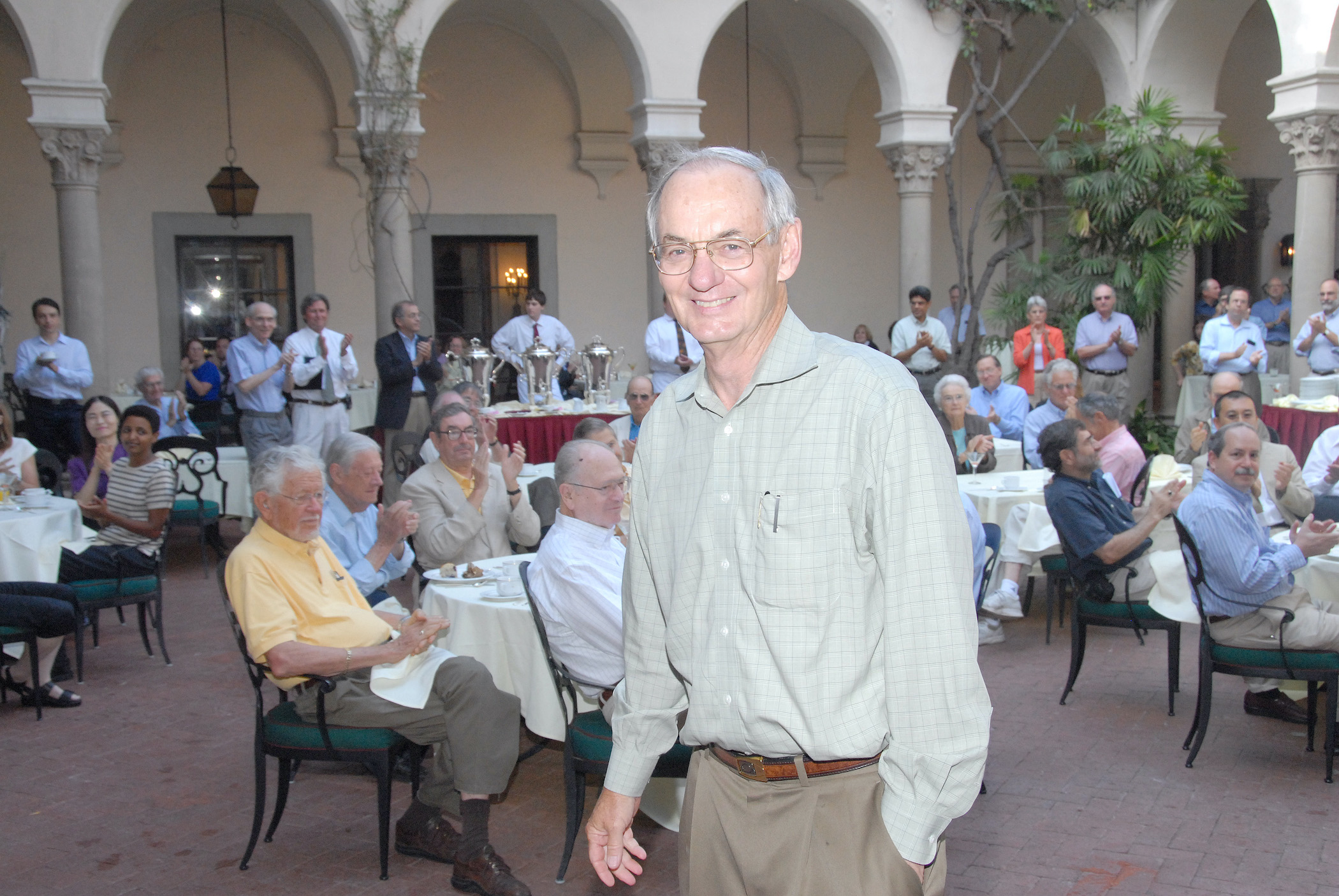
Paul C. Jennings Oral History Interview
Interviewed by Shirley K. Cohen, Heidi Aspaturian
Interview Sessions from 1999 to 2021
- October 13, 1999
- November 10, 1999
- November 23, 1999
- November 30, 1999
- January 13, 2000
- November 11, 2021
Abstract
Professor Paul Jennings, professor of civil engineering and applied mechanics, emeritus, chair of Caltech’s Division of Engineering and Applied Science (1985–89), Caltech provost (1989–95), twice acting VP for business and finance (1995; 1998–99), and provost yet again (2004–07), looks back on his life and multifaceted career in five interviews conducted in 1999 and 2000 and a sixth, focusing primarily on his second term as provost, in November 2021. Jennings recalls his youth and upbringing in Utah and Colorado, his student days at Colorado State University, and his Caltech graduate studies in civil and mechanical engineering with advisor G. Housner, which led to his focusing his PhD work and research career on the “very broad and rich” field of seismic engineering. His first decade on the Caltech faculty included engineering studies supported by field research in the aftermath of several major earthquakes, most notably Southern California’s 1971 Sylmar Quake. He also recounts his early teaching experiences and collaborative work with colleagues in both earthquake engineering and Caltech’s Seismological Laboratory. As chair of EAS, Caltech’s largest academic division, Jennings oversaw the expansion and revamping of programs in mechanical and electrical engineering, applied physics, and computer science, along with new emphasis on interdisciplinary research and stepped-up recruitment of female faculty and graduate students, while dealing with related administrative, funding, and personnel issues at both the divisional and institutional level. He talks at length about his two terms as Caltech’s provost, recalling the circumstances that led up to both appointments and his working relationship with Caltech presidents T. Everhart, D. Baltimore, and JL Chameau. The job saw him dealing with ever-present funding and budgetary issues, new research and campus-life initiatives, faculty recruitment and tenure decisions, the relationship between trustees and administration, Caltech’s stewardship of JPL, and campus expansion in the form of several new buildings, as well allegations of sexual harassment and scientific fraud and the technical, administrative, and personnel challenges arising from the LIGO Project. Elected to the National Academy of Engineering in 1977, Jennings is a longtime member and past president of the Earthquake Engineering Research Institute. He discusses his involvement with these organizations and with a number of Caltech committees, offers his thoughts on the evolution of Caltech’s institutional culture over a half century and his recollections of numerous colleagues and coworkers. A meditation on Jennings’ longstanding hobby of fly fishing and his insights, based on decades of experience, into the challenges and complexities of high-level university administration, also form part of this narrative.
Archival record in collection guide
PDF version of transcript [1.84 MB]
Preferred Citation
Paul C. Jennings Oral History Interview, interviewed by Shirley K. Cohen, Heidi Aspaturian, Caltech Archives Oral History Project, October 13, 1999, November 10, 1999, November 23, 1999, November 30, 1999, January 13, 2000, November 11, 2021, http://resolver.caltech.edu/CaltechOH:OH_Jennings_P.
Oral history interviews provide valuable first-hand testimony of the past. The views and opinions expressed in them are those of the interviewees, who describe events based on their own recollections and from their own perspective. They do not necessarily reflect the views of the Caltech Archives and Special Collections or of the California Institute of Technology.
Contents
Session 1, October 13, 1999
Family background in Utah and Colorado; attends Colorado State University
Shirley Cohen: Well, good afternoon Professor Jennings. Perhaps we can start with your telling us about your family—mother, father, where you were born.
Paul Jennings: I was born in Brigham City, Utah [May 21, 1936], and lived in Utah for about nine years, and then we moved to Colorado. Where I grew up—in an emotional sense—was in Colorado. My father was a civil engineer with the U.S. Bureau of Reclamation for most of his career. My mother was educated as a teacher. And she taught Kent Clark [professor of literature; d. 2008] in his first class in sex education, in Brigham City.
Cohen: Were your parents from the Mormon tradition?
Jennings: No, but they had to go along with it in some sense, to survive in Utah. Both sets of my grandparents lived in Utah. One grandfather came over from Denmark as a young man and then ended up in Utah and became a very prominent citizen there—which is really an interesting story in itself—and helped run the local lumber company, Merrell Lumber, in Brigham City, which is now a historical building. My other grandfather was a professor of agronomy at Utah State University.
Cohen: And they were not Mormons? That surprises me. Some of my mother’s siblings were active in the Mormon church and my grandparents were active too, at least to some degree.
Jennings: There’s Mormons and Mormons, you know.
Cohen: I see.
Jennings: So my parents were Mormons, but they were not at all active and were essentially agnostic. They drank coffee and liked their beer. [Laughter]
Cohen: I see. They went with the prevailing culture.
Jennings: Well, they just kind of got along, but they were not practicing Mormons. Though I was actually baptized in the Mormon church and went to Sunday school some when I was in grade school.
Cohen: But you weren’t practicing?
Jennings: We weren’t practicing, no. I remember that one kid in our class in Provo was a Presbyterian, and I thought, “Gee, what the heck is that? That sure is a long name.” Utah was essentially homogenous at that time. Of course, it’s much different now—Salt Lake City is less than half Mormon. But in the little towns, you have to get along.
We moved around a lot because of my father’s jobs. We lived in various places, never living in one home more than four or five years. So I got used to moving. I grew up in western Colorado, in Paonia, a small town, and then in Grand Junction. I went to college at Colorado State University in Fort Collins. I thought I was going to be a forest ranger, and then I got a summer job working as a laborer for the forest service in Alaska. And I thought, “Gee, I just got out of high school, and I can do what those college-graduate ranger guys are doing. This is not challenging or interesting enough. I want to do something else.” So I switched majors, first to mechanical engineering and then to civil engineering.
Decides to pursue graduate study at Caltech
Cohen: How did you get from there to Caltech?
Jennings: Well, at Colorado State I was in a two-year master’s program. I was a teaching assistant, and there were a couple of courses I wanted to take where the professors were really good. But I didn’t know quite what I wanted to do. During that time, I decided I wanted to go to graduate school for a PhD.
Cohen: Did anybody encourage you to do this?
Jennings: Yes, I was encouraged to go on to graduate school but not dramatically so; to the extent that I sought advice, I was encouraged. I thought the two best places were MIT and Caltech, and I didn’t want to go to the East Coast, so I applied to Caltech. It’s the only school I applied to. That was not too smart, probably. I had never been to California. I had never been to the East Coast, either, but the population density, the humidity, and the heat were enough to discourage me. And the lack of wilderness area—compared to real wilderness, like there is in the West. I thought I’d be happier in California.
Cohen: I see. You were already fishing and things like that?
Jennings: Oh, yes. Everybody knows I’m a trout fisherman, I suppose. I’ve been doing that all my life. I started tying flies when I was nine years old.
Cohen: Was that something your father taught you?
Jennings: Yes. He was in the Second World War. I was in the fifth or sixth grade before he came back, so it was from then on. I just have vague memories of him eating bananas to gain enough weight to go into the service, and then he went into the Seabees in the Pacific theater. He was on Okinawa, as near as I can tell, at about the same time that Clarence Allen [professor of geology and geophysics, emeritus; d. 2021] and Ed [Edward B.] Lewis [Morgan Professor of Biology; 1995 Nobel laureate in physiology or medicine; d. 2004] were.
Cohen: He must have really wanted to go, because with a family already, he didn’t have to.
Jennings: He didn’t have to go. But as near as I can tell from conversations with my mother and my own assessment, he figured that if he joined up rather than waiting, he could be a professional engineer in the Seabees. If he waited and got drafted, who knows where he’d land.
So that’s how I ended up at Caltech [1959]. I hadn’t heard anything about earthquakes until I came here.
Cohen: I see. You just thought about the engineering aspects.
Enrolls in Caltech’s new engineering science program, 1959
Jennings: I was going to be an engineering science major. They had just started the engineering science program here then. And with my background I was assigned—this was all done by mail at this time; I was still back at Colorado State—to Professor [George W.] Housner [Braun Professor of Engineering; d. 2008]. They’d just set up that program. So since I had a civil engineering background, they assigned me to him. I didn’t pursue the master’s program further at Colorado State.
Cohen: So you just did your one year there?
Jennings: One year. Because I could get a master’s at Caltech in one year, the amount of time spent studying for the master’s degree was independent of whether or not I changed universities.
Cohen: The engineering school [here] has a legitimate one-year master’s program.
Jennings: Yes, that’s right.
Cohen: It’s not like physics, where if you’re not going to do a PhD—?
Jennings: No, it’s extraordinarily different. The master’s degree in engineering is recognized now, almost universally, as the first real professional degree. Graduates with BS degrees don’t get the interesting jobs, unless they have some experience; engineers with master’s degrees are better trained, and so on. So it’s a very important degree, particularly for practicing engineers. An important difference between science and engineeering is that a very large fraction of scientists are doing research, particularly in universities. But the huge bulk of engineers are doing engineering out there, in companies and other places, and only a small fraction of them are in academia. So that affects the degree structure. But I digress.
Cohen: No, no, no, it’s important. But anyway, you then proceeded to work on the master’s degree at Caltech.
Jennings: It was just course work—it still is a course-work operation—and I quite enjoyed it. It was very challenging, which is what I wanted. When you come from a small place like Colorado State was then, you have a few really good colleagues and students and so on, but you wonder what it’s like at the really good places. So that was one of the things I thought I’d find out. I had some very interesting colleagues here.
Cohen: Was it just by coincidence that you were put with George Housner?
Jennings: Well, coincidence in the sense that in this new engineering science program he was the one from civil engineering.
MS degree in civil engineering
Cohen: I see. Now, what did that mean, “engineering science program?”
Jennings: It turned out that it didn’t mean much to me, because when I came I sized up the situation and decided I’d get a master’s in civil engineering instead. The engineering science program became working mostly on fluid dynamics problems. Professor [Theodore Y.] Wu [professor of engineering science, emeritus; d. 2023] led that work for years and years and years. Milton Plesset [professor of engineering science; d. 1991] was the framework for nuclear engineering with [Harold] Lurie [professor of applied mechanics; d. 1998] and [research fellow Jerome L.] Shapiro and Noel Corngold [professor of applied physics, emeritus; d. 2022]. So it turned out that that wasn’t the best box for me to sit in. Civil engineering had what I wanted—the mathematics of vibrations, the solid mechanics, and all that stuff.
Cohen: So by the time that year was out, you had switched over to civil engineering?
Jennings: Yes. Very early, in fact.
Cohen: And you made the decision that you were going to stay longer?
Jennings: Well, it isn’t your decision. But I decided pretty early that year that I did want to go on and get a PhD.
Cohen: And that was something you hadn’t even thought about in Colorado?
Researching hail & crop damage at Colorado State University; adventures in hailstone collecting
Jennings: No, I had thought about it. I thought about a career involving teaching and research, because it seemed from all the exposure I’d had working summer jobs and teaching—I was a teaching assistant as an undergraduate at Colorado State and actually taught classes—that it was a good fit for me.
Cohen: And you enjoyed that?
Jennings: I enjoyed it, and I liked surveying and slide rules and things they don’t teach anymore. [Laughter] I also enjoyed the research. I got a summer job on a hail research project. That was my first formal involvement in research. We were doing a research project on hail and crop damage: how does hail damage crops? So we decided we’d try to measure the energy density of the hailstorm as it hit the ground. We devised a gauge, which was a square pad of styrofoam, which recorded hits from the big stones. And then aluminum foil over part of the pad recorded the dents from smaller stones. We calibrated the dents by dropping ball bearings from different heights to get the calculated terminal velocity of the hailstones. In the gauge, we could see where a stone made a dent—usually it was an oblong, because of the wind. We could measure the two axes, and that’s proportional to the area. And going back to the size, you could figure the terminal velocity and the kinetic energy. So by the number of dents and the different sizes, you could eventually read the gauge and say, “Okay, in this storm we got so many”—we used foot pounds as energy measurements—“so many foot pounds per square foot in this storm.” And then you could correlate that with the crop damage. One of my jobs was to go out and maintain all these hail gauges and collect them.
Cohen: And you guys made up the idea?
Jennings: Of the gauge, yes. It’s the first paper I ever wrote, with a man named Dick Schleusener, who went on to be the president of the South Dakota School of Mines and Technology, in Rapid City. We wrote a paper on this way of measuring the relative energy of different storms. Weather statistics then were almost useless. They’d tell you “hail days”—that it hailed in the town of Wray on a certain day—and you might get some indication from the newspapers as to the extent of crop damage. But the science goes nowhere with that kind of information, so we wanted to get something more quantitative. I also collected hailstones.
Cohen: But they aren’t going to last very long?
Jennings: We would enlist the farmers. They would put the hailstones in the deep freeze, and we’d come out and collect them. That was interesting, because a hailstone is much more complicated than you’d think. A hailstone will look like an onion when you slice it and look at it under polarized light, because it’s gone up and down in the stream and the water condenses and freezes. The air kicks it up again, and it goes through cycles, as many as ten or so for a really big stone. But the real killers are the conglomerate stones, where several hailstones freeze together. In some of the areas around Kimball, Nebraska—the panhandle of Nebraska is a real good place for hail—these conglomerate stones can be big enough to kill livestock and ruin houses and cars. I saw a picture once of an inaugurated air service to the city of Scottsbluff. They flew in, I think, with a twin-engine DC-4, and a hailstorm came and totaled it on the ground. It looked like a hundred madmen had gone after it with sledgehammers. And that’s what your Volkswagen would look like.
The biggest hailstone we ever got was a spheroid, two inches by three inches by four inches. It went through a guy’s roof, and he collected it for us. I never pursued all this further—I went in other directions—but I’ve always been interested in weather and severe storms since that time, at least from a layman’s point of view.
Cohen: So anyway, you came here and you very quickly went over into civil engineering.
Jennings: Right.
PhD work with G. Housner & other earthquake/civil engineering faculty
Cohen: And then you very quickly went on to the PhD program. Who were your professors then?
Jennings: My advisor was George Housner. The professors I dealt with mostly, besides George, were Don [Donald E.] Hudson [professor of mechanical engineering and applied mechanics; d. 1999] and Tom [Thomas K.] Caughey [Hayman Professor of Mechanical Engineering; d. 2004]. I also knew Dino Morelli [professor of engineering design; d. 1972], one of our local characters, a little bit, because of my roommate, who was a mechanical engineer. And I knew the math teacher [Arthur F.] Messiter [research fellow in aeronautics, 1959-62]. I audited a class or two from Bert Fung.
Cohen: Bert Fung?
Jennings: Y. C. Fung. He was a professor of aeronautics [d. 2019]. He’s a former faculty member and also an alum, and he is one of a very few people who belong to all three national academies. He’s a very nice guy and very able. He wanted to set up a program in bioengineering here. He was motivated by his mother’s death. But it wasn’t the right time here, and [Frederick C.] Lindvall [professor of engineering, emeritus; chairman, Division of Engineering and Applied Science, 1945-1969; d 1989], I hear, didn’t want to put the resources into it. So Bert went down to La Jolla, to UC San Diego, to start his bioengineering program. He’s since retired. And he did extremely good work there. That’s why he’s a member of the Institute of Medicine as well as the NAS [National Academy of Sciences] and the NAE [National Academy of Engineering].
Initial attraction to earthquake engineering; influence of G. Housner, D. Hudson, T. Caughey
Cohen: So what put you onto earthquakes?
Jennings: Well, first of all, it was an interesting problem. I always liked vibrations and dynamics. And the earthquake problem looked rich, in the sense that there were all aspects of it—from the specialized PhD topics on vibrations in suspension bridges, to the very human aspect of building codes and implementation and public safety, to the interaction with the public and social scientists and seismologists in the science. Those were all very lively interactions, so it looked like a very broad and rich field to me.
Cohen: What year are we talking about?
Jennings: We’re talking about 1959. While I was here, the Hebgen Lake [Montana] earthquake occurred [August 1959], which was an interesting event. It was not very significant structurally, but geologically it was interesting, because of the big fault scarps and a major landslide. Hebgen Lake tilted. The shock was 7.3, or something like that—a big earthquake but in a very lightly populated region. It was, in some sense, a corresponding event to the [September 1999] Taiwan earthquake geologically; it was that size of event. And a testament to the power of nature in these things. There was a campground up in Hebgen Lake, which I later visited, where a guy was sleeping in his tent, near this picnic table, and there was a 16-foot fault scarp between the tent and the picnic table after the earthquake. [Laughter] I often wondered what it was like to be in that tent when that earthquake occurred in the middle of the night.
I also had a tremendous respect, and still do, for George Housner’s intellect. It seemed to me—although I didn’t think some of the other students recognized it—that this was an individual who really knew what he was talking about. In many ways, that determined it, too—that I’d like to study earthquakes—because I felt that this was a person I could really learn from and who would be a good advisor. He was wise, and smart, and understood what was going on.
Cohen: And when you asked him, he was happy to have you?
Jennings: Yes, I think so. I don’t know how they assigned students to advisors. I remember that it was just at a meeting of faculty and students, and they announced who was going where, of the students who were staying on. The decisions were based primarily on the natural interests of the individuals involved.
Cohen: So at that time, there was also Don Hudson and—
Jennings: And Caughey. They would perhaps have been the only other choices, and they were both mechanical rather than civil. Don Hudson was from a mechanical engineering background and was interested at that time mostly in instrumentation. Professor Caughey is from an electrical and mechanical background, and at that time was primarily in theoretical vibrations, with some instrumentation work going on. So George Housner—with the civil engineering and structural engineering background, which was my undergraduate background—made more sense as an advisor for me.
Cohen: I see. And he was basically working on earthquakes at this time?
Jennings: Yes, earthquake engineering problems.
Cohen: And you were here three or four years getting your degree?
Teaching & research experience at US Air Force Academy
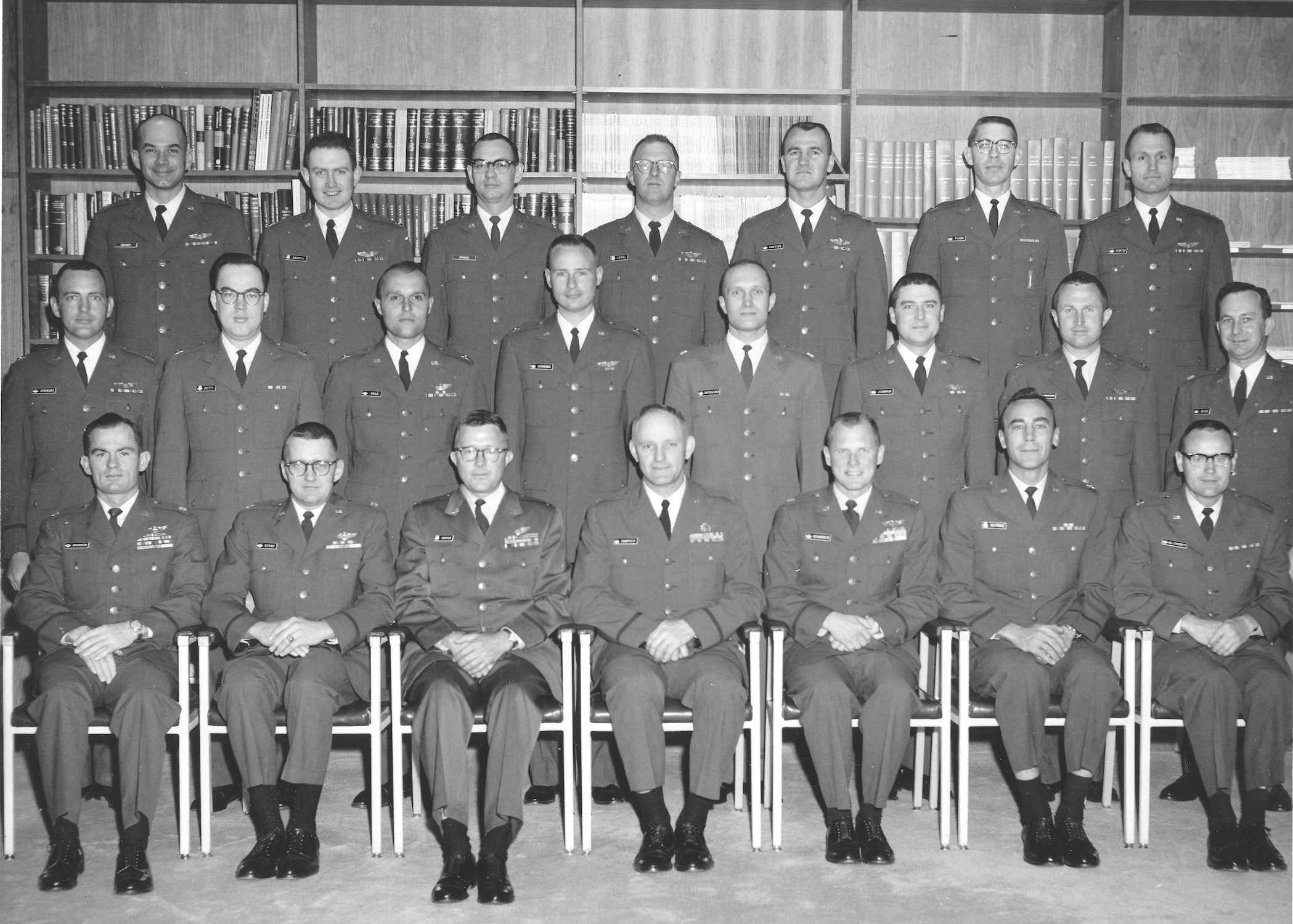
Jennings: I guess it was four years: ’59 to ’63. I graduated in June of ’63. I had been in ROTC at Colorado State University, and I got a deferment to go to graduate school. You could at that time. When I graduated here with a PhD, I went back and taught at the U.S. Air Force Academy [1963-1965]. Bill [Wilfred] Iwan [professor of applied mechanics, emeritus; d. 2020] did that too. He went back a year earlier.
It turned out that there was an individual who was in the mechanics department [at the Air Force Academy] who was looking around the country. He found everybody in the mechanical and civil engineering areas who had a deferment from the ROTC to go into graduate school, and he made it his business to see how they were doing. And if he thought them suitable, then he would essentially get them assigned to the faculty of the Air Force Academy.
Cohen: That must have made for a pretty good faculty there.
Jennings: Oh, yes. His name was Archie Higdon—he later was the dean of engineering at San Luis Obispo [California State Polytechnic University, San Luis Obispo]. He got a mix on the faculty of pilots and other career officers in technical fields—who usually had gone through the military academy in Annapolis or West Point and gone back and gotten a master’s degree somewhere, or sometimes a PhD—and then he had these other guys, who were fresh out of school but had, probably on average, a more intensive research experience. So it made an interesting mix of people—a good mix, because you got the different backgrounds.
Cohen: Did you do anything besides teach there?
Jennings: Yes, I did some research—mostly writing up things from my thesis. I was there for two and a half years, I guess it was.
Cohen: Did you have any family at this point?
Jennings: Yes, I did. By that time, both children were born, and we lived on base, in base housing.
Cohen: You had gotten married while you were in Pasadena?
Jennings: Yes, I got married in the summer after my master’s degree. Daughter Kate was born here, and then Maren was born at the Air Force Academy. The Air Force Academy baby was a lot cheaper than the one here. [Laughter]
Cohen: [Laughter] Well, they gave you housing.
Jennings: Yes, right. The pay wasn’t great, but you got housing and medical care.
Cohen: So there you were, back in Colorado.
Jennings: Yes. I have no complaints at all, because I was thrown back into the briar patch. My parents were living in Grand Junction at the time.
Cohen: Trout streams are there.
Returns to Caltech to serve on 1964 Alaska earthquake commission
Jennings: In summer, you could even do a little fishing after work. I had some colleagues there who fished, and so on. It was very pleasant. And I did some work on writing up some papers at that time. I went there in June of ’63. And in 1964 the Alaskan earthquake occurred.
Cohen: I’ve seen that escarpment.
Jennings: Yes. That was a very large earthquake. It prompted the National Academy of Sciences [NAS] to make a big study, and the Academy of Engineering, of course, was involved. So after some time they put together a committee. It took a while to do this, because it was hard to find somebody who could be the chairman of it—who would have that much time. This was a big commission. And finally Konnie [Konrad B.] Krauskopf, a professor of geology at Stanford, was named the chairman of the committee. There were maybe six or eight panels: biology, human ecology, seismology, engineering. George Housner was tapped to be the head of the engineering panel, and he asked if I could be made available to help him during this time. The heads of the NAS talked to somebody in the Air Force—an undersecretary or whomever, at whatever level they approached it—and said, “Can you spring this guy loose for six months?” So the order came trickling down to the Air Force Academy, and I spent six months or so here at Caltech on a temporary assignment.
Cohen: On this commission to look at the Alaska earthquake?
Jennings: Right. I became a member of the engineering panel. George and I essentially did the editing job for the big engineering volume [The Great Alaska Earthquake of 1964: Engineering, National Academy of Sciences, 1968].
Cohen: So for that six months, you brought your family back to Pasadena?
Jennings: Right. I learned later that I put a hell of a hole in the temporary-duty budget of the department of the Academy, because the word had come down to do it, but no money came along with it. You know how things go in bureaucracies many times—well, that’s what happened. They didn’t tell me at the time—I found out later, when I got back.
Cohen: Did it feel good to be back in Pasadena at Caltech?
Jennings: Sure it did. Since I had no other duties, I was able to be really thorough about documenting the Alaska earthquake. I went back and carefully read the report of the 1906 San Francisco earthquake—which, up until the Alaskan earthquake report, was the best studied earthquake anywhere in the world. If we were going to be part of a big multi-year effort to write a report on a very important earthquake, you ask yourself, What’s the best one that has been written up so far? So you sit down and read that first, and see what’s going on. Plus, another feature was that things were happening, people were getting more organized, there was money for studies, etc., so the climate for producing a good report was favorable.
Cohen: You were in a unique position: You had six months with no other duty, and you really could go into these things.
Jennings: Yes, right, it was a very good time for that. Heavy editing. I’ve done a lot of editing since then, but that was my first big experience in adapting engineering design reports, for example—which are not written at all for publication—to the needs of an earthquake study. You have to edit them down and throw out drawings and detailed things that you don’t need for this purpose. I wouldn’t want to do such all the time, but when it’s a subject you’re interested in, and you’re part of the study, it’s okay.
Cohen: So you did that for six months.
Jennings: Yes, plus writing a couple of engineering studies for the report.
US Air Force ROTC service
Cohen: Then you had to go back to Colorado?
Jennings: Then I went back, and then I was let out of the service. I was kind of old by then, for a lieutenant. When you get a commission, you’re a second lieutenant. And at eighteen months of service, you got promoted—back then, at least. No matter what you did, you were promoted; they didn’t even bother to review you. As long as you were warm and breathing and weren’t in jail, you got promoted to first lieutenant. And then after something like another three years, you might be made captain—I forget exactly. So when I went back to the Air Force Academy, somehow I became a first lieutenant rather than a second lieutenant, just by being in the Reserve, I guess it was. But I was the lowest ranking first lieutenant in my department, and probably at the Academy, and maybe in the entire service, because it had been five years since my commission, and I was still a lieutenant and everybody else was a captain. So I got to man and stock the shoeshine box. One of my duties was to make sure that we had all the proper shoeshine materials.
Cohen: For all the other officers?
Jennings: Yes, in our little department of about fifteen or twenty officers. That was one of my duties.
Cohen: And Colorado is dusty, huh?
Jennings: Well, those Air Force guys want their shoes shined. But you only need black, so it wasn’t such a difficult job. Then I got out of the service six months early, in an economy move, just as the Vietnam War was building up. I had tried to get my service specialty changed from civil engineer to instructor, because that was what I was doing and what I was best at. But the Air Force wouldn’t change it. On the other hand, they let me out six months early. Otherwise I probably would have been over there, as base engineer staff in Vietnam, so I was fortunate.
Joins Caltech faculty in 1965; recalls “lively” state of engineering department
Cohen: How did you make the transition to Caltech? You were asked to come, obviously.
Jennings: Oh, I think the faculty here, Hudson and Housner, did it—I had been here for a while. I had a postdoc appointment of some sort; it was one of those without stipend, because I was being paid by the Air Force. And while I was here, they went through the usual maneuvers to try to get an appointment. The searches weren’t so formal in those days.
Cohen: No, no—people would just decide that it was a good idea to hire somebody.
Jennings: They convinced Lindvall, and then they had to convince [Robert] Bacher [professor of physics; Caltech provost, 1962–1969; d. 2004] that it was a good idea—that this field was promising enough to merit an appointment.
Cohen: So you were happy to come back.
Jennings: That’s right. I got out of the service and came back. It’s an easy day to remember, because it was January 1st, 1966, when I started on the faculty.
Cohen: What sort of department was it when you came in ’66?
Jennings: It was very lively. Bill Iwan had joined, and we were the two new young faculty in the group. I’d got to know him in the academy; I didn’t know him as a student here. At the academy we were in the same neighborhood and department and we carpooled, so we got to know each other pretty well. The NSF [National Science Foundation] had just started funding things, and this area was one of the first areas in engineering they funded. George and Don together got a grant. But it was understood that you could use this [grant money] to support other faculty, even if it wasn’t in the proposal. Things were a little looser then than they are now—although that particular thing you probably could do now almost as easily. But it was one grant; that was all we needed. Don Hudson kept the books, and George was more active in the outside professional work, like the Alaskan earthquake report. Don was involved, too, as I recall, but not as much as George.
Engineering administration “more centralized, less bureaucratic” than today
Cohen: And how was the whole engineering school at that time?
Jennings: In those days, the division administration was more centralized, autocratic, less bureaucratic, and so on. And the way promotions and appointments were made was that people just talked to Lindvall and then he decided. I don’t think that the IACC [Institute Academic Council of Caltech] had been formed by then.
Cohen: You mean, with other departments debating an appointment?
Jennings: Yes, right. This is heresy, because I don’t know where it came from, but Lindvall and the head of PMA [the Division of Physics, Mathematics and Astronomy] got together one time and said, “Maybe it would be a good idea if we got everybody together to talk now and then about our appointments and other things.” It wasn’t as if anybody was going to give away a vote or anything, but it was maybe a good idea to talk about mutual problems. And out of that grew the IACC.
Cohen: Yes, I think I’ve heard a similar story—it started very informally.
Jennings: Yes. And then came the idea of getting outside letters and having search committees—they didn’t use that process then so much. I’m sure it was a lot more informal than it is now.
Cohen: Yes, I think that’s so.
Jennings: Lindvall was involved at that time in the American Society for Engineering Education. And I got a little involved in that. So I went to a couple of meetings with him, and he was always nice and introduced me to people and just made me not feel like a young kid being left out or something. He was very thoughtful.
Cohen: Was he interested in education, basically?
Jennings: I think that, one, he had an intrinsic interest in the educational process, and, two, it was part of his duties to be involved.
Cohen: How much did you have to do with the rest of Caltech at that time—people in physics or math or biology or what have you?
Jennings: Very little. And I think that’s true, mostly, of the assistant professors even today. I did get to know people outside the division—but it was a slow process. First, I always went to the Athenaeum [Caltech’s faculty club]. George told me, “Come on,” and we’d go to the Athenaeum. I’m sure my friends would be surprised to learn that I was shy then. [Laughter] I listened mostly, I didn’t say much.
Cohen: But you did go to lunch with the others?
Jennings: I did go. And I slowly got to know people from other divisions. Also, occasionally I’d get on faculty committees, and I got to know people that way. By now, I’ve been on so many faculty committees I’ve lost track of them.
Early teaching responsibilities & interactions with Seismo Lab faculty
Cohen: What were you teaching at that time?
Jennings: Well, a variety of things. I taught an undergraduate course in solid mechanics [Mechanics of Structures and Solids]. I taught the vibrations class [Dynamics and Vibrations]. For quite a number of years, I taught the solid mechanics class. Chuck [Charles D.] Babcock [professor of aeronautics and applied mechanics; d. 1987] at that time was teaching in aeronautics, and we finally managed to merge the classes. We arranged a merger because there were enough similarities, and we thought the different viewpoints would be good for both sets of students. And I eventually taught classes in earthquake engineering, when we finally got them established. We didn’t have any such classes for a long time.
Cohen: Now, the next big earthquake that comes along is in ’71. Is that correct, or was there something before that?
Jennings: Well, let’s see. There was the Caracas earthquake [July 1967]. I went down to Caracas as part of a team to look at that earthquake. So in terms of firsthand earthquake investigations, it was first Alaska, then Caracas, then San Fernando [February 1971]. Then it was somebody else’s turn after a while.
Cohen: You mean to go down to investigate earthquake damage firsthand.
Jennings: Yes.
Cohen: Now, was the Seismology Laboratory up and going at that time?
Jennings: Oh, yes. The Seismo Lab had started in ’21. [Charles F.] Richter [professor of seismology; d. 1985] had some interest in earthquake hazard reduction and strong ground motion. But he was kind of a hard person to work with, apparently. I didn’t know him real well, but I knew him a little bit in his later years. And he was actually kind of nice, at the level I interacted with him. But it was primarily Clarence Allen [acting director of the Seismological Laboratory, 1965-1967] who was broadly interested in earthquake effects. And then later Hiroo Kanamori [Smits Professor of Geophysics, emeritus; director, Seismological Laboratory, 1990-1998] came. So I worked with him quite a bit. And a little bit with [Donald V.] Helmberger [Smits Family Professor of Geophysics, emeritus; director, Seismological Laboratory, 1998-2003; d. 2020]. But most of the seismologists there—Frank Press [director, 1957-1965], Don [Donald] Anderson [McMillan Professor of Geophysics, emeritus; director Seismological Laboratory, 1967-1989; d. 2014], and others—were interested in earthquakes as a tool to tell them about the Earth. Whereas for an interest in earthquakes per se and the effects of earthquakes, it’s primarily Clarence now, Hiroo, and Bob [Robert] Sharp [Sharp Professor of Geology; d. 2004] a bit, in tectonics. So my interactions were mostly with them.
Cohen: So in the ’70s, you must have already been a professor.
Seismicity sabbatical in New Zealand
Jennings: Things were easier and simpler then. I didn’t even know when I was up for tenure. [Professor Jennings received tenure in 1968. –Ed.] I think it happened around the time I went on a little sabbatical in New Zealand.
Cohen: When you say a little sabbatical in New Zealand—
Jennings: A three-month sabbatical in New Zealand [February-May, 1970]. New Zealand has about the same seismicity as California.
Cohen: I see. I know people who go there to fish, but I didn’t know about earthquakes.
Jennings: Oh, yes. I didn’t go there to fish, but that helped—knowing that there was fishing there. No, I went there as an Erskine Fellow at the University of Canterbury.
Cohen: Erskine?
Jennings: Erskine was a mining engineer, a graduate of that university, who left funds for a visiting scientist fellowship. And I don’t know what happened in his humanities training, but he very specifically in his will excluded the humanities from participating in this program. The language is so clear and strong that I don’t think they’ve been able to change that.
Cohen: So this was something you applied for?
Jennings: No, I was asked to do it. There’s a range of disciplines involved at the University of Canterbury, primarily in the engineering and science programs. They kind of rotate the visiting fellowship among the departments. It was pretty much arranged by Robin Shepherd, who’s been a visiting professor here off and on since that time. So I went there for three months. It was very interesting.
Cohen: You liked New Zealand?
Jennings: Yes. Then, it was like stepping back in time. The milk came with cream on the top, and gas stations were closed on Sundays
Cohen: Where were you living?
Jennings: In Christchurch. Supermarkets were just starting to appear. Life was just a little more relaxed. Everything slowed up on Sunday. People were very friendly.
Cohen: Well, it’s much more of a homogeneous and—I mean, everybody makes the same amount of money.
Jennings: That’s right. There was nothing like a San Marino in New Zealand.
Cohen: Yes. I think it’s still like that.
Jennings: I’ve been back since. I took another Erskine Fellowship many years later and went back.
Cohen: So what did you do for those three months when you were there?
Jennings: I studied earthquakes and taught.
Cohen: Are there earthquakes there? Oh, there must be.
Jennings: Yes, sure. It’s about as seismic as California. There was a big earthquake in Inangahua [May 1968]. And a big historic earthquake in Wellington in the mid-nineteenth century. There’s a big fault scarp. So they take it very seriously.
Impact of seismic shaking on structures from an engineering perspective
Cohen: Now, when you say you study earthquakes, what you’re really studying is the amount of shaking and how that affects structures?
Jennings: Yes. The simplest way to approach it is to say that seismologists study an earthquake until it hits the surface of the ground. From there on up, it’s an engineering problem. So if you look at the equation of the motion of a structure subjected to earthquakes, it turns out that the forces are equal—by Newton’s law—to the mass of the structure times the acceleration of the ground, at the base. What that means is that the fundamental earthquake parameter is essentially the acceleration of the ground. So that’s what you want to measure—not the velocity and not the displacement. And it also tells you to watch out for mass, because mass is the multiplier. So if you have a three-foot adobe wall, sure, it looks great, but you’ve got all that extra mass, so it’s not going to be safe—unless the strength is proportional to the mass, which it isn’t for many of these heavy constructions in places like Turkey, unfortunately.
Cohen: Where the buildings just crumble.
Jennings: Yes. Unreinforced masonry, rubble masonry, and that kind of construction just comes down, it’s heavy but it doesn’t have strength. So that’s where the engineering comes in. You want to study the character of the ground motion, but you want to study the acceleration more than anything else. And then you want to study how structures perform. What affects the ground-shaking locally? What are the effects of soft soils? Things of that sort.
Cohen: So then you came back here. I have you down here as becoming an executive officer [for civil engineering and applied mechanics] fairly soon [1975-1980].
Far-reaching impact of report on 1964 Alaska earthquake
Jennings: Oh, was it fairly soon? [Laughter] We had finished up the Alaskan report.
Cohen: Right. And where did that report go? Of what significance would it have been?
Jennings: It took a while to wind that down and get everything in, and the publishing process is pretty lengthy. But it did really influence the quality and scope of future reports as well as engineering codes and practices. It also included, for the first time, some of the effects on humans. In fact, I can tell a joke on myself. The committee wanted to name the volume having to do with the human effects Human Ecology. At that time, I said, “Ecology? Nobody’s going to understand what that means.” I sure blew that one. [Laughter]
Cohen: So you really looked at every facet.
Jennings: Every facet of it.
Cohen: It’s a tome, huh?
Jennings: It’s ten volumes.
Cohen: And you edited the whole thing?
Jennings: No, we just did the engineering volume. And we participated in the summary volume. There was hydrology and geology and so on. It’s a series of huge volumes.
Cohen: So that took up much more than the six months you came here for.
Involvement in 1971 San Fernando earthquake studies
Jennings: It lasted until after I came back and went on for what seemed like quite a while afterward—at various levels, of course. When the San Fernando earthquake came, it was easier in one sense, because the agencies that were involved felt that they had a responsibility to report. They didn’t, really, in the Alaskan earthquake. It was NAS encouragement that got the U.S. Geological Survey to do its thing as part of that, and the Coastal Geodetic Survey to do its part, and so on. But by the time of the San Fernando earthquake, that responsibility had somehow filtered down and been institutionalized.
The Alaskan and the Chilean earthquake [May 1960] are the two—unless something happens between now and December 31st—biggest earthquakes of the twentieth century. These are huge events. They have all kinds of ramifications and effects, and ripple effects out into other sciences besides geology and seismology. It was really important to find out what happened. San Fernando was a different story, a smaller earthquake.
Cohen: But a lot of people were involved in that one.
Jennings: Yes, a lot of people. It killed about the same number of people as Alaska. It did about the same amount of damage—but it was only a magnitude 6.5 or 6.6.
Cohen: Well, it knocked that Veterans Hospital down that was at the epicenter.
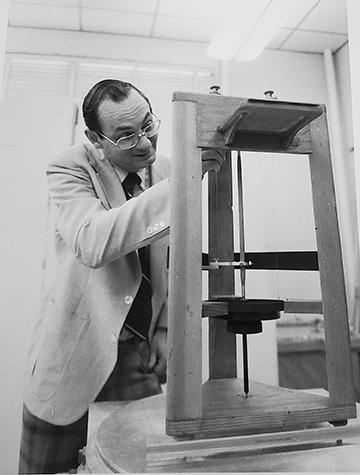
Jennings: Yes. Hospitals didn’t fare too well. Changes in hospital building practices came into effect after that. We did write a Caltech report about the San Fernando earthquake—since it was kind of in our backyard—and we got it out quite quickly. I was the editor of that. We wrote chapters. Don Hudson and [Mihailo D.] Trifunac, who was on the faculty then, worked on the strong ground motion, and George [Housner] did the introduction. And we had some other people do this and that. John Wood and I wrote something about the freeways. We weren’t sure at that time that Caltrans was really going to produce a good report on the freeways. It turned out they did. But what John and I did was to take the new Foothill Freeway, the 210, which was not opened yet, and try to document what happened to it from end to end—you know, no damage, then the damaged portion, and then out the other side. We even had to climb a few fences to get in close enough to take pictures and examine damage. [Laughter]

Cohen: It was not built yet at that time?
Jennings: It was mostly built. Many structures were complete; others were not quite complete.
Cohen: No cars or people on it yet?
Jennings: That’s right—almost no cars. I think somehow or other there was a car somewhere. You know how it is.
Cohen: A good time to study something like that.
Jennings: Yes, it was. We knew that wear and tear hadn’t caused whatever damage you saw. So we all wrote our parts up and got the report out pretty quickly. In fact, a good share of the day after the earthquake I spent in the basement of Olive View Hospital, looking at the earthquake damage there. You could see the evidence of the hasty departure of people there during the earthquake.
Cohen: So you were looking at structures.
Jennings: Sure. That was what we were trying to do. What were the earthquake effects, and how did the various kinds of design work? What came through well and what didn’t? Often because of the media approach, you never see what came through the earthquake well—all you see is what went wrong. But in some sense, what went well is more important, because that guides future actions.
Teaching responsibilities prior to mid-1980s
Cohen: Meanwhile you were still doing your teaching?
Jennings: Yes. Until I got to be division chair [1985–1989], I taught every term that I was a professor at Caltech except one—that was the spring quarter of the year of the San Fernando earthquake, when I got a term off from teaching to do this report.
Cohen: So you liked to teach.
Jennings: Oh, yes. But that’s also the standard load in engineering. It’s light for most engineering schools. Your biggest mission in most engineering schools is to educate engineers for the workforce, not to do research. That’s the way engineering is organized, as opposed to science. That’s why the teaching loads tend to be heavier in engineering schools, I think.
Cohen: Yes. But it’s different here: The people here are very involved in research.
Jennings: Yes, that’s right, but they still have the teaching loads.
Executive officer for civil engineering & applied mechanics, 1975–1980; impressions of divisional culture
Cohen: Was being executive officer a big job?
Jennings: No, no. It was a little housekeeping job. The faculty did not want to delegate much authority to the executive officer. Your job as executive officer was to coordinate who was going to teach what, next term and next year and so on.
Cohen: You didn’t have anything to do with money?
Jennings: No. I didn’t have any real budget. The budgets went through the departments. They were very small budgets. And dealing with the instructional program wasn’t a big deal. It had nothing to do with the research program. You worked out the assignments of the teaching assistants and answered the mail that came from outside for the chairman of civil engineering. Civil engineering doesn’t have a chairman, so the executive officer would get that.

Cohen: Right. How was your department coordinated into the whole division of engineering? How much time did that take up?
Jennings: Not much. At that time, we didn’t have lots of faculty meetings at all. Most of the things were handled—
Cohen: Lindvall just decided?
Jennings: Lindvall and whoever was involved would just work it out. We didn’t vote on anything. Voting came very late to the division—just in the last few years did we vote on appointments. Before that, it was kind of a Quaker meeting type of thing. It’s an incredibly diverse division, in the sense that computer scientists, say, don’t take the same journals, don’t go to the same meetings, have no professional interaction whatever with people in mechanical engineering or aeronautics. In each of these fields, they go to their own meetings. The number of journals you need for the division is in the hundreds.
So the division is very diverse. People didn’t want to mess in each other’s business or have other people mess in their business. So when I first joined, the faculty was a little dicey about voting. We were worried about bloc voting. We were worried that strong individuals in the different departments might, in effect, become instant experts in some other field and try to veto appointments [in other fields] if they could. There was a kind of cautious détente—so we didn’t vote. We didn’t want to start having patterns of voting.
Cohen: I see. Now, was this unique to the engineering division?
Jennings: I think so. From what I experienced later on as provost, I found that the cultures [in other divisions] were very different in this respect. And it just seemed to be kind of a local option, like the candidacy exams. Look at how somebody gets admitted to candidacy. When you look at the process in the various divisions, it’s very different. And the ways the division meetings operate are very different.
Cohen: Maybe that’s a good place for us to stop.
Session 2, November 10, 1999
Named to chair engineering & applied science division [EAS]; circumstances surrounding appointment [1985–1989]
Cohen: We’re going to start this interview with you speaking about the challenges you faced as division head. As a matter of fact, let’s start with your being asked to be division head and how you felt about that.
Jennings: Well, I was on the search committee for a new engineering division chairman. We were discussing inside and outside candidates and all of this, and it was moving along. When we started discussing internal candidates, I started thinking more seriously about the possibility. And I was at a peculiar stage in my research. I was thinking of writing a textbook on the dynamics of buildings, or doing something different. And I did end up doing something different. [Laughter] I became division chair.
I think Fred Culick [Hayman Professor of Mechanical Engineering & professor of jet propulsion, emeritus; d 2023 ] was the chair of the search committee. Jim [James K.] Knowles [Kenan Professor & professor of applied mechanics; d. 2009] was on it, too. So there was some discussion about whether or not I’d be willing to be considered. It was well handled, so people on the committee would have a chance to think about the possibility, and I had a chance to think about the possibility, in a nice way. So I agreed to be a candidate. The committee then, without me, reported back to—I don’t know whether it was Robbie [Rochus Vogt, Avery Distinguished Service Professor & professor of physics, emeritus; Caltech’s provost 1983–1987] or Murph [Marvin L. Goldberger, Caltech’s president, 1978–1987; d. 2014]. I suppose it was Robbie. Because I wasn’t in the meeting, I don’t know whom they reported to. So then I went over and talked jointly with Robbie and Murph about—
Cohen: You mean in the same room?
Jennings: In the same room.
Cohen: The two of them, okay. That must have been interesting.
“Division had some problems”; initial challenges with faculty recruitment & resources
Jennings: It was interesting. My comment when I came back to talk to the search committee was, “If I had been an outside candidate, that would have been the end of it right there.” [Laughter]
Cohen: [Laughter] Did they actually contradict each other?
Jennings: [Laughter] Oh, yes. They were arguing about different things in the course of the interview. It was a time when that relationship was not good. It hadn’t much longer to go, I guess—well, a couple of years more. But it was the sort of thing that probably, in fairness to both of them, they wouldn’t have exposed an outsider to.
I brought up some of the questions I had about the division’s and the Institute’s resources. There was a feeling at that time that engineering had not participated well and that the other divisions—the scientific divisions, in particular—had a greater claim to the resources and a smaller teaching load. The undergraduates were, and are, predominantly engineering, and the graduate students are 40 percent engineering. The general budget support does not mirror that at all, so you have 25 percent of the faculty doing 50 percent of the work within the teaching program. And that leads to some questions and concerns.
I started to bring out those kinds of issues and pointed out the obvious need to do something. And computer science had some other problems. Murph, in a sense, told Robbie, “You’ve got to sit down and work through these things.” And Robbie said that he didn’t have any time, that he was fully loaded. That was one I remember. There may have been other issues. It would have been clear to any third party in the room that the provost and the president were not seeing eye to eye.
There were some things I was concerned about, because the division had some problems. Engineering had exploded as a discipline, particularly in the computer science/applied physics/materials area. The traditional fields of engineering were strong but getting old. And I was concerned about what I could expect in terms of help and resources and what was reasonable to help rebuild the division. So I wanted to know what I could count on. I mean, that’s a sensible thing to know: What’s the level of support and backing that’s going to be reasonable? What can you expect? And there are always the personal arrangements. I had to end up shortening my sabbatical in New Zealand from six months to six weeks, but I was able to at least go. There was one staffing issue that had to be done a little bit by e-mail and correspondence, but it worked out all right.
Cohen: What specifically did you want to know?
Jennings: Well, I could see that we needed, over a given period of time, to launch a number of searches. How many search positions? Those are really the two big issues: What’s the cap on the size of the division, and how rapidly can you start the searches? Given that you’d have to have some plan and all that, I wanted to know what the situation was. So I dealt with Robbie on that. And he was very good at that kind of stuff. He gave me a good idea of what could be done, and it was sufficiently hopeful that I agreed to take the job.
Cohen: I think the feeling’s always been that it would be very hard for an outside candidate to come in in that job.
Jennings: Our previous outside-division chairs [in engineering] were Francis Clauser [Millikan Professor of Engineering, emeritus; division chair, 1969-1974; d. 2013] and Robert Cannon [1974-1979]. And there was a feeling that they had not been too successful. Partly it was a culture issue, we thought. And there was also the feeling that we really needed a full-time division chair, at least for a while. And I shared that view.
Cohen: You mean someone who wasn’t also teaching?
Jennings: Who wasn’t also trying to run a research group. The teaching was never the issue. The issue was, How much time do you devote to research and professional activity? The faculty felt that maybe it’s okay to be half-time when you have 30 faculty, but when you’ve got 70 faculty, you really have trouble doing it. So that was an issue at that time. By the time I was near the end of my five years as the division chairman, things had settled down enough and I had gotten used to things enough that I was starting to rebuild my professional and research activities a little bit—at least to go to seminars and talk to students. I was getting ready to teach. So that’s how I got launched as division chair.
Search for new GALCIT director & challenges in mechanical engineering
Cohen: What were your immediate problems?
Jennings: Well, we had to look for a new head of GALCIT [Graduate Aeronautical (now Aerospace) Laboratories at the California Institute of Technology], which is a bright star of the division. Because of [Theodore] von Kármán [professor of aeronautics, emeritus; GALCIT director 1930-1949; d. 1963] and Clark Millikan [professor of aeronautics; GALCIT director 1949-1966; d. 1966], it had a history of very illustrious leadership. Hans Liepmann [von Kármán Professor of Aeronautics and GALCIT director, 1972-1985; d. 2009] was director when I became division chair. But it was time for Hans to step down. We needed to recruit a new director, which meant that they had to get organized. We knew that we were going to be going outside—that was determined really quickly. And that means you’re essentially trying to look for the best person in the world and get him to come. So you’ve got to look good. You’ve got to be organized. You’ve got to have some grasp of your future. So you had to build up that kind of mentality.
Cohen: The people in the department themselves felt you had to go outside?
Jennings: Yes, that’s right. We had a search committee going on that. Chuck Babcock was a possible internal choice—he was the strongest internal candidate. But he was vice provost at the time.
We also had a situation in mechanical engineering that needed attention. The field was changing. And our research strength for a long time in mechanical engineering had only been in technical fluid mechanics—the kinds of things that [Allan James] Acosta [Hayman Professor of Mechanical Engineering; d. 2020] and [Rolf H.] Sabersky [professor of mechanical engineering; d. 2016] did in thermodynamics and Chris [Christopher E.] Brennen [Hayman Professor of Mechanical Engineering, Emeritus] did in cavitation and fluid flow. They were strong in that area. But on the mechanical side we had only had some work in the teaching of design. First Morelli and then Dave [David F.] Welch taught courses in engineering design, but neither had a research program of any significance.
Erik Antonsson [professor of mechanical engineering, 1997–2009] came to the faculty just before I was division chair, and he was interested in mechanical design, but in a modern sense. He was actually doing research on processes to make the design process work more effectively—integrate it with other fields and get a handle on it and try to do some engineering analysis of what is essentially an intuitive, almost artistic process. The rubber meets the road in that business. You have to have blueprints and designs and real materials; there’s clearly an intellectual challenge in the process of making the design. But instead of the process itself, almost everybody could see that the real future was going to be in mechanical systems, combined electromechanical systems. And now we take them for granted.
Building up the micro-electromechanical systems (MEMS) program
This was even before the micro-electromechanical systems called MEMS, which are really very important now. We had to build this area up. We had no reputation. So what we had to do was, first of all, get the existing, interested faculty together. They were ready, but they also needed a catalyst from the top. So we put them together and added some people and then went through a planning exercise and came up with a white paper: Where is the future headed in this field? What kind of people do we need?
Cohen: And this was going on at the same time as the GALCIT search?
Jennings: Yes. And there were other searches under way. You have several going at any given time in a division that size. And computer science—we’ll get to that, but that was obviously a place where you had to search. The challenge on the mechanical side was that we were trying to get into an area where we hadn’t been. We had no research presence on the mechanical side, period.
Cohen: So you had to go modern or close shop.
Jennings: Yes. We didn’t have anybody. Erik was the closest thing we had, but he was at the edge of that area. So we made a plan, people bought off on it, and then we were able to get the searches going and bring people, recruit young people, to campus. And that’s how we got into the robotics area. That’s what mechanical systems are—robotics and remotely controlled vehicles and remotely controlled devices, fluid-control devices and electronic-control devices.
Cohen: Was there any cooperation with JPL [Jet Propulsion Laboratory] on these things?
Jennings: At that stage, not much was going on; that developed later. Their systems are more—it’s a different kind of control problem there than in, say, manufacturing robotics or medical robotics. There was some interaction, I guess, but not significant.
We had a lot of visitors come to try to size up the field. We eventually ended up hiring [Joel W.] Burdick [professor of mechanical engineering and bioengineering] and [Richard M.] Murray [Everhart Professor of Control and Dynamical Systems] and some others. And that became the seed for this control-and-dynamic-systems option.
Cohen: So the department decided that this was the direction mechanical engineering would go in.
Jennings: Yes. You’re not going to be in mechanical engineering unless you’re strong in mechanical systems and robotics and the control systems that go with them. So that took some doing, because we had no presence in that field. Now it’s done very well. They get very good students, which is always a good indication of the strength of the program.
Recruitment of new EAS faculty
At some stage along here, another interesting thing happened. We had to have a plan for the whole division—for where we were going to go. Now, this is more complicated, because there are something like eleven or twelve different options in the division, representing different fields—
Cohen: Am I reading more into this than there was? I have the feeling that there was a malaise in the engineering school—that they had to be brought into the modern world or up to the excellence that one says is Caltech.
Jennings: They thought they were slipping, and their faculty members were aging. There was a time when there was a difficulty in making appointments. At the time I was division chairman, certainly in the civil engineering area, I was the youngest faculty appointment—something on the order of 53. [Laughter] And we had situations like that in other groups. You could just see that we had to do something. We had to get searches going in that field and get Jim [James L.] Beck [Housner Professor of Engineering and Applied Science] and John Hall [professor of civil engineering, emeritus] here. In mechanical engineering, we were missing the whole field. The environmental side of civil engineering also had to strengthen itself, because, again, there were only senior people, like [Vito A.] Vanoni [professor of hydraulics; d. 1999] and [Norman H.] Brooks [Irvine Professor of Environmental & Civil Engineering, Emeritus]—[Fredric] Raichlen [professor of civil & mechanical engineering; d. 2014] was mid-career at that time.
Every group needed something. Computer science we had just never gotten off the ground. It’s a strange thing, when you think about it. I mean, here’s the California Institute of Technology. You’d think, “How big is Caltech’s computer science department? It must be enormous.” [Laughter] The answer was no, it was tiny and troubled. You’d have to start building it a person at a time.
Cohen: Did you appreciate this when you took the job? You saw this challenge?
Jennings: Well, I saw some of it. Some of it, I learned. It’s an interesting thing, for most faculty, becoming a division chairman, because you make your mark by concentrating in a field—I mean, that’s how you establish your reputation. And everybody knows this. And you may not know too much about what’s going on in other fields because of that. So you have to learn. You’ve got to get out and talk to the faculty and learn what’s going on. Of course they want to teach you, because they have something to argue for. So you have to broaden yourself to be able to judge things. And most important is to judge who in the group is really going to follow through and be a leader and get things done. Of course, you take what you’ve got. [Laughter] So we had to work on computer science a lot.
Revamping & strengthening the electrical engineering program
Cohen: What about electrical engineering?
Jennings: They were doing okay, but they were not nationally ranked. If you look at engineering at Caltech, there are two things that are really important. One is that it’s a very small operation compared to the other engineering schools. The size of any given faculty, with the possible exception of aero, is smaller than those faculties elsewhere. And the competition for graduate student resources is extremely strong. The ratio of the number of faculty in leading engineering school departments compared to those at Caltech is typically five to one; in EE it’s ten to one. So here you have a department of five, and you’re competing with a department of 25. Aero is about half the size of its major competitor, and they had a strong reputation. And they’d spawned applied math, so it was a little different.
Cohen: Well, they sort of started the field.
Jennings: Yes, that’s right. In the graduate rankings, we were in the top half-dozen in chemical engineering, which is in another division, and in civil engineering and environmental engineering. And in aeronautics it was usually number one or two.
Cohen: Now, electrical engineering had a foot also in physics all the time, didn’t they?
Jennings: It started that way. But then it pulled away, pretty much. But electrical engineering was never as strong as the other departments. They did not have a person like Hans Liepmann. They didn’t have somebody like George Housner. They didn’t have that kind of leader in the field. They didn’t have a Vanoni or Brooks or [Jack E.] McKee [professor of environmental engineering; d. 1979], who were really very eminent in their fields. And Jim [James J.] Morgan [Goldberger Professor of Environmental Engineering Science; d. 2020]. They didn’t have that level of leadership in electrical engineering. And they were not as strong. That had to be strengthened by the addition of people. And they’re still working on that, but now they are among the top.
Cohen: I think they have the most students, though, don’t they?
Jennings: They have great students coming through, and that’s been the case for some time. Being a division chair is a very busy job. There were a lot of things to think about and try to keep going. We typically had five or six searches going on at once, and probably still do.
Cohen: So is that the biggest job, really, that the division chair has—these search committees and adding faculty?
Jennings: Yes, adding faculty. I think that’s the most important thing they do.
Cohen: And how did you deal with the rest of the Institute? Because it’s my impression that you then go to the IACC—
Jennings: The IACC, yes.
Cohen: And fight for whom you want.
Caltech’s historic focus on “engineering science rather than practical engineering”
Jennings: You bring your promotions and tenure cases and appointments there and work on them. The situation with engineering is, I think, a little different here. I was going to mention two things about engineering that are different. One already mentioned is the small size compared to the big engineering schools, the competition. The other thing is that we tend to be more of an engineering science operation than a practical engineering operation. That has two features to it, and you can see this. If you look at where people got their training—[Amnon] Yariv is a physicist. [Thomas C.] McGill [Jones Professor of Applied Physics; d. 2009] is a physicist. [Janet] Hering [associate professor of environmental engineering science, 1996-2006] and Morgan are chemists. Mike [Michael R.] Hoffmann [Chen Professor of Environmental Science] is a chemist. Mary Lidstrom [associate professor of applied microbiology, 1987–1996], before she went to [the University of] Washington, was a PhD bacteriologist. Jim Knowles has a PhD in mathematics.
Cohen: So these people didn’t come from the traditional engineering schools.
Jennings: No, they did not come from the traditional engineering background. In fact, we always have been sort of weak on the real practical types. I was considered a practical type, but if I go to another civil engineering department, I’m considered a theoretician. I mean, this is tomorrow’s engineering; this is engineering science, by and large. There are some areas that come in through empiricism and practice in the engineering field, but a lot of it comes about because of the engineering science approach: Understand the science, and there are going to be some engineering applications here. And it turns out in dealing with your scientific colleagues at Caltech, particularly at the IACC level, it’s very easy to present a case for an engineering scientist. When you present a case for a real engineer, it’s harder. It’s not as well understood.
The engineers understand science because it’s important for them to understand science; for many scientists, it’s not important to understand engineering. So that makes it a little more difficult. To a practical engineer, designing things, writing up a paper is anticlimactic compared to the actual device or the structure or the piece of software. They’re really out there doing something. “Write it up? Come on, get off me.” [Laughter]
Friction between Caltech president & provost; B. Kamb becomes provost[ [1987–1989]
Cohen: Now, during your tenure, you changed presidents. Is that correct?
Jennings: Yes, that’s right. First the provost changed, then the president.
Cohen: Who came in as provost then?
Jennings: Barclay [Kamb, Rawn Professor of Geology & Geophysics; d. 2011]. I got a phone call one night from Murph saying, “Robbie has resigned.” I don’t know exactly the words he used—whether it was “resigned” or “He’s no longer going to be provost” or something more neutral. Anyway, he said, “So we’re going to have a meeting tonight.” And I said, “Is it recoverable?” because, geez, there was only a year or so before one or the other’s term was up—Murph’s or Robbie’s, I forget which. And he said, “No.” So we had a meeting of the IACC in Murph’s home office upstairs and talked about what to do.
Cohen: You mean that night?
Jennings: Yes, that night. Of course, this had been brewing for a long time at some level, and everybody knew about it.
Cohen: Well, that was one of Robbie’s things—to resign. And this time he did it. [Laughter]
Jennings: [Laughter] Yes, right. So we decided then to see who could be brought in to do that position. And really, Barclay Kamb was the only viable candidate, if you took a look at the special skills needed to be provost.
Cohen: And he was willing to do this.
Jennings: Willing to do it for Caltech. And he certainly had the intellectual strength and respect of the faculty and everything he needed to do that. And then, of course, the Institute pretty soon got started on another search for a new president.
T.E. Everhart becomes Caltech’s president
Cohen: You were still division chair when [Thomas E.] Everhart [Caltech president 1987–1997] came?
Jennings: Yes, I was division chairman when Everhart came.
Cohen: And did that make a difference in your life—now that you suddenly had a president who was an engineer?
Jennings: He also has his degree in physics. [Laughter] But he thinks like an engineer. In many ways he was like Bob [Robert B.] Leighton [Valentine Professor of Physics; d. 1997], who was a very good engineer, according to Chuck Babcock. I didn’t know Leighton very well, but Chuck said, when they designed the mirrors for the telescope, “This guy’s a good engineer.” So it’s an outlook. Jerry Nelson, the astronomer [chief designer of the Keck 10-meter telescopes]—again, a person I think you know—is a good engineer. He doesn’t want to look through the telescope, he wants to build it. [Laughter] But he understands it. So it’s mostly outlook. And Tom [Everhart] has the outlook of an engineer, even though his training is in both physics—applied physics—and engineering.
Building up EAS: new programs, interdisciplinary curriculum requirements, recruitment
Cohen: But by this time there must have been a real commitment on the part of the Institute to build up engineering.
Jennings: To a certain level, yes. There’s never been the commitment to have an enormously strong engineering school. You know, Murph once said, “We are never going to be number one in anything but astronomy,” or something like that, because to do it would change the Institute dramatically. You would essentially have to double the size of the operation. How could you compete with 150 faculty in EE at MIT, when you’ve got ten? I mean, get real. And most of the engineering faculty have accepted that. They like it the way it is, more or less. They’d like to be a little bit bigger, but they don’t want to be a big school. If you want a big department with lots of colleagues and so on—
Cohen: You don’t come here.
Jennings: You don’t come here. And that doesn’t bother us. But I sense there is a commitment to keep working on computer science until we get it right.
Cohen: So you’re saying it’s still not right.
Jennings: Well, no. It’s very small. And until very recently we didn’t even have an undergraduate option in computer science, although a third of the undergraduates in engineering were in computer science. It’s just a very small group. It’s very good in computer graphics. We’ve got about three people, and that’s all you need to make a big presence in computer graphics. [K.] Mani Chandy [Ramo Professor of Computer Science, Emeritus] and Alain Martin [professor of computer science, emeritus] are new hires we’ve made, and they’re very good, but you wouldn’t set up Caltech from the beginning with a computer science [group] that small, given what’s going on in the field. And EE is building up with great young faculty, too. And we have control people now. We didn’t have much in controls for a long time. And yet controls is the name of the game in systems, whether it’s automobiles or aircraft.
Cohen: So you had this job. Do you feel that by the time you came to the end [of your tenure as division chairman] you had solved some of the feelings that people had of not being appreciated?
Jennings: I think that because they saw progress, they felt better. People realized that, even though the teaching load in engineering is the highest in the Institute. The typical teaching load in engineering is one course every term, forever.
Cohen: That’s more than other divisions.
Jennings: Yes. It’s five out of six in PMA, essentially, except that the astronomers have a little less. And it’s two out of three in chemistry and geology, and one out of three in biology. But this represents what’s going on in these fields nationally. When I was provost, I once talked to a biologist in the UC [University of California] system about this issue. I said, “Well, gee, how do you get your biologists to teach so much?” And he said, “We don’t.” [Laughter] But the engineering teaching load is not heavy compared to other engineering schools. It’s light compared to the other engineering schools, which are primarily our competition for faculty.
Cohen: Is that because the engineering degree requires a lot more courses of their students?
Jennings: Certainly in comparison to traditional biology and chemistry, the answer is yes. In comparison to some aspects of physics—you have a lot of courses in physics, too.
Cohen: Now, your engineers take their physics in the physics department? Or do you teach your own physics?
Jennings: They take the Institute’s [core curriculum] Physics 1 and Physics 2. And there are some grumblings about the preparation they get. But then from there on, the applied physicists teach it themselves.
Cohen: Now, how about mathematics?
Jennings: Again, the core curriculum. But AM 95 [applied mathematics] is a requirement in engineering options.
Cohen: And the mathematics people teach that?
Jennings: No. Applied math teaches that. Beyond the core curriculum, none of the physics or math in engineering is taught by physics or mathematics faculty. Von Kármán came in and wanted to teach practical mathematics.
Cohen: He didn’t want the math that was taught in the math department?
Jennings: Yes. It wasn’t oriented for what he wanted to do. And it’s interesting. Because now when a graduate student comes to Caltech and needs to have some math, he or she can take Math 108, which is really a traditional graduate math course in the mathematics department. You can take Physics 129, which is mathematical physics. You can take AMa 101, which is taught in applied mathematics. You can take AM 125, which is taught by applied mechanics. And you can take AM 114, which is taught by applied mechanics.
And these are all graduate-level mathematics courses. The difference is the level and the emphasis. Most of the incoming graduate students would not have the preparation to take AM 125, AMa 101, or Math 108. Some do, some don’t. They didn’t emphasize mathematics in their electives. So there’s a wonderful variety of entry-level mathematics courses here at the Institute; it just turns out that only one of them is taught by mathematicians. I taught Fourier and Laplace transforms, complex variables, and other things in AM 114. You try to give the students some tools they need right away. They have to know something about separable partial differential equations real quick to do other courses, and so on.
Cohen: I can completely appreciate what you’re saying, because I taught mathematics in high school, and I taught like a chemist. So I know what you’re saying.
Jennings: You try to give them some idea of the things that are important to mathematicians, like the beauty and the simplicity and what they call depth or breadth of the impact of things. In classical mathematics, the differential equations and complex variables are wonderful. You know, Cauchy’s theorem is just a wonderful thing. Even the most practically oriented engineer can suddenly somehow, if he or she tries, appreciate how all this ties together and what a wonderful accomplishment it was for [Augustin-Louis] Cauchy, who was a civil engineer. He was a civil engineer by training. And how he came up with these results, which are so powerful and have such generality—but I digress on the teaching point.
Cohen: Right, but that’s fun. Now, do you feel a sense of accomplishment from those five years as division chair?
Jennings: Well, yes. Another thing I did was put together a plan for the division and got them to buy into it and got it past the visiting committee with some endorsement. So this bit of organization helps. The upper administration, for good reason, always likes it if the faculty groups seem to know where they want to go, rather than just saying, “Hire a superstar.” A superstar isn’t always what you need. In our case, what fields do you emphasize? So that’s where we push mechanical systems. Every field of engineering gets a chance to say what they think their brightest future’s going to be and where they think Caltech should go. This is tempered by interactions and so on.
Female faculty recruitment; rising number of EAS female grad students, 1970s–1980s
So I got some things going. And of course the faculty were helpful. We recruited Hans Hornung [Johnson Professor of Aereonautics; director of GALCIT 1987-2004] in aeronautics. We hired Mary Lidstrom—I recruited the first woman faculty member in engineering.
Cohen: Very good. She’s the young woman who didn’t stay?
Jennings: Well, yes. We couldn’t get a job for her husband, Charlie. Charlie is a pharmacologist. He got an offer once from USC [University of Southern California], but it wasn’t a particularly strong group. And we had a couple of deals we worked between ourselves and USC to try to make that work, and there was some hope that maybe something would come at UCLA. We even tried to work a deal where we were going to give him part of a lab here. But the biologists weren’t interested in going into pharmacology, so we eventually lost them both. They ended up at the University of Washington. But one thing you’ll appreciate: She asked me during the recruiting process about our maternity-leave policy. And I made some general comment that we didn’t have one but by the time she got there, we would have one. [Laughter] I pushed on Robbie, and we got the maternity policy in place.
Cohen: Where did she come from?
Jennings: She came from the University of Wisconsin at Milwaukee. She had worked on a kind of bacteria—methanotropic bacteria, which have the rather rare talent of being able to work without oxygen and decay some complex hydrocarbons.
Cohen: Frances Arnold [Pauling Professor of Chemical Engineering, Bioengineering, and Biochemistry; 2018 Nobel laureate in chemistry] does some things along those lines.
Jennings: Some of that. So you can do in situ mediation with such bacteria. And of course they’re interesting little rascals anyway.
Cohen: By the time you left [the chairmanship], how many women were there?
Jennings: Oh, we had a few more. I don’t remember the number. At one stage we had—before Jenijoy [La Belle, professor of literature, emeritus] got tenured and after Olga Taussky Todd [professor of mathematics; d.1995] retired—exactly zero tenured women faculty members. And one of Murph’s better little speeches was when he said to, I think, the faculty board, “Zero is a very difficult number in these circumstances. You can’t add with it, you can’t subtract with it. And multiplying and dividing are disastrous. We’ve got to do something about this.” [Laughter] So we did. And the engineering faculty was good about it. I told some people at a division faculty meeting, “You’ve got to change your ways. In faculty meetings, you can’t behave quite as you did in the past.” In a one-sex meeting, people just behave differently.
Cohen: How many women students did you have?
Jennings: Oh, twenty to thirty. A good fraction of the students were starting to go into engineering at that time. Mechanical. Electrical came a little later. But civil and environmental was popular. During this time I had several women advisees as undergraduates.
Consulting work on offshore drilling platforms
Cohen: So during this period of time, you devoted yourself completely to this? You didn’t do any—
Jennings: I didn’t do any significant research, though I had a couple of students finishing off. And I did help one of Chuck Babcock’s students—Chuck was very ill by then—who was in an area close to mine in structures, so I helped him finish his thesis.
Cohen: And did you do any consulting?
Jennings: I did a little. I think it was on offshore drilling platforms at that time. But that was tapering off, because the industry was starting to be able to do that kind of thing for themselves.
Cohen: Okay. Those rigs have to be stable out there.
Jennings: Yes. The advantage of special structures like that, as opposed to buildings, was that the oil companies were willing to put money into the design. With the typical building, the owner doesn’t want to put money into design. It’s supposed to be a routine process, so it’s very difficult for the engineer involved to stop and study something that’s interesting, and so on. Owners don’t want interesting buildings. Most of them just want the building, at so much per square foot. But these bigger developments that are new, like offshore drilling platforms, and even nuclear power plants, help engineering a lot in trying to solve problems—because the owners are willing to really look at them. So they’ll hire consultants, they’ll do computer studies, they’ll do tests. They’ll do the engineering in the right way, and it’s good technical fun to be involved in those kinds of projects, especially for the younger engineers who need to gain experience. Later, when I was provost, I pretty well cut out the consulting.
Cohen: Were there any crises while you were division chair?
Complications in computer science
Jennings: Oh, there are always crises of various sorts. I tend to forget them, really. The tough things are the personnel issues. And there were personnel issues with the squabble between Chuck [Charles L.] Seitz [professor of computer science] and Geoffrey Fox [professor of theoretical physics; associate provost for computing] over parallel computing.
Cohen: Are either of them here now?
Jennings: No. Geoffrey went to Syracuse [1990]. Much of that happened when I was provost—a little bit when I was division chair. [See also Session Three] They were just two utterly different personalities who were involved in a cooperative project developing parallel supercomputing. They actually had a prototype, and they worked together for a short period of time, but then there was a severe falling out. It was very bitter on both sides.
Cohen: So they both left?
Jennings: Eventually they both left. Chuck left later [1994]. He formed a company [Myricom] here in Arcadia, manufacturing cells and switches for computers. And Geoffrey left for Syracuse, where he could head up an effort there.
Cohen: So that’s still where you had your problems—computer science.
Jennings: Yes—it didn’t help. Every time you’d gain one, you’d lose one, it seemed like. I felt best about being able to do some strong recruiting and pulling the division together a bit and getting some good young faculty going. If you don’t like to recruit, you shouldn’t be a division chair.
Recruited as provost, 1989–95
Cohen: Tell me how the step to provost came. Everhart was president at that time?
Jennings: Everhart was president. He and Barclay [Kamb] decided that there was going to be a change. And that was up to Barclay and Tom to talk about.
Cohen: What is the provost’s job? Can you explain it?
Jennings: Well, I’m sure each provost would look at it a little bit differently. It has evolved over time. In general, the job is whatever the president and the provost decide to make of it, so it depends a bit on what the president expects, too, and how much the president wants to be involved in day-to-day activities, how much they want to delegate, and who’s good at what and how they want to work together. And that varies from person to person. The provost has historically been an internal person, because you’ve just got to know how the Institute works. It would be very difficult for somebody to come in. This is an atypical place for a provost.
Actually, I saw being asked to be provost coming. Because I could tell from the IACC that among the existing division chairs, the way they thought, the way they argued, and the way they talked about things, that Tom [Everhart] was more comfortable with me than with any of the others. Although in some sense it would have been a better balance—because he was an engineer by outlook—for him to get a scientist as a provost, but that didn’t work out. When we went to Palm Springs for the Board of Trustees meeting, he said he wanted to talk to me at a break before dinner, when we had an hour or so. So we went for a walk. And I knew at that time he was going to propose it. I was thinking about whether or not to do another term as division chair, which I thought—
Cohen: Oh, because your five years were up.
Jennings: Just about up. And I thought perhaps I would do another term, and I would be able to build back my research a bit, because things were running fairly well and it wasn’t any longer a super-full-time job. But I knew that would not be the case if I was going to be provost. It seemed like that was going to be a consuming job. I had a pretty good premonition that he was going to ask me, because I had a pretty good idea who else might do it and what the problems would be with those choices at that time.
Cohen: So he asked you, and then the search committee found you?
Jennings: Well, he had a reading from the search committee on the leading candidates by this time.
Cohen: But the final choice would have been his from the different candidates?
Jennings: Yes, that’s right. I don’t know. He may have asked someone—probably a scientist, since the humanities faculty were not really in the picture then, I don’t think.
Cohen: The provost has always been a scientist.
Jennings: Yes. It would be very difficult for him not to be. Tom may have asked, or seriously considered asking, somebody else—I don’t know. You’ll have to ask him that. I didn’t want to raise that issue. All that does is make the relationship perhaps awkward at the beginning, and we didn’t need that.
Divisional, faculty, & research funding issues
Cohen: So you became provost in 1989. What were the problems then? Then you had to think about the whole Institute.
Jennings: That’s right. I had to learn more about the different cultures, to appreciate them more. I had to learn the finances. You can’t leave finances and budgets up to the guys down at the other end of the hall.
Cohen: Before, as division chair, you didn’t have to worry about finances?
Jennings: Only about the division finances, which were much simpler than the finances of the Institute. As division chair, you make recommendations for the salaries. And there’s one meeting each year of the IACC when the salary data for all the faculty is reviewed by everybody on the IACC. And nothing—none of the paper—leaves the room, except your own.
Cohen: Those must be awful meetings. [Laughter]
Jennings: [Laughter] Well, they’re eye-openers. Some of the differences in fields and so on become apparent. You have to, at Caltech, respond to the marketplace. I mean, if you’re going to play in any of these fields at the top—and that’s where we want to play—and you’re going to play with small groups of people, as we again do, you can’t ignore the marketplace. And that makes a lot of difference. So different salaries in different fields would be substantially different, particularly at the entry level. But those are procedural issues.
The problems I faced in the provost’s job were general. First, I had to get things a little more organized, because Barclay’s style was different from mine. The division chairs didn’t really know where they stood on some important issues. There were differences of opinion on how many faculty searches they were allowed, and what had been agreed on, and so on. Barclay had kind of kept it in his style, in his way.
Cohen: Vague?
Jennings: Yes, vague. So what I did was get it all together. In effect, there were two limiting factors which set the stage for discussion. One was the maximum size of the divisions—how many full-time faculty members they were allowed. And the other was the number of faculty search committees: What search committees were authorized? “Exceptions are always possible, but let us understand how many search committees you have,” and what the size of the division is, and the phasing and so on. And then we worked out a little sheet for each division that showed the expected retirements, the active people, and the research that’s going on, and I put it all together for the Institute. That’s when we started reporting at the spring faculty meeting about the size of the Institute. So I could put all this together—about the number of faculty, the number of searches, the number of retirements, and so on—and let the faculty know a little bit more about the process.
Cohen: Now, are research grants something the provost handles also? I didn’t even ask you about that when you were a division chair. Did you have to pass on research grants?
Jennings: As provost, the main issue was matching funds for some large proposals. The typical research proposal doesn’t have to cross the provost’s desk. It can go through the vice provost and the sponsored-research office.
Cohen: Let’s take a step back. Does it have to pass the division chair’s desk?
Jennings: Oh, yes. The division chair has to sign it.
Cohen: So in some sense you did have control.
Jennings: At the division level, yes. You would read them; you ignore doing that at your peril. You know who submits reasonable proposals and who doesn’t. If it’s a standard proposal, it will go very quickly. And then at the Institute level, again, there’s a kind of process. There’s a sponsored-research office for all the bureaucratic stuff that has to be done. They look at it for appropriateness and so on, and sometimes bounce it back—very rarely, but when they do, you’ve got a real issue. Then the question of matching funds comes to the provost.
Cohen: Matching funds? You mean that the Institute will match?
Jennings: Yes. It goes like this: “We want to have a center. We’ve got to have some matching funds.” “We’ve got this equipment proposal program at NSF that requires matching funds,” and so on and so forth. For those decisions you have a little pot of money, and you have to—
Cohen: I see. So each division gets a little bit of money, and they can do with it what they want?
Jennings: Well, no. It’s all different. Some divisions have pretty sizable endowments—endowments specific to the division—and other resources. And others have almost none. So that’s why you’ve got to know, or learn, the finances—where the endowments are, where the discretionary funds are—so that you can manage that, because you don’t have nearly enough money to go around in the provost’s office.
Cohen: If somebody wants money for some pet project that has not been financed from anywhere, they would come to the provost?
Taking a gamble” on new research initiatives in applied physics
Jennings: Yes, if they thought they had a good enough shot. But they would usually come when they had a shot for getting something and they had already some of the money needed. That’s more typical. Every now and then, you take a gamble. I remember one with Gerry [Gerald J.] Neugebauer [Millikan Professor of Physics and division chair at the time; d. 2014]. He had been saving the discretionary funds in physics, and I had some other money—about the same. We essentially cleaned him out, and me pretty nearly, when we went into solid-state physics. We had to get a lab for [Michael L.] Roukes [Roshek Professor of Physics, Applied Physics, and Bioengineering] and [Axel] Scherer [Neches Professor of Electrical Engineering, Applied Physics, and Physics] and [H. Jeff] Kimble [Valentine Professor of Physics, Emeritus]. We got all that money. If you want to do the kind of really impressive experimental solid-state physics that Roukes and those people do, it’s going to cost you a million bucks for the lab. Where are you going to get it? It’s a million rehab and a half a million start-up for things like that.
Cohen: Do the trustees get involved in this kind of stuff?
Jennings: Rarely. Although sometimes we talk. You’ve just got to work all the angles. If you talk to one trustee and they have some undesignated funds, you might say, “Look, we’ve got a real chance here. Can we use your undesignated funds for this purpose?” So you’ve got to know the trustees.
Cohen: And Gerry came to you and said, “Look, we should do this.”
Jennings: Well, that one we could see coming, because we knew it was something that the white paper in physics had called for. It made eminent sense. Murray Gell-Mann [Millikan Professor of Theoretical Physics; d. 2019] kept calling the field “squalid-state physics” and had held it down. And it had grown up in the engineering division, with Yariv and McGill and others who were doing applied physics. Sometimes applied physics is in EE departments in other schools. Sometimes it comes from physics. Sometimes it’s joint. The Institute built up applied physics in engineering because they couldn’t do it in physics. That’s what happened, whether there was a conscious decision or not. There was a lot of ground push, because the EEs could see that these new devices—the things you could do with the new materials, and the kinds of things that [Amnon] Yariv [Summerfield Professor of Applied Physics and Electrical Engineering] and [Thomas C.] McGill [Jones Professor of Applied Physics; d. 2009] is a physicist do—were very important for electrical engineering, as well as for quantum physics and applied physics.
Cohen: So physics in some sense held back these other fields.
Jennings: Yes. I remember talking to Tom [Thomas A.] Tombrello [Goddard Professor of Physics; d. 2014] when I was division chairman in engineering. He was very frustrated about the situation and tried to get applied physics going in various ways. And I think Kimble was really the first big appointment. And, again, that was an area where he was the first in a department that didn’t have much and was doing some benchtop physics. And there were others who had the same mental outlook—as opposed to the big particle physicists or astrophysicists.
Parallel supercomputing initiative
Some of these things pop up on you quickly. I coughed up a million bucks in matching funds to get the parallel supercomputer for the gang of n—that’s what I called them at the time, because n was an integer but it kept growing. [Laughter] These were people—[B. Vincent] McKoy [professor of theoretical chemistry, emeritus] and [Aron] Kuppermann [professor of chemical physics; d. 2011] and Chuck Seitz and Jim [James M.] Bower [professor of biology, 1984-2001] and Paul Messina [director, Center for Advanced Computing Research, 1987-2002] and Tony [Anthony] Leonard [von Kármán Professor of Aeronautics, Emeritus]—from all the divisions. Almost every division was represented. These guys wanted a parallel supercomputer, and they secured some NSF money. We got some deals at Hewlett-Packard to make it. So I took a huge bit of the pot and put it behind the project. So we had, for a while, the biggest computer in the world—little Caltech.
Cohen: I heard that Aron Kuppermann had been using the Ambassador College computer.
Jennings: Yes. They had a lot of computing power over there. So acquiring the supercomputers kept us in computational mathematics, or computational physics, whatever you want to call the emphasis in the different fields. We still do very well.
Cohen: So that’s the really big difference in the provost’s job—you’ve suddenly got money.
Jennings: Well, yes. It’s money and people—you’ve got to work them together. And I feel people are the most important, because if you’ve got the right people, you can usually get the money. If you’ve got the money, you can usually get the right people, but it takes longer.
Cohen: You need the people first. But you’ve got to promise them all the start-up stuff.
Jennings: Well, sometimes you do, yes. And they’re being realistic about it, because that’s what they need, particularly if they’re going to start a virtually new field. You’ve got to help them. And it’s very expensive.
Session 3, November 23, 1999
More on parallel supercomputing
Cohen: You mentioned some of the ongoing concerns when you were division chair, and among them was the computing center. [See Session Two] Would you like to say something about that?
Jennings: Well, it wasn’t the computing center so much as embarking on parallel supercomputing and parallel computing. As I recall the early history of it, Chuck Seitz and some of his students had built a sixteen-unit machine that actually worked as a parallel computer in a lab over in Booth [Willis H. Booth Computing Center]; downstairs, I think it was, although I never saw it myself. And they showed that it could work. I think the idea was that JPL, with the help of Geoffrey Fox from physics, would build an even bigger one.
Cohen: So this would be a joint physics/JPL engineering project?
Jennings: Well, something like that, yes. I’m fuzzy on it, because it never did really work out. I think that they in fact did build a larger prototype at JPL eventually, but the commercialization kind of went in a different direction. But from Caltech’s point of view, there was a joint project with Seitz and Fox. It’s hard to imagine two more different people, and it didn’t work out, and there was bad blood. Bad feelings developed between the two individuals, and the project fell apart. JPL went ahead. I think Seitz went ahead; he had a lot of relations with industry.
Institutionally, we recovered from the crumbling of the project, in the sense that the JPL prototype did go ahead. But the more important thing was that when Intel was in the supercomputing and parallel-computing business then, we were able to—with the help of NSF and matching funds from the provost’s office and the active involvement of the faculty group I call the gang of n—round up the funds and the support to get it going. So we were able to get Intel to build it. But it was this effort—the things that Seitz and Fox did—that paved the way for some of the parallel supercomputing.
Unfortunately, selling parallel supercomputers isn’t very economical or a great thing to do. So the number of people and active companies in the field diminished. Intel got out. The number of customers for a $20-million computer is limited. Caltech, in the early stages, rounded up $4 million or $5 million for a computer that legitimately cost three times that, with donations from Intel and other support. But you can’t keep going that way. And pretty soon, only the national labs or somebody else could afford a computer of that size and power—and that’s about where it is now. But because of our early entry into the field and continued activities with what’s called CACR [Center for Advanced Computing Research], Paul Messina and Jim [James C. T.] Pool are running it here now. We have good access for parallel supercomputing cycles for the users who need this capability.
Cohen: But it’s not a program that graduate students work on?
Jennings: No, it didn’t have an academic component; it was a research effort. Graduate students and postdocs did work on it, but it was a research area, more than an academic discipline. Now I guess there are four—I think they’re going down to two—supercomputing centers that NSF sponsors, and I think one of them has a parallel supercomputer.
Cohen: Now, none of those NSF centers were here?
Jennings: No. We were very much involved in one in San Diego—a first round that Paul Messina and others were involved in. It was an important thing for the Institute to participate in, because there are some problems that you can approach only that way. So it opens up new areas.
Cohen: Is that being worked on at the present time?
Jennings: Well, I think the people who want those kinds of cycles, that kind of computing power, have to go work with CACR and get on these big machines elsewhere with very high-speed lines. I don’t know who’s still doing it, but some heavy users you might know would be Aron Kuppermann, Vince McKoy, and Tony Leonard. Mani Chandy was involved, more from the computer-science aspect; he wasn’t involved with how to make them work. But his research was on how to use them where you can often use a smaller number. You know, sixteen is enough to demonstrate a lot of things, for example. And then Jim Bower was involved, and Tom [Thomas A.] Prince [Bowen Professor of Physics], and whoever else was interested in doing some really heavy computing using large amounts of cycles. [CACR is] involved in big computer systems and parallel supercomputing and benchmarking the various kinds of supercomputers and high-speed networks that you need to make them accessible to all kinds of different users. But the actual Intel Delta, the first parallel supercomputer, has already been decommissioned.
Cohen: Well, these things don’t have a long shelf life.
Jennings: Not compared with a telescope.
Provost’s role & responsibilities; working with President Everhart; involvement with fundraising
Cohen: Now, going back to your job as provost, can you say how that position was defined under Everhart?
Jennings: Yes. Tom liked to be well informed; he didn’t like surprises. But he did not interfere with decisions I made. If he thought maybe I might be doing the wrong thing, he would talk about it and get his point of view on the table. And he would participate actively in the discussions at the IACC about faculty matters and so on. He wasn’t so involved in budgetary things or in rehab. We did get him involved in start-up packages. I tried to keep him informed of things as they went along, so that I would be sure that as I went out into troubled water, so to speak, I had his backing.
As provost, what you do—at least the way I looked at it, and the division chair job was similarly divided—is spend about half your time making sure the system works. So for the provost, that means making sure that appointments and promotions are processed in a timely and fair way, that the reviews are done in a timely manner, that postdocs are appointed in a timely way, that information is getting back to the divisions on what to do. You just simply have to do that. And there’s a lot of stuff that the provost himself has to do; you can’t simply delegate it all to the staff.
Cohen: Doesn’t that, in some sense, depend on your having a really good administrative person keeping track of the—
Jennings: That’s right. For example, in faculty records Sharon Borbon is excellent, but she occasionally has quick questions to resolve, and you’ve got to make sure you address them in a timely way. You often must make decisions promptly. And you’ve got to keep things running well so the decisions can be made. Delay is a real enemy in these situations. One way a president or a provost can bring the Institute down is just by not making decisions—by indecision, by taking too much time. So you’ve always got to know how much time you have to make the important decisions.
The other part of the time, you try to provide some leadership—like helping the Institute get into supercomputing. Whether or not that’s a good thing to do is based on the answers to questions like, “Do you believe these guys?” “Who’s the leader?” And also working with the division chairs and helping them through their problems and judging which areas are strong and which are weak. You can encourage developing strengths and talk about the future of the divisions and work with them so they feel comfortable in their staffing plans, and so on. And then you can do things that are beyond that—I worked first with Tom [Thomas W.] Anderson, in particular.
Cohen: Now, Tom Anderson was a vice president?
Jennings: The head of development.
Cohen: Was he a vice president?
Growing the Division of Biology; planning the Biological Sciences Initiative [BSI] campaign
Jennings: Yes, for Institute relations. We got the idea that we should make a concentrated effort—a mini-campaign, if you will—in biology, broadly speaking.
Cohen: So that started a long time ago.
Jennings: Oh, yes. I think it was pretty obvious to many at Caltech that the biological sciences were a field that had tremendous opportunities and that we were not well positioned to move forward, because of a peculiar history. For example, biology didn’t grow the way chemistry grew—just because of leadership and accidents and whatever.
Cohen: But we had some very important people here.
Jennings: That’s right. But then after the war, we didn’t strengthen it quite as much as other fields. Biology had some very strong components, but we weren’t particularly well situated for the future. So as provost I did a couple of things, and they took time.
Cohen: Was this something that Everhart wanted also?
Jennings: First Tom Anderson and I thought about it. I had some discussions with the individual division chairs. So we kind of fleshed it out in our heads, at least, before we talked to Everhart, because we wanted to have something for him to react to.
Cohen: I see. So it came from you guys.
Jennings: Yes. We were getting it going but it’s an idea that occurred to a lot of other people, and Tom may have already been thinking along those lines, so I don’t want to take too much credit for it. What I had to do as provost was sell it to the faculty. I’d give these state-of-the-union reports at the end of the academic year in June. I don’t know if Barclay [Kamb] did that or not, but I did it. I thought it was a good idea. And I said that there were a couple of areas in which we were missing the boat. I think I actually said that if we were too slow to join the show, all the good seats would be taken.
Some things looked good, but it was clear to me that we were not well positioned in the biological sciences, broadly speaking, and that we should strengthen that, considering the future. And we were not well positioned in global climate change either; we had some expertise here and there. It’s obviously a very important problem, and yet we weren’t really involved in it to the extent we should have been.
So then you have to keep the level of interest up and get the other division chairs to buy off on this idea that we ought to do something. You know, you have to put forward some straw man, saying, “Well, maybe we need about $60 million or $75 million.” I think we started with that. “Probably that will include a building in biological sciences. It will include some appointments in biology and some appointments outside of the biology division, in things like biochemistry and geobiology and biophysics and engineering biology—computational biology, for example.” And you’d point out that these promising areas weren’t within the present division, so that people wouldn’t think we were just going to pump up the biology division. And then you keep working on this idea and selling it. And it would have to have programmatic support. So you’d get it to a certain level where you could say, “Here’s a rough plan,” and have what we were trying to do on a couple of sheets. And then you’d start working with it.
Anderson and I figured that the trustees had just completed a major campaign not too long ago and they weren’t ready for another big one. [See also Session Six] Also we were having a change in leadership at the board level. Rube [Ruben] Mettler [Caltech trustee chair, 1985–1993; d. 2006] and Si [Simon] Ramo [Caltech trustee, 1964–2016; d. 2016] were not as active anymore. One generation was stepping back, and a new generation was coming on. In these circumstances, it would be a good idea—instead of waiting five years or so for another major campaign with nothing going on in between—if we could have a kind of small campaign. We’d not only get started on something important but we would also provide, in a sense, a training ground for the new generation of trustees.
So there was this internal advantage as well. We had to put it a little bit on hold when I stepped down as provost [1995] until Steve [Steven E. Koonin, professor of theoretical physics, provost 1995-2004] got there. In talking to Steve about being provost, I wanted to make sure that he bought on to this idea pretty strongly, because he was going to have to carry it forward. And that’s in fact what happened. Now it’s going along pretty well. Anderson and [J. Ernest “Jerry” Nunnally [consecutive heads of Institute relations] put together a little committee of people—trustees and some faculty—to talk about idea from time to time to see how it looked to potential donors and existing trustees. And also to try to generate some excitement in potential leaders, like Camilla Frost, an influential trustee. These things take longer than you think to get going.
“Selling” biology-focused campaign to Caltech’s other divisions; Everhart’s role
Cohen: Yes. Let me back up a bit and ask you a question.
Jennings: Sure.
Cohen: The division chairs look out for their own departments. So to sell them on something they’re not directly involved in must take some doing. Or would you say that they’re people who think big for the Institute and not just for themselves?
Jennings: Well, most of the division chairs, if they could see that at least they’re not going to get hurt, could see that this was such an overwhelming institutional opportunity and need that you’ve really got to do it. But if it were just for the biology division, you couldn’t sell it—for good reasons and also for parochial reasons. One is that the division chairs felt that technically, scientifically, some of the real opportunities in the biological fields would come from outside of what was going on in the Division of Biology, and that includes computational biology, evolutionary biology—
Cohen: That’s because they’re such new fields, in some ways?
Jennings: Yes. And Caltech has always been in most fields a niche player—interdisciplinary and so on. So if we were just going to strengthen existing thrusts in biology, we would not be where we want to be as an institute. And a lot of the other faculty would realize this, and that would give them all they needed to feel justified in being strongly critical. [Laughter] There was an overwhelming consensus that we should do something. And, big deal! Ten more faculty people. Continue at the present rate of expansion, which is one to two a year, concentrate on biology over the next ten years, broadly speaking, because if we don’t, we’re going to be in trouble.
Cohen: And so you got everybody to buy that?
Jennings: Yes.
Cohen: Including Everhart?
Jennings: He helped shape it.
Cohen: But it wasn’t his idea?
Jennings: Well, it was his idea in an interesting way. When he was interviewed for president, he mentioned this point. He didn’t push it so much, but he let it blossom. You’d have to give the president credit for the biological initiative in many ways, because—
Cohen: He did run with it?
Jennings: He did run with it. He did shape it. He did give it his enthusiastic support. And without that, you don’t get anywhere; nothing happens without that.
Everhart’s achievements as president
The one thing Everhart did quite differently was that he strengthened the emphasis on caring for the students and the people.
Cohen: So he was a very personal kind of president?
Jennings: Yes, that’s right. I think everyone gives him and Doris [Mrs. Everhart] very high marks for their interest in the students and the people in general.
Cohen: That doesn’t often count for posterity, but it’s good for the moment, certainly.
Jennings: What else did he accomplish? The Moore building [Gordon & Betty Moore Laboratory of Engineering, 1996]. And the strengthening of engineering and applied physics.
Cohen: And of course, he had fires to put out. [Laughter] Maybe we’ll get to that?
Jennings: Oh, yes. You spend half your time making this thing run, and if you’re lucky, half your time trying to think about where we’re headed. Use some real leadership on some things and help people develop the mechanisms in their divisions that will make things work. And in some cases, that often boils down to people problems.
Humanities & social sciences (HSS) division: role within Caltech; faculty recruitment strategies & challenges
Cohen: Now, I often hear, because of the people I know, that the humanities and social sciences division is getting short shrift here. Did you have any problems with them? Were you aware of what they wanted?
Jennings: Yes. I made a point of trying to work with the division chairs, meet with them regularly, and find out what their issues were. And I think it’s true that a number of the faculty in the humanities and social sciences division feel left out or marginalized or undersupported. But by no means is that uniform, because in the humanities, for example, we pay on a twelve-month basis rather than a nine-month basis and have some direct institutional support—it’s only a few thousand dollars a year, but other places don’t provide that. If a scholar likes to work by himself or herself rather than with graduate students, then this is a pretty good place to be a humanist. And some of those people are quite happy. I think part of the sensitivity is inevitable in a place that’s so strongly technical. They feel like a minority, and occasionally a beleaguered minority.
Cohen: Maybe it’s a problem of having put social sciences and the humanities together.
Jennings: Yes. Caltech has a very warped view of the university world, as seen statistically at least. MIT is the closest to us, but they’re different in many important ways.
Cohen: Well, MIT is much bigger.
Jennings: Much bigger. And if you go to a large state university, which is often where some of the best humanists and social scientists come from, it is altogether a different picture. The arts and sciences is often the biggest school.
Cohen: Well, I know that from being at Cornell.
Jennings: Yes. And the Ivy League universities, though they have some strength in various areas of sciences, aren’t very much in engineering. Princeton has a fairly good engineering department, but it wouldn’t be in the top ten. Harvard’s great in applied physics and in some areas of materials science, but they deliberately got out of engineering in the 1920s. Well, this gives a university a whole different character. Plus, the business schools also give a university a different character. The way I tried to address these issues in HSS was in recruiting and helping to support majors [for incoming students] so they could hold their heads up. Our PhDs in social sciences were being hired by the very best schools. So HSS had nothing to be ashamed of in terms of the training of the students.
Cohen: Well, I don’t think the economics and social sciences people here at Caltech feel inferior. [Laughter] I think they’re number one, so they’re fine.
Jennings: They’ve got high ratings. What we did was try to recruit the very best people—and their recruiting rate is not as good as many of the other areas. What we did in humanities, in agreement with the IACC, was to adapt recruiting to this crazy thing that they do once a year in literature, English, and the humanities: They have this annual meat market.
Cohen: Oh. You mean that everything’s done at one time?
Jennings: Yes. They [English and literature departments] have a meeting around New Year’s. Everybody goes to this big conference, and they have all these little rooms where people are doing interviewing. It’s a situation where there might be 300 or 400 applicants for every really good job [at any university]. If you read The Chronicle [of Higher Education], you see that a lot of people are discouraged by this system. So with this timing situation, the strength of the competition, the difficulty of the two-body problem, and the fact that some applicants prefer a different atmosphere—a larger department, say—we would then take the view that as long as the HSS division kept the quality up, they could make offers to two people—you know, get them both. So we were very flexible with humanities recruiting and that really helped them recruit. And we gave them a little more flexibility on their numbers at any given time. You know, “If you get two now, you don’t get one next year.” That kind of thing.
Cohen: So this was not a major headache for you, then?
Jennings: No. We had a couple of disconnects. And it was just a communications problem. I think the worst one was a historian they wanted to hire, who looked good to them, but the person’s specialty was the history of relativity. The person was really getting into the technical aspects of it enough that the HSS faculty should have gotten hold of somebody in physics and let them see what kind of person was involved. So I encouraged them to have the candidate talk to Kip Thorne [Feynman Professor of Theoretical Physics, Emeritus; 2017 Nobel laureate in physics], so that somebody who really knew relativity would be able to tell the HHS division chair that the candidate was not crazy and was looking at something interesting and so on. That didn’t happen, and what happened instead was that the case came up to the IACC where the division chairs read the package and said, “This guy’s studying relativity and doesn’t know anything about it. We don’t want this person on the faculty.”
So the appointment was stalled. By the time we reworked that, the person had taken a job somewhere else. But the point is that the historians of science have to be pretty careful and know the science very well. Now, if you’re studying nineteenth-century science, that’s not so hard, but if you’re going to study the history of the theory of relativity, you’ve got to be pretty damned good even to get going on it. It was not demonstrated that this person knew enough about the theory of relativity to be respected.
Cohen: So that caused hard feelings?
Jennings: Yes. It caused hard feelings, because the division chairs like to think that they’re doing it right all the time and that it’s mostly just their business, not the [business of the] other division chairs. So, if they bring an appointment to the IACC and it gets dumped, they feel really bad about it.
LIGO: project history; administrative, technical, & personnel challenges
Cohen: So then, coming back to what was certainly your biggest problem: LIGO [Laser Interferometer Gravitational-wave Observatory].
Jennings: Oh, LIGO, yes. That was a real headache.
Cohen: Do you want to talk about that a little bit?
Jennings: Oh, a little bit, because it was such a problem. It got going a long time ago. [In the 1970s] the Division of Physics, Mathematics and Astronomy decided they would get into gravity waves. To do that, they wanted to make a senior appointment, and eventually they did. And that was how Ron [Ronald W. P.] Drever [professor of physics; d. 2017] came.
Cohen: That was way before your time.
Jennings: Yes. But then, as the research effort started to get bigger, the NSF people got interested in the management. And the management wasn’t going well in their view, so they had a meeting here at Caltech and brought in a group to assess the program.
Cohen: How involved were you in all this?
Jennings: Not at all. So they decided that they had to have some kind of change in managerial leadership. And at that time Barclay Kamb decided to talk Robbie [Vogt] into taking over the management of the project. So I inherited that when it was rolling along. We built the facility. The 40-meter tube had been built. Some experiments were done. And we put together a big proposal.
Cohen: Now, were you appalled at the amount of money this entailed, already at this time? I mean, it was way out of bounds for a university project.
Jennings: Not really. It’s all relative. If you look at the size of the Keck Telescope project and Palomar, those are two other big undertakings. It was a Big Science project, no doubt about it. And it put strains on the space and strains on the personnel. It made strains everywhere. It was difficult from day one. It was always in difficulty.
Cohen: So was that coming up in your office all the time?
Jennings: Yes. Robbie reported to the provost, so I would see him. And sometimes it went okay, at least for a while. But it kind of went steadily downhill. The relations between Drever and Vogt became very strained, and that affected the project. Also, Robbie did not have good relations with the NSF people. In fact, he had stormy relations with them, and he didn’t have respect for them. So there were difficulties there. But still the project was going ahead, and technically it was pretty good. It looked like they were going to make the phase-one goals. Kip [Thorne] was doing the theory for them.
Cohen: So it was going. It was not a crisis at this time.
Jennings: Right. It was just a continual sore point for a long time, this problem and that problem. Every site visit or meeting was a big deal, with all kinds of emotional overload.
Cohen: Did you find that you had to be very involved with LIGO?
Jennings: Yes. I spent quite a bit of time on LIGO, in the administrative sense, helping deal with the NSF people, going to the site visits, and reading the proposal. I read the proposal to see where areas of construction might be. I could follow that all right, to see if they were doing things on track. And anyway, that part I could understand in depth. Because if you look at the idea from the point of view of a practicing engineer—on the face of it, measuring displacements that small over that distance is absurd. [Laughter] They’ve really got to prove it.
Cohen: We used to say, “Someone’s liable to shut a door in Seattle, and that’s it.” [Reference is to the LIGO detector site in Hanford, Washington; the other one being in Livingston, Louisiana. –Ed.]
Jennings: [Laughter] Yes. So, how are you going to do it? How does it work? And whether or not it was a good idea, that decision had long ago been made. If they won it fair and square and the NSF decided to do it and the institutional commitment had been made to do it, and if it was still scientifically sound and managerially sound—
Cohen: That was your business.
Jennings: Yes. It was not my business to say that this was a waste of money, and become a judge of the nation’s science. I could have said, “Look, if they gave me $182 million”—or whatever it was at the time—“I might spend it differently.” But that isn’t the way things happen.
Cohen: Was [President] Everhart comfortable with this project? Did he have anything to do with it?
Jennings: He might have had his own opinion on the wisdom of the NSF and all that, and he shared people’s concerns about what this was doing to the physics division—having all these people who were not professors taking up space.
Cohen: You mean the technical staff was getting so big?
Jennings: Yes. It was a matter of size. Where do you put them? Who’s being pushed out?
Cohen: I see. So that was an institutional concern.
Jennings: Oh, yes, and people were talking about it. It came up at the IACC when LIGO appointments would come up, or LIGO-related appointments. There were two professorial appointments that didn’t work out in the LIGO project. The first was Stan [Stanley E.] Whitcomb [deputy director of LIGO, 1991–2015]. The second was Fred [Frederick J.] Raab [LIGO Hanford site manager]. And in both cases, one of the central problems was that here you had a young faculty member, untenured, who was in a project mode. And you have to do what you’re told in a project mode, and you have to do what has to be done, not what you’d like to do. And it’s very hard to carve out areas where you can do independent research. You’re just not in that mode.
Cohen: Hard to prove yourself for tenure.
Jennings: Yes. And in both cases, it didn’t work. I think Whitcomb was already on the staff by then. I remember when it came up, I was still the [EAS] division chairman. But with Fred Raab, we tried to give him a better shot at it. And Robbie did work well on this, trying to get some students involved, choose tasks that would be appropriate for Fred in at least quasi-independent work. So rather than just shutting the door on him and going ahead—
Cohen: I’ve interviewed Fred Raab, so I know that he was quite happy doing what he was doing.
Jennings: Yes, and he was good at it. And he was counseled about the problems. And he was a pretty street-smart guy. So we figured that if anybody had a chance, he would have a good one. At least he knew what he was dealing with. I don’t think he was bitter about [not getting tenure]—disappointed perhaps.
Cohen: That was unusual for Caltech—or for that division—to have two people to whom they couldn’t give tenure because they were involved in a big project. That was sort of something that didn’t happen here?
Jennings: Well, there was certainly concern among all the division chairs about the situation.
Cohen: And it was discussed at the IACC meetings?
Jennings: Yes. You’d discuss them at reappointment time. And you’d try to have the IACC work as a group with Institute consciousness at this time: “Your turf isn’t at stake here. You’re not going to get anything if that guy fails or doesn’t fail.”
Cohen: So people took this seriously?
Jennings: Yes, they did. The IACC at that time was a good group.
LIGO academic freedom & tenure case: R. Drever vs. R. Vogt; involvement of other campus faculty
So that was a concern. And then things just went from bad to worse, really. And you couldn’t imagine two more different personality types [than Ron Drever and Robbie Vogt]. [Laughter] You couldn’t invent these guys. Nobody would believe you.
Cohen: So was that really a shock to Everhart when some of his people, whom I’m sure he must have had great respect for, suddenly turned things on their ear here?
Jennings: Well, it was a very uncomfortable situation for Everhart. The Academic Freedom and Tenure Committee got involved with Drever’s charges—and he certainly had a complaint, although I didn’t think it rose to an academic freedom and tenure issue, because neither one of those, I felt, was involved. Certainly not his tenure. And as far as his academic freedom was concerned—although he certainly got some abuse, in actual fact anything he really wanted to do he ended up doing, although it may not have been easy for him. And in his own way, he gave as good as he got. So I didn’t think this was a case of academic freedom. But the committee clearly disagreed on that issue.
And there’s no doubt that the way Robbie removed Drever from the project was a disaster. [John J.] Hopfield [Dickinson Professor of Chemistry and Biology, 1980-1997] was the most influential guy at that time, I think, on the committee on this issue. And there’s one thing he didn’t get, and I should have argued with him about it. He said, “You guys never really made it clear who had the authority to dismiss Drever.”
I chose not to argue with him; I was concerned about having the discussion outside of the whole committee—probably a mistake on my part. Institutionally, I felt that I had the authority, but as a practical matter that authority had to be shared, because the responsibility was shared. [Gerry] Neugebauer had responsibility for Drever’s welfare as a professor in his division, and Robbie had responsibility for the project. Robbie had wanted to get rid of Drever for a long time, and Neugebauer and I wouldn’t have it. But finally the three of us agreed, all together, that it was the best thing—that is, that the only real solution was to remove Drever from the project.
Cohen: So that was a joint decision.
Jennings: Yes, and I felt it had to be. Hopfield didn’t get it, somehow. I should have argued with him about it, but I didn’t. But then the way Robbie did it was a disaster. He did it with a stupid e-mail. I told him that that e-mail can’t stand and you’ve got to follow it up with something that makes sense and placates things. And he didn’t do that well. Drever got upset, and others stepped in. And, again, it went from bad to worse.
Cohen: I think it tore the campus apart.
Jennings: Yes, it did. In retrospect, what looked like very strange documents were generated. Few people have read them all. I have. [Peter] Goldreich [DuBridge Professor of Astrophysics and Planetary Physics, Emeritus] and Drever and others generated one set of documents. Kip Thorne decided he would take it on and go back and check all those things and sort it out.
Cohen: I think we have copies of all this in the Archives—sealed. [Laughter]
Jennings: Yes. Technically what happened was that Robbie, as a very capable manager, wanted to manage the project as what we call a “skunk works.” During World War II, Kelly Johnson designed aircraft for Lockheed, and because of the importance of what was being done and his strong reputation, he had a situation where he took all the responsibility and essentially insisted on all the authority and kept the Lockheed accountants out and designed airplanes. And he was successful at it.
Cohen: Well, you have to be successful if you’re going to do that.
Jennings: Yes, that’s right. My quick description of the skunk works is exaggerated. But the point was that Robbie wanted that kind of management. Whereas, the NSF was much more comfortable with the DOE [Department of Energy] model, where you have a bigger management bureaucracy and more structure to the management and more milestones and more reviews. Robbie hated reviews, so every one of those was a big stressful event. But on the first few he was good. You know, he’d blow up privately, but he never blew up publicly. But obviously in what turned out to be near the end, he started making inappropriate remarks publicly. And then back at the NSF for a meeting he made similar remarks. That’s when Charlie [Charles W.] Peck [professor of physics; d. 2016] was division chair. And by that time it was clear that the NSF guys had given us all the rope we wanted and it still wasn’t working. So they said, “You’ve got to make a change.”
Cohen: So the NSF told us, then?
B. Barish replaces Vogt as LIGO director & revitalizes project
Jennings: Well, I don’t know who decided first, frankly, but it was pretty obvious that a change was going to happen. But what we had done—and Everhart showed some real smarts here—was to appoint a committee to look at the situation. Because of the conclusions of the Academic Freedom and Tenure Committee, I couldn’t be as effective as provost as I could otherwise. I had to work the faculty side of the problem. One of the questions I often had asked myself was “Okay. If Robbie can’t do it, who can?” Finally, we had some luck there—because of somebody else’s bad luck. The SSC [Superconducting Super Collider] was turned down. So what Everhart did was get Barry Barish [Linde Professor of Physics, Emeritus; 2017 Nobel laureate in physics] and a couple of others to form a little committee to look at what should be done. And it was a deliberate action on Everhart’s part to get Barry, who had been working on the SSC, familiar with enough of the project so that he might be amenable to taking it over.
Cohen: You saw some light at the end of the tunnel when you realized you’d have somebody who could lead the project.
Jennings: Yes. Somebody who could lead it and might actually be interested in leading it. Once that change took place [1994], then LIGO got turned around—not instantly, but pretty fast. And it went into a different mode. The budget had to change. Robbie was right on the budget. If you went to the DOE type of management, the overhead would cost more. But what he didn’t realize was that the NSF guys knew that. They would rather pay a little more money and have this professional level of management, this type of approach.
Cohen: So at what stage was the project when you left office?
Jennings: When I left office [1995], Barry was running it and we had the LIGO advisory committee up and being effective at that time. NSF was happy with the change. [Robert A.] Eisenstein [NSF director for mathematics and physical sciences] was a good guy to have back there then. Everhart knew him. Robbie was still working in LIGO at a pretty high level—though he gradually was more and more at the edges of things.
Cohen: Would you say that that was your biggest challenge?
Jennings: Dealing with LIGO was the most unpleasant part of my whole five years as provost. It was unpleasant until it was turned around—and that was more Everhart’s doing than mine, by getting Barry [Barish] on board. And I, of course, worked on this issue with Neugebauer, who is a great guy. But it was both discouraging and unpleasant. I felt that neither Drever nor Vogt were acting well much of the time, in quite different ways. It was a very unpleasant business.
Cohen: So you were glad that was finished with.
Jennings: Yes. When Barry was in charge, things seemed to be headed the right way, and then you didn’t hear so much about it anymore.
Drever after LIGO
Cohen: Has Drever finally got his lab up and going?
Jennings: Well, there has been some follow-up to it. We agreed to help him get an independent lab.
Cohen: Now, this was still under your tenure as provost?
Jennings: Yes. And Maarten Schmidt [Moseley Professor of Astronomy, Emeritus; d. 2022] tried to help negotiate that, because I wasn’t going to buy a pig in a poke. And the division chair, Charlie Peck, didn’t want to, either. So we had to have some kind of a proposal. It turned out that Drever couldn’t give us anything. It just never went anywhere. It wasn’t realistic.
Cohen: Drever couldn’t submit a plan for what he wanted to do?
Jennings: Well, he had some ideas, but decisions were never made. He’s not a guy that makes decisions easily. But finally some progress was made. Space was identified. Some of this occurred later. We made a promise that we’d build a research interferometer; it was just a question of how to get it done. And it hasn’t been completed. Some things have been done, but there are still some things in the lab that haven’t been done. And I don’t know exactly where that stands.
M. Hunt, F. Arnold tenure cases
Cohen: So then, were there any other major problems that you had?
Jennings: Well, yes. There was one difficult tenure case. Most of them were not. My experience is that if the process works well at the committee level, then it turns out well.
Cohen: Who ultimately makes the tenure decisions?
Jennings: The ultimate decision is made by the provost, on the advice of the IACC. And the president can always overrule the provost. And I’ve seen all of that happen in my time as division chair and provost. Murph [President Goldberger] once stepped in and said, “Look, I realize the decision on academic grounds is that way; it’s probably valid. But if you look at the broader picture, there’s no way we can do anything but this.”
Cohen: So that was his decision personally, and that’s what held.
Jennings: That’s what held, yes. And he was right. People knew he was right at the time. So there wasn’t any fuss about it, because it was the right decision.
And Everhart did that once, too. That was tenure for Melany Hunt [Hayman Professor of Mechanical Engineering]. In this case, the division and the department both were strongly for tenure, and the other divisions didn’t want it. It wasn’t unanimous in the engineering division. There were concerns about the quality of her science on the part of those few who said anything. But on balance her technical work and research were, everybody thought, very good. There was a very good component of professional activities—she’s an organizer. And there was a tremendous component of helping with the diversity situation on campus. In contrast to Frances Arnold, who can be a hothead at times, Melany Hunt is a perfectly level-headed, sensible person. She was the one people would go to. Students would go to her with problems. She gave us a dimension that we didn’t have. And Everhart intervened in that case.
Cohen: I see. So that’s interesting, that this does happen.
Jennings: It does happen, yes.
Cohen: What was the case you were involved with?
Jennings: That was the Frances Arnold [Pauling Professor of Chemical Engineering, Bioengineering and Biochemistry; 2018 Nobel laureate in chemistry] tenure case in chemistry, well known to be a fractious one. I looked into it very thoroughly. As is often the case, there were some difficult personalities and a difficult history, but I was convinced that by any objective standards she had earned her tenure and that she had not been well treated—by the process, not by any deliberate actions of anybody. They have a process in chemistry whereby they have a person who is up for tenure give a seminar. And everybody knows this person is up for tenure. Well, they did that, and then they decided they were going to wait.
Cohen: To give her tenure?
Jennings: Yes. To decide, or whatever. They wanted to wait another year. Well, in the meantime everybody knew what was happening. So her lab started to fall apart. How can you recruit people under those circumstances? The existing students and postdocs started getting nervous. And so it’s a process that, unless you keep to the timeliness of it, can be very destructive.
Cohen: Why did the division do this?
Jennings: Well, I think these were thoughtful people doing what they thought was right. There was enough concern about her getting tenure that they couldn’t agree to do it right away. There were people who found her to be kind of an up-front and in-your-face personality, which she can show on occasion. Outspokenness is something they didn’t care for. But if you looked at what she had done, it was pretty good. Also, I felt part of the issue was that the scientists in the chemistry division, or at least some of them, were not used to having someone with an engineering approach come into the field, into the science. If Frances had explained a little better some of the things she was doing, they would have understood it better.
Cohen: So they had a prejudice that it wasn’t really good science?
Jennings: Yes. But, see, their criteria were different. For example, she was using natural permutations in some of these enzymes as they were reproduced, and she’d just select out the good ones and keep going, selecting more and more desirable properties in the enzymes. And the work has turned out, and it’s still very successful. [See also Session Six, conducted in 2022, four years after Frances Arnold was awarded the Nobel Prize.]
And from her point of view, she didn’t have to understand how the permutations arose. That was irrelevant. What was relevant was whether this process would work in producing enzymes that had properties that they didn’t have before. And this is where she made a communications mistake. She’d come up with what she called rules of how to do some process. From the engineering point of view, these were not really rules—I would have called them guidelines. Because this is a process that 90 percent of the time will get you where you want to go, but it’s not scientifically valid in the classical sense. It just happens to work. [Laughter] It gets you through a problem so you can study your real problem. The science—that’s okay, that’s fun, and you want to understand those things. But if you want to solve a problem, you want to take the appropriate science to the appropriate level of understanding and then get after what you think is the real problem. And that kind of thinking some of the chemistry faculty understood, and others did not.
Cohen: So was that a case where you made the decision for tenure?
Jennings: Yes.
Cohen: Okay. The division didn’t, and you did.
Jennings: Yes. It was turned down by the IACC. I put it on hold. We met again later, and we discussed it some more. But I made the decision that she should have tenure.
Cohen: A good one. She even brought a star in [her husband, Andrew Lange, Goldberger Professor of Physics; d 2014]
Jennings: Oh, yes, she helped with that. We got two awfully good ones there.
Cohen: Yes.
Jennings: So it was a very difficult time. But I looked at other tenure cases in chemical engineering for comparison. And I know enough about engineering that chemical engineering is not completely opaque to me. I mean, I don’t understand the details of the chemistry, but I felt that if we had turned her down and she had sued, she would have won hands down. There is no doubt in my mind that she could have won that hands down, because by any objective measure—there are not many objective measures—she would be easily as distinguished as anybody who had ever got tenure. If you start looking at the details and reading letters, you would see that they got letters from all the best chemical engineering departments, and all the right people within the best chemical engineering departments, and every one of them said uniformly that she was the best person in her generation. You’re not going to give her tenure? And most of the negative things came from chemists.
Cohen: Who didn’t understand the engineering ideas.
Jennings: Yes. So I still feel good about that case, but I could have handled it better with the chemists themselves, so that made it harder.
Cohen: You mean they were angry?
Jennings: They were angry, and I could have worked more with them. The problem was that I probably would have needed more time to work with them. And time would have made the other end more miserable for everybody.
Assesses accomplishments as provost: student affairs office, health center, female faculty recruitment, women’s center
Cohen: Okay. Well, what would you say was your biggest contribution as provost? What did you enjoy the most? But that may not be the same question.
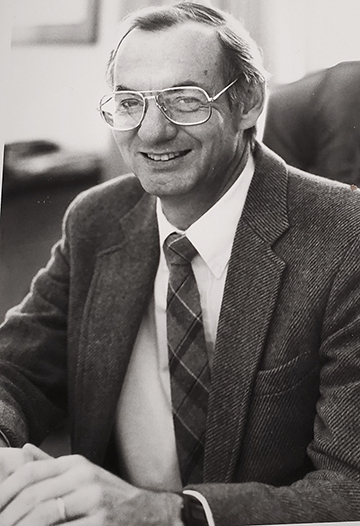
Jennings: I guess what I enjoyed the most—and I think it was also a lasting contribution—is that we were able to recruit a good number of good young people and make some excellent senior appointments during this time. That really is the most important thing, I think. We were able to do it by a combination of goodwill, finances, whatever.
There has been some realization of the growing number of people involved in student affairs. I think that has grown over the years, partly because of the expectations of the community we’re trying to attract—the students—and because of the in loco parentis role that the government’s passed on to us. For example, it used to be that the placement office was run by Bill Nash half-time. He’s a professor of metallurgy. But now we have a crew. Sally Asmundson [director, career development center] and four or five other people are doing career development, as it’s called now.
Cohen: What does that mean?
Jennings: They’re helping get students the jobs—arranging all the interviews and stuff. And the alumni use it. So those things have had to grow. We had to have a women’s center. We were attracting postdocs and female faculty, and they were saying, “Where’s the women’s center?” And the answer was, “We don’t have one.” And that gets reported back through the channels. We were losing ground because we weren’t modern. So there were pressures to, in a sense, have a competitive environment of service.
Cohen: I see. So that started during Everhart’s tenure?
Jennings: No, that was before. The seeds of this go way back.
Cohen: Is there a vice president in charge of all this?
Jennings: Sure, the vice president of student affairs. Placement reports to him, for example.
Cohen: Okay. That’s Christopher Brennen?
Jennings: Yes. It’s supposed to be a half-time job, but it’s not. And then there is the health service. We used to have one counselor—David Ells. Do you remember him? He was here when Harold Brown [Caltech president 1969-1977; d. 2019] was here. So we started with one good counselor. That’s not true anymore. The health center has grown a little bit as well. These are things that you have to have if you’re going to have a competitively attractive environment.
Cohen: And this isn’t just an Institute trend—it’s a national trend? Were other universities doing this also?
Jennings: Yes. In those areas we tend not to lead, but when we see that we have to have something, we do it. And it may be triggered by some event that pushes us over the edge.
Cohen: Did you get involved in trying to recruit more women students?
Jennings: Not the students, but faculty. There was a discussion about whether we should have a free faculty slot in some divisions. Throw it out on the table and the division chair would say, “It’s got to be a woman, but the best person wins. Bring your best candidate.”
Cohen: Did you do that? No.
Jennings: No, we didn’t do that. But we did certainly try to recruit women faculty in other ways. And everybody, I think, understood what we were doing, although we didn’t write it down as a policy. Whenever we got a woman candidate who made it through the hurdles, we made sure we didn’t lose her. We were extremely competitive once she passed muster. We really worked to see that she got here. That meant good lab support and whatever.
Cohen: More so than for a man candidate?
Jennings: Not more so than every man. But it was not just a matter of money—sometimes it was attention. We’d really do what was right and make sure she met the right people—find out what she needed and do it right.
Cohen: There still are not very many women.
Jennings: No, but there are a lot more than there used to be.
Cohen: But take geology and chemistry, where half the graduate students are women.
Jennings: Yes.
Cohen: So that’s where most of the administrative people got added, you say, in the area of taking care of students.
Jennings: Yes, but in other areas also. And for 20 or 30 years that’s been going on—these gradual build-ups. And then it comes in quantity—not just one at a time. You know, you expand the placement office one decade adding two or three people. And then you get a women’s center and it has three people. You have to really watch the associated growth.
And there’s the campus organization for women [OWC: Organization for Women at Caltech]. They had some good leadership one year. Regina Dugan was a graduate student in mechanical engineering. [Dugan subsequently became head of DARPA (Defense Advanced Research Projects Agency), from 2009–2012. –Ed.] A very nice person, tough. And then there was a senior research associate who worked with Lee [Leroy E.] Hood [Bowles Professor of Biology 1977-1992]. They were very capable people, very level-headed, but not at all shy. And they decided it was time we had a women’s center. So they started working toward it. And I told Everhart, “Look, you’re never going to have better leadership than this. This is really about as good as it gets. It’s far better to work with these people than to work with the next crowd. Because if they’re not successful, the next ones to come up are going to be irrational and strident.”
Cohen: Acting like women, you mean?
Jennings: No, no. This is just a human thing. If you say no to a group when they have reasonable leadership, the next round of leadership is not going to be reasonable. They’re going to go bring forward the revolutionaries.
Cohen: I see. So the whole women’s center concept came up under you and Everhart? And that was upstairs at Winnett [Student Center] at that time?
Jennings: Yes, and we worked on it. There was a search committee, composed primarily of women faculty, that interviewed candidates and so forth. And I had to explain to the faculty board that we were going to do this and why it was a good idea.
Cohen: And that was all right with them?
Jennings: It wasn’t unanimous by any means that we needed a women’s center. But I think there was a preponderance, and there was certainly strong support from the women faculty for it.
Cohen: So that got established. And now, of course, they’re in a garage behind Steele [Harry G. Steele Laboratory of Electrical Sciences].
Jennings: Yes. They’ve been moved around a bit, unfortunately. And it has not been as broadly attractive to the community as we had hoped.
Cohen: It seems to be a lot more active this year.
Jennings: Yes. I advised Kathleen Bartle-Schulweis [director, women’s center, 1994–2000] that the thing that’s going to make it is if you have good programs. Self-defense and rape counseling and things of that sort—you can do that as a sideline. But if you don’t connect yourself with the educational mission of this institute, which is to create new young scientists and engineers, you’re going to be marginal.
Cohen: I see. So you had this heart-to-heart talk with her. And did she change? Well, she’s still here.
Jennings: I think she saw the wisdom of it. And maybe she saw it all along but just didn’t have it brought home from above: This is what’s going to save you; all these young women are working with these problems. We know what the problems are: Women in science and engineering are going to be outnumbered for their entire lives; they’re going to have family responsibilities to deal with. Get after the main problems with a good program and then you’ll be secure.
Cohen: Okay. So what pleased you most?
Jennings: Recruiting people. I enjoyed working with the division chairs, because they were good people, too. And we had combined objectives. You know, we got some things done. Neugebauer and I pooled resources, as I think I mentioned, and got us a couple of good appointments and labs in solid-state physics. The Kimble decision was made before my time.
Use of provost discretionary funds
Cohen: Now, I remember you alluded last time to discretionary funds. The provost’s office has discretionary funds. Is that a set amount? Or do you go to the trustees if you have a good year?
Jennings: No, it’s a budgeted amount. But the problem is, you have to spend it in a funny way. You know, you’re recruiting. You have to promise it, but there’s only a probability that the offer is going to be accepted. So you have to overspend. And the question is how much. You’ve got six search committees out there. And if everybody is successful, it’s going to cost you $3 million, which you don’t have. But the likelihood is that it’ll only cost you $2 million, which you have.
Cohen: I see. So it’s a numbers game.
Jennings: Yes. Well, it’s management. It’s management in your particular circumstances. And then you have to be able to float things back and forth for a period longer than a year. So if you can get lucky and get the right people, then you say, “Okay. Well, we can’t do anything next year, or not as much. Don’t start this search committee right away, because we don’t have the money to promise something.” That kind of stuff is challenging.
Cohen: And when do you go to the trustees? Or do you go to an individual trustee for some help with something?
Jennings: Well, all contacts of substance with the trustees should be cleared through the president. He should know about it.
Cohen: So he’s the person that goes to the trustees?
Jennings: Yes. He’s got to give an OK. But sometimes for lesser things you’ll say, “Well, keep track of who’s got money sitting on the table and help decide what to do with it.” So you’d talk to Anderson or Nunnally. As provost, you’ve got an idea. You wonder if so-and-so would be willing to be put up the funds for just that, because we’ll be able to do this and this. And if Nunnally or Anderson thought that was a good idea, then you’d go to Everhart and say, “Look, we think this is a good idea. Is it okay if we give So-and-So a call?”
Faculty entrepreneurship comes to Caltech
Cohen: Did the problem of people starting companies come up while you were provost?
Jennings: Not to the extent that it has now. But it was going on, and we were looking at it. We did try to do those as individual cases and make sure that each division chair talked to the entrepreneur involved and determined that the person was playing by the rules.
Cohen: Meaning that only 20 percent of his time could go—?
Jennings: Well, you were allowed one day per calendar week. I had to make sure that it was “calendar week” in the faculty handbook rather than have people taking one day out of five and then spending a Saturday and Sunday working on it, too. One day per calendar week. And [you are not to] have line responsibility. So it’s really a question of commitment. And [vice provost] David Goodstein [Gilloon Distinguished Teaching and Service Professor, Emeritus; professor of physics and applied physics, emeritus; d. 2024] was very involved in writing the faculty rules for this. He’s very good at that kind of thing. Not every faculty member felt that other faculty members were doing things right. But I think when push came to shove, when somebody of authority talked to the faculty members, they found that the faculty were in fact following the rules. There were still one or two people who were following the rules literally but not the spirit of them, and we got to those guys at raise time.
Cohen: There’s always a problem of graduate students working on business projects.
Jennings: Well, the rules on that kind of thing were clear. But some people made it difficult. There was a professor in engineering who had a company. He would say that he had somebody else run the company and he did not have line responsibility. But he didn’t live in Pasadena, and he’d only come in a couple of times a week to teach his classes. Now, the problem is, in the climate of the engineering division and the department he was in, that was simply a real source of friction. But on the other hand, there are other parts of the Institute where working at home that much is a standard mode of operation and everybody’s happy. So you can’t single somebody out in a legal sense for that. You have to try to work the problem out differently.
Time to Step Down
Cohen: So you were happy to step down, I would guess.
Jennings: Well, I had spent five years as division chairman and five years as provost. I felt it was time to go. I felt a little burned out by these heavy-duty problems. And I felt, in some sense, that the problems were getting repetitive. I could have stayed longer; Tom [Everhart] would have been quite happy if I had stayed longer. But it was a good idea, considering the previous history of the provost tenure, to establish a precedent. Somebody comes in and does it for five years—a set term—and then leaves. Because we had recently gone through them too fast. So I was very determined to stick for five years—but I was not unhappy to step down. And the pace, the stress, is consuming. It’s a consuming job.
Cohen: Well, you get everybody’s problems.
Jennings: Yes. And it’s long, long hours. You get a little tired of some aspects of it.
Session 4, November 30, 1999
Caltech “fraud squad” investigates scientific misconduct in biology division
Cohen: Last week we talked about the provost position. And you said that you had a few more things you’d like to add to that.
Jennings: Well, one of the things that was interesting was the scientific fraud cases—two of them, actually—by people in Professor [Lee] Hood’s laboratory.
Cohen: How do you classify something as scientific fraud? Exactly what does that mean?
Jennings: They’ve actually been arguing about the definition, but it usually means falsification of data, plagiarism, or misappropriation of actual property. So we had two cases. This was in the late 1980s, I guess, and it involved postdocs.
Cohen: Both in Hood’s laboratory?
Jennings: Yes. Of course his laboratory is a very large laboratory. The one case was a falsification of data; the other was roughly similar. We were very fortunate, because Lee did a very smart thing. He quickly put together a couple of teams to find out what the real state of the data was.
Cohen: How did it get brought to his attention? Did somebody whistleblow or something?
Jennings: Yes, it was a whistleblow within the lab. One guy had made a substitution in what’s called a Southern blot. He had taken one thing and replaced it with what he thought it should be.
Cohen: You mean he took out a piece of data and put in—
Jennings: Well, actually it was a photograph—having all the bands that become distinct when they do what’s called the Southern blot analysis. And the other guy had done something a little more subtle. In writing up a paper draft, he knew about what to expect, so he blocked out his graphs, and he stuck in data points. You know—“This is how it’s going to look.” Already he was probably skating on pretty thin ice. But what he did then that was clearly wrong was to send the draft out for review with that falsified data. And that was caught in the review process.
Cohen: Before it was published?
Jennings: Yes, before it was published. The first one, with the Southern blot, was published. There had to be some retractions there.
At that time, Dave Goodstein, the vice provost, had put together a generic procedure for the investigation of fraud cases. So we did something that worked pretty well, I think. He and I and Sandy [Sandra] Poole, the Institute counsel, would get together every time we had a major thing going. We had to notify the NIH [National Institutes of Health], follow our procedure, put a lot of things on paper, interview people, and so on. And at each major step our little fraud squad, as we called it, would meet.
Cohen: Who was on this fraud squad?
Jennings: Dave Goodstein was the theoretical guy. I was the point man, because I had to sign the letters and make the decisions. And then Sandy Pool was the legal counsel. It worked quite well. And with Lee’s help, we sorted through everything. It was a very lengthy process. I got the last letter from the NIH when I was over in Thomas [Franklin Thomas Laboratory of Engineering] a year ago. An extremely slow thing. One of the guys never did admit it, although the evidence was overwhelming. The second guy did admit it. By the time we had sorted it out, both of them had left Caltech.
Cohen: For other jobs, I presume.
Jennings: Yes, for other jobs. We had to report these findings, and what we’d done, to the NIH. We had to decide whom we notified and how. You had to be very careful, because you didn’t want the NIH to come and do their own investigation. You want to make sure that they’re happy with yours.
Cohen: I see. So the whole idea is that they would accept your investigation.
Jennings: Yes—that we’d do a sufficiently robust investigation and they would support it and not come sit on top of us. And we had to do it right, of course. We were lucky, in retrospect, that we knew what the situation with the data really was in both cases. In some other cases, if it’s ambiguous about what the data really are—that was one of the problems with the [Thereza] Imanishi-Kari case that David Baltimore [Caltech president, 1997-2006; 1975 Nobel laureate in physiology or medicine] was associated with—it’s much harder; there was lots of argument about those data for quite a while. Whereas here we knew within a week what had happened. So then it was a question of process. Our procedures work quite well, but they’re rather general, so in each case you have to decide exactly what you can do. In some cases, you have to make a slight modification. You have an inquiry phase—you know, you’ve got these various phases and you make it clear to all participants where you are.
Cohen: Did these people come back for the inquiry?
Jennings: For interviews. We had a panel set up. Jim [James H.] Strauss [Bowles Professor of Biology, emeritus; d. 2021] was on it. Ellen Rothenberg [Ruddock Professor of Biology]. And another person or two, I don’t remember. They interviewed the people and came up with their findings.
Cohen: Did you personally have to deal with NIH?
Jennings: Only by correspondence. We would get these letters back from NIH and the three of us would try to figure out what they were really saying, compose a response, and make sure we all agreed that this is what we’d do. Then we’d fire it off. And then you wait another six months or a year for an answer.
Cohen: I see. So that’s why it was so dragged out.
Jennings: Yes. We got our part done fairly rapidly, but then we’d have to notify them at each stage of the proceedings. And they were pretty active with us at the beginning of it, when committee findings were coming in and so on.
Cohen: I can see where that could be a disaster. There are a lot of NIH grants here.
Jennings: Yes. We were very concerned that people who hadn’t done anything wrong and weren’t guilty of anything would be tarred by it, including Lee himself, who acted very fast and very sensibly once he found out there was a problem.
Cohen: Well, I can believe he would have been criticized for running such a big group that he didn’t know what they were doing.
Jennings: That’s right, and that criticism was going on at the time. In one case, he had actually read the paper and made some corrections in the text and so on. But he hadn’t really studied the figures, and the problem with falsification was in the figures. So it slipped by him. That could have happened to anybody, especially if you’re doing as much as he was. The point of that particular story is that we had the procedures in place and they worked. All universities had to have procedures in place to deal with this kind of thing. Whereas we used to say, “Well, we deal with them ad hoc and informally,” and so on and so forth. That didn’t cut it. The NSF and NIH really wanted everybody to have some procedures.
Cohen: I see. Now, were these the only cases you had here?
Jennings: The only serious ones, yes. I don’t think there was any other case that was—
Cohen: That was caught.
Jennings: Yes, that was caught or that rose to the level of requiring an investigation.
Cohen: I see. Well, that must have been pretty scary for a while.
Sexual harassment issues on campus: establishing policies & procedures; EEOC involvement
Jennings: Yes. And then there were the sexual harassment issues. The sexual harassment case I can’t say too much about, except that it was between a faculty member and a student. They had a consensual sexual relationship that should never have been there in the first place.
Cohen: Was this an undergraduate?
Jennings: No, a graduate student and a faculty member. It developed as a consensual sexual relationship, and then it went sour. Things happened and attitudes developed and charges were made. The problem here was that we had a policy on sexual harassment, but we didn’t have any procedures. And I had been provost less than a year—not very long. And Tom Everhart said, “We really ought to have some procedures,” so I put it on my list of things to do. And Goodstein helped with these kinds of things too. But, gee, there were just so many other things going on that we didn’t quite get to it. Then we had an actual case. So what I had to do was write up the procedures for the case and say, “Here’s my draft of what we intend to do,” and give that to both sides and to others. Of course, I’d get all kinds of flak.
It was all very high-gain emotional stuff. You’d get a lot of flak, at least from one side, about this and that. And you’d listen to some of it and not the rest. And the lawyers are there. And you’d say, “Okay. We’ve decided these are the procedures that are fair. They pass muster with the law, and I’ve taken into account some of your concerns but not all of them.” And then we had to use the procedures on the case. And that is not the way to do it.
It would have been much, much simpler to do it as it is done now. We have the published procedure—that there is going to be a little investigation committee, how it’s made up, and so on. So when something happens, we can go pull the procedure off the shelf and say, “Here’s the bare-bones way we handle these things, and this procedure has been vetted, and if we do it this way, it will be all right.”
Cohen: So that’s your legacy. You left procedures both on fraud and sexual harassment.
Jennings: [Laughter] Well, the fraud one is Dave Goodstein’s. But the sexual harassment one I did a lot on. And it had to go through the faculty board this time, too. That was very—
Cohen: You mean the regular faculty board?
Jennings: Yes. The policy is that there won’t be any tolerance of sexual harassment. And there are two kinds. There’s physical aggression and quid pro quo that everybody understands, and then there’s a hostile environment, which is more subtle, at least the way the law was written at that time. So we had to have this procedure, and we had to say that some things were essentially not allowed. Do you actually forbid other things? Or do you say these are discouraged? If things develop, whom do you notify? If there’s a relationship between a staff person and a supervisor—you know, you have to think of that too—then that’s a conflict of interest in terms of working hierarchy, pay, and so on. So you have to have a transfer or a change of supervisor.
Cohen: Isn’t there somebody in charge of that here? Or is that part of the procedure now?
Jennings: Well, it’s part of the procedures now. Of course, the procedures are slightly different for the students, because they have a different environment. It’s slightly different for the staff. And it’s slightly different for the faculty.
Cohen: But all that’s in place now.
Jennings: It’s in place now. Dave Goodstein and I wrote a long document on sexual harassment. I did it as a teaching document. But then in a couple of years, it was in the news and there was more awareness of how these things worked. You could read about cases in the paper and in academic journals like The Chronicle. So people got used to the idea of having procedures to address the problems. And then, about a year later, they had a little committee that boiled things down and made the staff, student, and faculty procedures as similar as possible and stripped away some of the unnecessary verbiage.
Cohen: So these were what occupied a lot of your time?
Jennings: Yes, and I got some criticism from faculty members: “Gee, the provost shouldn’t be involved in that stuff. I want the provost to be thinking about other things.” Which would have been okay, except we didn’t have the procedures. It had to be the provost doing it. You just had to be in a position of authority.
Cohen: Yes. Did the president involve himself in any of this?
Jennings: No, because he’s the last appeal. For staff actions—harassment of any kind or wrongful termination and so on—the president, by one mechanism or another, is nearly always the court of last appeal. So you don’t get the president involved in the judgment itself. And if you think about it, that’s a pretty good principle.
Cohen: Oh, sure. You have to have someplace to go to, hopefully, that’s internal. Now, who gives you a hard time on this? I understand [it would be] NIH and the grant-givers for the fraud. But is this the federal government or the state government?
Jennings: Well, the feds are certainly interested in sexual harassment issues. The EEOC—Equal Employment Opportunity Commission—can involve themselves in these kinds of cases. The plaintiffs will call in the EEOC to see what they have to say. If the EEOC weighs in on the side of the plaintiff, that is a major plus for the plaintiff. Because if he or she subsequently goes to trial, then it’s an arguing point. The plaintiff doesn’t have to have the approval of the EEOC to go to trial, but it helps. And most of the time the plaintiff will wait to see if he or she can get a favorable ruling.
Cohen: And did this case here go anywhere?
Jennings: It went to the EEOC. So we were worried that they might get involved. But then in the end, I negotiated a settlement with the plaintiff.
Cohen: And are these people gone from the Institute, too, or are they still around here?
Jennings: The professor’s still around, but the graduate student finished up with another advisor.
Cohen: Right. Now, how about other kinds of harassment?
Wrongful termination case in athletics department
Jennings: Well, wrongful termination. I got involved in one with a coach. And coaches, like instructors, are members of the faculty, because they teach. That’s the rationale, although this is arguable. And only some coaches are members of the faculty—the ones that are on at least a three-year appointment typically and involved in regularly teaching classes. Not every guy or gal who comes in and out is a member of the faculty. But a few of them are. There got to be a tiff between the director of athletics and one of the coaches here, so the coach filed a complaint. So I interpreted the rules that we had written down. I said, “This is how I interpret it,” and I gave that to both parties.
I wanted to try an informal resolution of this, so I sat down and spent quite a bit of time talking to both people, came up with something that I thought might work, and it was rejected by both of them. [Laughter] So I struck out completely. And I said, “Okay, you’re going to go to grievance then.” And because this case had very little to do with being a faculty member—it’s really more of a staff situation—I said, “In my judgment, this is the kind of procedure you should have. It’s essentially that of a staff grievance, to be judged by your peers.” So that went forward. The coach just had blind spots. Everybody that knew him or knew anything about him knew that he was going to lose, because he didn’t have a case. He didn’t have a real case.
Cohen: I imagine this takes a lot of time.
Jennings: The people things take a long time, yes. But in that case the procedures worked, so it didn’t take as much. So we changed from the old informal ways to the new, more formalized structure that we have now, which is imposed on us, largely.
Cohen: So you think that’s good to have the procedures all in order?
Jennings: Well, if you have the procedures and they’ve been vetted and you follow them, then you really are protecting the Institute from subsequent liability. People can always complain, they can always sue, and so on. But if you start inventing it as you go along, then you’re so vulnerable—one, just to making legal mistakes, or mistakes that would be viewed as legal mistakes, and two, making other kinds of mistakes too. You know, it helps to have set procedures. The lawyers will say, “Well, what is due process in these circumstances? Who has to be notified?” If they ask, “Well, how are you going to handle it?” and you say, “I’ll think of something; I’ll use my best judgment”—that doesn’t work anymore.
Cohen: Yes. In some ways that’s too bad, but I guess it has to be. So those are the problems. Are there any joys to being a provost?
Jennings: Well, I told you last time. The fun part, I think, is recruiting good people and helping them get started and seeing them succeed.
Cohen: So how long has it been since you’ve given all this up?
Becomes acting VP for finance, 1995; scope of responsibilities
Jennings: I decided a five-year term was enough for me. Problems were getting a little repetitious. I was getting kind of burned out. So a certain time, roughly, had been arranged with Tom [Everhart]. And then, at that time, Dave [David W.] Morrisroe [Caltech VP for business and finance, 1969–1995; d. 2002] stopped being the vice president for business and finance and treasurer, and just kept the treasurer’s role. There are a lot of confidential aspects of that, but you can interview somebody else about them. If Tom Everhart wants to talk about it, let him.
Cohen: You’re talking about when Morrisroe was stepping down?
Jennings: Yes. At that time, in effect, I essentially just walked down to the end of the hall and became the acting vice president for business and finance [1995]. And Dave stayed as the treasurer. He still ran the treasurer’s office, with Sandra Ell as assistant treasurer. And people like Greg van der Werff, who’s director of property management, worked over there. So he stayed there. Tom had to cut it cleanly one way or another, so that people knew whom they worked for. So I did that while they searched for a—
Cohen: So what did that mean? What did you do exactly?
Jennings: Well, a lot of people report to that vice president’s office. I don’t know if I can name them all. But there was the physical plant, with Bob [Robert] Fort and Bill [William] Irwin and that whole operation. The treasurer’s office didn’t, because Dave Morrisroe did that. But sponsored research, finance, security, audit—let’s see. It’s easier to think of them in the new setting. There were ten people that reported to that vice president. And you had the interactions with JPL [Jet Propulsion Laboratory] over the finances and contracts. And the controller and the director of federal finance. Budget, of course, goes through there. There wasn’t a budget office—well, I guess the closest then was Brian Jenkins [assistant director of finance/assistant controller].
Cohen: It sounds like a huge amount of work.
Jennings: Yes. There’s just a lot that goes on there.
Cohen: And were you familiar with any aspect of that?
Jennings: Well, human resources. That’s about it. The human resources office—
Cohen: Which you are the most familiar with, right?
Jennings: Yes, having been provost, I was familiar with Human Resources. It’s not that different. We’d get involved with staff things as provost. The physical plant—well, I’m a civil engineer, and I was always interested in the facilities. So even as provost I was very much involved in rehab jobs, because I was interested. I was willing to put a little extra time into that, because I was just intrinsically interested in construction and things of that sort. So those came pretty easily. The budget was not too much of a stretch either, because, as I mentioned, as provost you really have to know the budget. You and the president together should really know the budget. Whoever prepares it, whoever does it, has got to know what’s going on. So that wasn’t such a big stretch. The treasurer thing maybe would have been more of a stretch, but I didn’t have to do it—not the first time around, anyway. The issues the first time were the endowment spending rule and how much we were actually spending on the endowment, because it was a complicated process. So when I came in as acting vice president—I’ve done it twice now. So both times I did the same thing. I’d say, “Okay, I’m not here to make great big changes.”
VP for business & finance, second time around, 1998
Cohen: You said that you did this twice. When was the second time?
Jennings: Oh, just recently, after [John R.] Curry [vice president for business and finance, 1996-1998] left.
Cohen: I see. But the first time around, Morrisroe was still here.
Jennings: Yes, handling the investment committee and the treasurer’s office. I did all the rest. Just to give a little information about that: After Dave retired from the treasurer’s job as well, they searched and got Philip Halpern to come in [1996], and he and Curry modernized the endowment philosophy and so on. And then Philip Halpern left and Sandra Ell became acting treasurer and was acting treasurer when I came in the second time [1998]. And recently, as you know, she’s been appointed treasurer. So by the time I became acting vice president for business and finance the second time, although this time the treasurer did report to me, Sandra had been acting treasurer for a year. She had been over there for a long time and had good people. It didn’t take a whole lot of time. We worked together and reviewed things and so on, but it wasn’t as if it were a situation in trouble that took a lot of attention at a fundamental level—far from it. It was really done well.
Preparing financial reports for trustees; overseeing endowment; federal auditing
Cohen: Now, did your business and finance office have to do a report for the trustees?
Jennings: Oh, you bet.
Cohen: How does that work?
Jennings: You spend a lot of time in that office preparing things for the board of trustees. It’s budget, it’s rehab, it’s investment, whatever.
Cohen: How often did you have to report to the trustees?
Jennings: Something every month at every meeting.
Cohen: So every month you had to have a report for the trustees?
Jennings: It seemed like every month. Investment committee meetings were four times a year then, I think. There are now three. And that had to be done. The budget comes up twice, once preliminary and once for approval. And then you’ve got all of the projects—the buildings and the capital budget and all that. Then you have the personnel policies committee that meets twice a year. And you review the personnel policy matters with Tom [Thomas W.] Schmitt [assistant vice president, human resources].
Cohen: I see. And I imagine the trustees just rubber-stamp all this.
Jennings: No, they do not. You want to make sure the documents are clearly written, that you have a clear position, and that you’re asking them to approve something sensible and understandable. Or that you’re just giving it to them for information. But if you give them something muddled for a decision, you never know where it’s going to land and you just confuse them. Nearly all of these people manage big organizations themselves and know what they want to see.
Overseeing endowment; troubleshooting general budget
Cohen: Did you enjoy doing that?
Jennings: Oh, yes, for a while. I did enjoy parts of it. I wouldn’t want to do it as a career, because there’s kind of no intellectual heart to it for me. It’s just work. [Laughter] Interacting with the trustees and interacting with the people is the most fun. Sometimes getting the puzzle, or problem, solved has some satisfaction. But the problems are mostly arithmetic problems, budget problems. The first time I did it, the real question was how the endowment was being spent.
Cohen: The endowment’s not supposed to be spent. [Laughter] Is that not right?
Jennings: Well, no. The endowment earnings gets spent, usually as a percentage of the total value of the endowment. When you come in as acting vice president, you decide on probably one or two problems that you really have to work on. And there are other problems that are simply not that critical. Your job is just to keep things going and solve individual problems as you go along. Other parts of the operation are running very well, and you just want to keep the people going.
Cohen: What was the endowment problem?
Jennings: Well, there were two problems with it. One was that it wasn’t clear—because the procedure was complicated—exactly how much was being spent from the endowment. And the second problem was that although we were not sure exactly, it seemed like too much. [Laughter] So we had to simplify that. There were some subtle features to it, because an endowment consists not of a single fund. It’s invested as a single fund, but it consists, I think, of something like 700 different funds. Each one buys shares, in effect, in the endowment investment pool. At the end of the month, the shares in the endowment pool would be valued at so much per share, so if somebody were to give $50,000 for an endowment for optical astronomy, then that $50,000 would buy so many shares. And then you’d lock on to the boat like a mutual fund.
Cohen: I see. And does that mean that that particular thing, like astronomy, would get that piece of the pie?
Jennings: Each year it’s decided that there will be a payout of so much per share, in effect.
Cohen: So in some sense, the largesse of contributors goes to the people they’re interested in. It’s not given to the Institute as a whole.
Jennings: Yes. And there are good things and bad things about that. There has been a trend, nationally and here, for more and more gifts to be restricted. So there is a concern about the growth of the unrestricted endowment, which is needed for the general budget. So that was one of the questions. And it turns out that you have to look at the kinds of things that are in the endowment. Fortunately, we do have large chunks of unrestricted endowment. One I’d like to point to is the Liliore Green Rains gift. One bright day about fifteen years ago, somebody development had never heard of gave us $40 million.
Cohen: You mean it just came in?
Jennings: Yes. Similar amounts went to Stanford and elsewhere, too. It just came in over the transom, unrestricted. And there are some other historical things in the unrestricted. endowments Then there are other kinds of endowments that have very general restrictions on them—like “in support of engineering.” And in a practical sense, the earnings from that endowment can be melded in with the general budget stream that goes to engineering. But it’s acting like general budget money.
Cohen: And then someone like the provost has to make the decision as to whether [some department or other] can have that?
Jennings: Yes. And then there are more [narrowly] restricted gifts. For radio astronomy, say. Again, it’s a little gray, and it has to be set up. Because the provost could say to the division chair, “Okay, look. This budget line you’ve been getting, at least part of it, now is in concrete. That doesn’t mean you automatically get more money. Maybe you’ll just get a little bit more money.” So those things have to be worked out. But sometimes the gift is so specific that it doesn’t help the general budget at all.
Cohen: How long were you at this the first time?
Jennings: About eight or nine months. So what we did was find out those things and sort the endowment into a couple of classes and find out what the taxes were along the way. Most institutions—and Caltech is no exception—solve some of the pressure on the general budget by, in effect, taxing the earnings of the restricted endowments for the general support of the Institute. And there are various processes to do that. I sat down with Georgia Morton [assistant director of finance], who is the one who actually did it. I said, “Tell me what you do for a whole year in managing the funds. What actually happens?” And so she went through it and I wrote it all down and showed her what I thought I heard.
We worked on that a couple of times—the allocation process and where any kind of taxing was done, and then how the allocation worked at the end to get the money back in. And then, when she and I agreed on it, I showed it to the other people in the controller’s office and said, “This is what Georgia thinks is happening and I understand to be happening. What do you think? Is this the way it actually happens?” So Brian Jenkins and others said, “Yes, I think that happens.” So then I went back and told the president and Nunnally and others, “Here’s what’s really happening. Here’s your effective draw.” Then we could tell the board, “Here’s what it is.”
Cohen: I see. So you did this for a year, or nine months, and you actually left things a little neater when you left than when you came in.
Jennings: Yes. And it was at that stage that I told Curry, “Here’s how much we’ve been spending, exactly. You can normalize it with respect to the value of the endowment at this given time or with respect to a moving three-year average, which is the way the rules work. But what I’ve done is tried to get the total down, which is the underlying problem.” So I just froze the numerator—you know, it’s a ratio—and let the denominator grow as the endowment grew. We were spending over 8 percent of our endowment at that time.
Cohen: Oh, that sounds bad.
Jennings: That’s pretty high. Very conservative numbers are on the order of 4 percent. And that’s 8 percent of the endowment at the given time, because the endowment was rising. Based on a three-year average, you get a different number. So you have to ask details about how the numbers are calculated and so on. But in order to bring it down—the trustees wanted to bring it below 6 percent, and we said, “Look, we can’t do it all at once.” So we brought it down about half a point by just saying that the general budget allocation for the endowment would be exactly the same in dollars as the previous year. The endowment was growing in the meantime, so the effect was to bring it down. I then told Curry, “Look, that’s just a one-year fix to get us in the right direction. You need an endowment spending rule. So you’ve got to make up one with the president, and get the investment committee and the board of trustees to buy it. So they have a rule now.
Auditing issues & complications
Cohen: Right. So then you left that for a period of time and became a professor again.
Jennings: Yes, for a couple of years.
Cohen: And then they dragged you in again last year.
Jennings: Yes. And this time problems were altogether different. The treasurer’s office was working fine, which it wasn’t before. Even though it hadn’t reported to me, [I knew] it was still in real good shape. [By this time,] Halpern had gone in and they had modernized it. Sandra was up and running. So it was working very well. Oh, audit reports to this VP, too. The audit situation—we didn’t have the Stanford-type atmosphere, but we had the second round of that in our audits. Remember Stanford, the yachts—which actually was a mistake—and all the attention that that caused? We got a bit of that. We just dodged [Rep. John] Dingle [chairman, House Oversight and Investigations Subcommittee] during that time. His staff was asking questions.
Cohen: Is that right?
Jennings: They came sniffing around and asked us some questions. I don’t think they actually physically came, but we were getting questions that one of his staffers in Washington supplied—this, that, and the other. But by then we had pulled all the pizza out of the accounts by then—and flowers and other stuff. Even though they were flowers for the spouse of a dead faculty member, it was just not worth arguing about. We just took all that stuff out of overhead-bearing accounts—pizza for the students, or whatever.
Cohen: Did you put them in another account?
Jennings: Yes, in restricted accounts.
Cohen: But not anything that was going to be overhead from grant money.
Jennings: Yes, that’s what I mean—not anything that the federal government would end up paying for. It was all small stuff, so it was just a matter of reallocating things to division discretionary accounts or something like that. It was then our money, not the federal money.
So we got that cleaned up. But what we found the second time was that the audit situation was not as good, in the sense that the situation was a little unstable. The federal auditors had become quietly but consistently more and more aggressive. They were asking all kinds of questions we couldn’t answer, because our data were insufficient. We had very poor data. We had to re-create data to answer what appeared to be simple questions. And we were seriously behind on our audits to the federal government, so that was a problem.
Cohen: How big is the office that does this?
Jennings: There are about eleven people over there. It was that plus federal financial accounting. The auditors do the auditing. Federal finance does all the record-keeping and collection of the money and so on. It was that area that was in bad shape. Curry had come in and cleaned it out, but he hadn’t rebuilt it yet. So they were really limping along. It was a real problem to meet deadlines. We had to hire consultants. And that hadn’t been a problem before.
Cohen: So the Stanford business was a real wake-up call for all the universities.
Jennings: Yes. The people described it to me as two rounds. There was a first round, where the government would go after the egregious stuff, and most universities decided, “Okay, let’s get on top of this and the other issues involved.” They left Caltech alone in the first round, but they didn’t leave us alone in the second round, and we weren’t prepared. The second round, they were asking questions about all kinds of practices—whether costs were allowable or not in terms of the federal rules.
Cohen: How did they get enough people to go to all the universities?
Jennings: Well, there’s a crew stationed permanently here. About eight or ten federal auditors live here permanently. There used to be two. And then there’s another big crew at JPL.
Cohen: You mean that these are federal employees?
Jennings: Yes.
Cohen: Just watching your books?
Jennings: Just doing their audits, yes. So the scrutiny has increased dramatically. And we did not ramp up and keep—
Cohen: And all of these auditors are on the federal payroll?
Jennings: You bet.
Cohen: [Laughter] I’m stunned.
Jennings: Yes. And they go after funds and procedures: how the library is charged to overhead, how travel is worked, how petty cash is handled. And also we have the IRS sitting here now. They’re doing another audit.
Cohen: And they’re permanently here also?
Jennings: No, they’re just temporary.
Cohen: You’ve got to give them office space?
Jennings: I don’t know if we give them office space or not. Some of them are in trailers. Some of them may have to provide their own. They have at least one office, I think. But when I last heard, they were still in the data-collecting mode, although they had one finding at the IRS. Tom Schmitt and Tom McLoughlin [acting controller and director of finance] had kept track of the process and said that the IRS had asked for the equivalent of 375,000 sheets of paper.
Cohen: Now, is the hope that all this is going to be on the computer now?
Jennings: Well, the systems, yes. Oracle, whatever its problems, will be much, much better for this kind of purpose than anything we’ve had before.
Cohen: I’m overwhelmed. I had no idea this was going on.
Jennings: Oh, yes. And the cost of dealing with it has gone up.
Cohen: So where does that money come from, for dealing with these things?
Jennings: It comes right out of the general budget. It comes out of overhead. Most of it is, fortunately, chargeable to overhead, because it’s clearly dealing with managing federal contracts. Sponsored research is all chargeable, and so on.
Cohen: So you were happy to leave this then?
Financial & accounting concerns at JPL
Jennings: Well, again, I enjoyed it for seven or eight months. We had a cash problem with JPL at the time—which is one of the more serious things we had to deal with—because of their Oracle system going live and the question of billing and paying. So from campus we had to loan them money.
Cohen: I thought JPL was supposed to give you money.
Jennings: Yes, but the way they get the money is by billing the federal government. And when you bill the federal government, you’d better not make a mistake. Because if you overbill them, it’s subject to penalty and possible criminal action. If you underbill them, you don’t get any credit for it, and you might have trouble collecting the difference. So what they were finding out was that they were having trouble getting enough check runs—I mean, check runs that had everything in them accountable. So what they did was stop paying people for a while until they could get it sorted out.
But then the vendors started getting antsy. People needed their money. And some of those are pretty small local businesses. They started going to the newspapers and so on. And we were legally responsible for paying them. We as a corporation, Caltech—nonprofit or not, it doesn’t matter—are responsible for paying these things. And they had a contract: “I will supply so many widgets and you will pay me so much.” We had no legal defense at all for stalling, except the usual business practices—30 days or 45 days or whatever it would be. So we had to essentially loan JPL money so that they could pay the vendors and then get it straightened out later. And NASA had changed the JPL contract at the same time.
These two things together—the new computer system and the new NASA contract—really made it difficult, because NASA wanted everything to be charged to the old contract up to a certain date, and then everything from there on would be chargeable to the new contract. Well, that seems pretty simple. But if you have a subcontract and you’re building a $50,000 instrument, and there is a completely artificial deadline somewhere in the middle of your six months—you have to decide how much is charged to the old contract and the new, you have ongoing projects with things in transit. It’s completely artificial, from the point of view of the science and engineering—this cut-off, in the middle of putting in a new computer system. So this just drove everybody nuts. We’d go up to JPL a lot.
Jennings: Caltech, from NASA’s point of view, isn’t two places, it’s one place. Caltech manages JPL. And how we worked it, at some stage, was with a handoff from the numbers they’d generate at the lab down to federal finance here, and then we, Caltech, would bill the federal government for the money for JPL. An interesting thing is the size of it. If you think about it, there’s about $1.25 billion a year spent at JPL and some 200-odd working days. They spend money at the rate of $5 million a day. [Laughter] So you can’t put a hiccup into that kind of cash stream for very long before you get to real money, from the campus point of view. It’s five times what we spend per day; we spend maybe a million dollars a day. Meanwhile, we’re having our own problems. JPL wasn’t very strong in accounting there at the time, but they are now. They’ve got some more people. But essentially the process was designed by the people on campus.
Cohen: And comes out of this office?
Caltech–NASA management contract for JPL: Resolving issues
Jennings: Yes. And that was a real problem. I mean, JPL had its problems because of the change of contract and the new system [brought on by the year 2000 changes]. It used to be simpler at JPL: You’d add up everything you had spent, make sure that you had actually spent it, give it to the federal government, and they’d pay you. Now it’s much more complicated than that.
Cohen: Was the government worried about dishonesty?
Jennings: We never found a bit of dishonesty.
Cohen: Do you mean that the time had passed for simple methods?
Jennings: Yes, it’s gone. Sometimes, as near as I can tell, they would do things like, “Well, let’s send in a bill for $200 million, but we’re not sure about $5 million of it, so let’s ask for $195 million and we’ll bill that $5 million next time when we get it straightened out.” They wouldn’t keep a good record of things like that.
Cohen: So it was often governed by expediency?
Jennings: Yes. And sometimes instead of billing for the exact amount, they would round it off.
Cohen: That seems incredible to me. [Laughter]
Jennings: They’d have expenses for $125 million and all kinds of change, and they’d say, “Well, let’s just bill $125 million.” And they had been doing this for decades. If you think of your checking account, and if you’d done that for that long a time, you’d get random noise.
Cohen: So who was the whistleblower on this?
Jennings: There wasn’t a whistleblower. This happened when NASA decided they’d change the contract. They change a contract every five years. They decided, “Well, we’ll close off the old accounts and start new ones.” And when they started to do that, they realized that things were not quite right. And on some things we made some really stupid mistakes, like we forgot to bill the government for Ed [Edward C.] Stone’s [Morrisroe Professor of Physics, Emeritus; JPL director, 1991-2001; d. 2024] salary. [Laughter] And that’s kind of dumb.
Cohen: So this was just one facet of what goes out of that vice president’s office, along with everything else? If this were a commercial enterprise—you know, a regular company—wouldn’t there be many more people in charge of these things?
Jennings: Yes. We’re not in the accounting business. We’re not going to make any more money by any of these processes. But we stand now to lose in a way we didn’t before. And I think that’s the reason you’ve got to have better systems—to keep us from being penalized.
Cohen: Do you think also that because all this [computer] technology is suddenly available, there’s too big a push to change things too quickly and a certain element can’t keep up with it?
Jennings: Well, it’s certainly a problem of skills in the accounting force. Yes, that is a problem. And also the quality of the systems makes it easier to ask questions that you couldn’t ask before, because it was patently impossible to go through zillions of records. Well, now you can ask a lot more of a robust system than you could in the past. Now the federal auditors will have a terminal like everybody else in accounting, and they can ask whatever they want. So we have to run a completely open show that way.
Cohen: Once all this gets in place, life will be in some sense simpler.
Jennings: Yes, but there isn’t going to be one day when it’s all in place. It’s an evolving thing.
Involvement with business & finance search committees
Cohen: So you kept this job [acting vice president for business and finance] until—?
Jennings: Until Bill [William A.] Jenkins came [VP for business and finance, 1999–2002]. I was on the search committee for both Curry and Jenkins. And I was on the search committee for the new controller at JPL. Part of the business of the fallout at JPL was that the business manager has left and we now have a chief financial officer there, who’s up on the ninth floor along with Ed Stone, Larry Dumas [deputy director 1992-2001], and Kirk Dawson [associate director 1993-2001]. So instead of three of them, now there’s four.
Cohen: Those are nice big offices up there.
Jennings: Yes. So the business part now is part of the top administrative structure at JPL. That was at the insistence of the board. They tried to push it through last time—by “last time,” I mean when we got the business manager, which happened when I was acting VP before. The trustees were pushing to have better financial management at JPL, and the JPL guys didn’t want to do it at the level that the trustees did. So they compromised and got a business manager, who was really quite good. But the next time the problem came around in a different guise, the trustees just insisted, “You guys get a chief financial [officer].”
Cohen: Well, these trustees are used to running big businesses.
Jennings: That’s right. And this time Ed, and others too, did not resist. They felt there was no argument—we really needed it.
Cohen: So all this is getting put in place.
Jennings: It’s interesting. It’s very stressful and interesting. And as I said, the problems the second time around were altogether different from the first time.
Cohen: Now, how difficult was it being on these search committees?
Jennings: That isn’t an onerous job at all. Typically you get a headhunter experienced in the business side. You use headhunters a lot. They do a preliminary screening of candidates, handle the advertising, and get it down to maybe ten or twelve résumés. So we look at ten or twelve résumés and decide on interviewing four or five. That community is very used to using headhunters, whereas we never use them for academic positions. At the level of president, nationally, people use them a lot; some don’t. We had one on a consulting basis for the search committee for [David] Baltimore. But, as I think I mentioned earlier, our contacts on the faculty side were far better than their contacts. On the business side, it’s the other way around. Who do I know at MIT in business? I only know Curry, and he came from here; I don’t know anybody else. But in engineering, it’s different.
Cohen: So you served on all these committees then?
Jennings: Yes, because I was the one who could tell them what the job was really like. And you’ve got to have that be available to the candidate in some manner. It always boils down to trying to sell the job to the really good ones. You have to do a bit of that—or be prepared for it. The job is a big challenge for them; they want to feel excited by it. They want to make sure that the guy who’s the acting VP doesn’t want the job and they’re not just wasting their time in a charade. For legal purposes, that sometimes happens. So I could assure them that I had no intention of doing this permanently, and I could tell them some dimensions of the job and show them how the office was organized and things of that sort.
Cohen: Right. So now you’re again back in your professor’s office.
Jennings: That’s right.
Cohen: How did that transition go?
Jennings: Well, it takes a little getting used to. [Laughter] The first thing you notice is that the pressure of your schedule drops dramatically. I used to carry my little three-by-five cards every day with all the appointments.
Cohen: You didn’t have a PalmPilot? [Laughter]
Jennings: It actually is a little old-fashioned. I use cards because I can carry them around. Keeping control of your own schedule is a big part of the job.
Session 5, January 13, 2000
Involvement with Earthquake Engineering Research Institute & other technical societies
Cohen: Welcome and Happy New Year. Today I thought we might talk about some of the technical societies and organizations you’ve been involved with.
Jennings: Okay. I think the primary technical society has been one of the smaller ones, actually—the Earthquake Engineering Research Institute [EERI], which is really a misnomer. It’s the earthquake engineering and hazard reduction society, or something like that. It has engineers, seismologists, government officials, social scientists, and others who are interested in the earthquake problem.
Cohen: How did that get organized? Where did it come from?
Jennings: Well, it came from an advisory committee of the U.S. Coastal Geodetic Survey in the 1930s, and it grew out of that into, first, a private, by-invitation-only society with fewer than 100 members. It opened up, because of pressure from us—Clarence Allen and others—into a public society in the late 1950s or early ’60s, as far as I recall. And it’s since grown to maybe around 2,000, or a little less than 2,000, members. And they put on interesting conferences yearly. Someone always puts together a program for that. Plus, they sometimes have, in recent years, a topical program the day before, which is pointed at some specific topic of interest, like the results of a recent earthquake or things of that sort. So it’s where the nitty-gritty goes on.
There have been other societies that are important to this field. One of them is the Seismological Society of America. Although it has involved less engineering in the last few years, some of the things they do are very interesting to engineering. And then, of course, the American Society of Civil Engineers sometimes has specialty sessions. But that’s such a huge organization—there are well over 100,000 members. You kind of get lost in that if you’re in a specific technical field, even though the engineering-mechanics division and the structural division have emphasized earthquake engineering from time to time.
So I’ve been active in a number of those technical societies over the years and served on the board of directors of the Seismological Society and the EERI. I was president of both of them. In fact, I was president of both of them at the same time for about three months. [Laughter] But those administrative responsibilities were before I became provost, essentially, so it’s been quite a while. And the societies have changed in that time. The emphasis has changed.
The SSA, the Seismological Society of America, essentially puts out a real good journal and has annual meetings, and doesn’t do too much else. They used to share their executive director with the EERI, and that’s where all the proactive stuff happened—the programs, going to investigate earthquakes, some outreach. They put together a public lecture series for engineers not familiar with earthquake problems. As it’s evolved now, they don’t share the same office anymore. The Seismological Society still has a very small structure, whereas the EERI has four or five paid professionals.
Cohen: So who supports these organizations?
Jennings: Well, for the EERI, membership is part of it. They make some money on their meetings. Every four years they host a national conference on earthquake engineering. They get some funds from the National Science Foundation, and from other places, for certain programmatic activities and educational outreach. So they’re kind of a proactive group. They’re a little different from most technical societies; they’re much more proactive. They can do studies for people. They administered—and still do, I believe—a learning-from-earthquakes project funded by the National Science Foundation. So they do the administrative part of putting the teams together to go to Turkey and Taiwan to see what went on and get a report back about the earthquake effects.
Cohen: I see. That’s quite interesting. That doesn’t sound like most professional organizations that I know.
Jennings: No. In some ways it was way ahead of some of the recent push in the National Science Foundation for people to get a little more involved in the implications of the research. This is something that we’ve quite naturally been involved in for a long time. And now I’m pretty well a regular at the EERI meetings. Among the others, I just kind of pick and choose.
Work on 2000 earthquake engineering & seismology handbook
Cohen: What technical organizations are you involved with now?
Jennings: I’m involved with Hiroo Kanamori and a fellow named Willie [William] Lee, who’s a retired U.S. Geological Survey employee. We’re putting together—primarily under Willie’s leadership—one of these big handbooks, as they’re called in the field. They’re not really handbooks; this one is essentially two big volumes on the state of the art in 2000 in earthquake engineering and seismology, and we’re the editors of it.
Cohen: You’re asking people to contribute articles?
Jennings: Yes. I’ve got some 50 chapters. And we’re asking people to contribute and review manuscripts. I also just finished a penultimate draft of a very large paper for this, which is essentially tutorial. It’s an introduction to the dynamics of earthquake response. The idea is that this big handbook, which is put out by the International Association of Seismology and Physics of the Earth’s Interior, will have separate sections that would be useful in classroom work for the kind of earthquake-engineering classes we teach here. So I’ve talked a few of my buddies into contributing on that basis.
Cohen: So that’s strictly education and public service.
Jennings: Yes, right. I think we each get a copy of the books. [Laughter] So I’m doing that.
Involvement with California Council on Science & Technology
Another thing that takes a bit of my time in this arena is the California Council on Science and Technology.
Cohen: Now, that’s a rather new organization.
Jennings: Yes. It was put together by the various universities in the University of California system plus the leading private universities—Stanford, USC, Caltech.
Cohen: These are the sorts of places with research programs?
Jennings: Yes. These are essentially the research universities. And not all the UC schools—
Cohen: Are part of it?
Jennings: Not all of them, no. Each of the participating schools contributes about $35,000 a year to keep this running. It was started when the State of California proved itself so disorganized in responding to requests for matching funds when California sought the Earthquake Engineering Research Center and also SLAC [Stanford Linear Accelerator Center].
Cohen: Oh. It lost out to Buffalo [for the earthquake center].
Jennings: It lost out to Buffalo. The California process just was not there, in terms of responding to the initiatives and the new way things were being done—not the way that other states were doing, like New York. So the universities formed CCST. David Goodstein has been on the board for many, many years, virtually since its inception. There’s a board, kind of like a board of trustees but a little more proactive; they sign off on the budget and sometimes suggest projects. And then there’s the council itself, which has maybe 40 or 50 people in it. They meet three times a year. It’s composed of people from universities and industry. I don’t know if there’s government involved now, but it’s not proscribed. I mean, these are technical leaders of various sorts. And we take up various topics. We’d like to eventually acquire the role and the status within California that the National Research Council has in the nation as a whole—to be thought of as a reliable and unbiased source of technical council and advice within the state of California, which the state of California really does need.
Cohen: Do they realize that they need it?
Jennings: Yes, in scattered ways. But they’ve gotten into a situation where they’re not very technically sophisticated in Sacramento. They don’t have a mechanism for getting advice, and they tend to want it so quickly that it’s hard to respond. We’re working with that. I’m in a three-year term as chair of the council. I’m starting my second year this January. And it takes a bit of time, although it’s primarily a staff-run operation, where the people on the council are mostly there to guide and react. We don’t sit down and write much. The people on the council, including myself, are pretty busy already. So what you want to do is hear concepts, hear problems, and react to them. Our next meeting should be an interesting one, because it’s devoted to e-commerce. And the state of California is very interested. Among other things, what’s the taxation situation on e-commerce? We’re developing enough ties with the staff people in the state, which is like it is in the federal government—kind of the unseen backbone.
So we’re still in our formative years. We’re working on a strategic plan right now, and so on. But we’re meeting three times a year, and we have some other projects. We had a series of press conferences on a report we just came out with, on the technical infrastructure in the state of California. We got some money for this from the Keck Foundation.
This council is one of those things that was enacted by the state government, but no money was put with it. There was no funding, so the universities themselves fund it, and for projects they go out and hustle their own funding. The council’s base, of course, is much broader than just universities; there are a lot of good industry people there. And the board of directors is starting to broaden itself a little bit to include industry people, even though they’re not contributors to the financial health of the operation.
Cohen: Not mostly trade organizations?
Jennings: They’re suspect. You know, Sacramento is very sophisticated about influence. [Laughter] They may not know much about technology, but they can smell special interests across the room. So one of our challenges is to keep demonstrating that we don’t have an ax to grind, that we’re unbiased. Sure, we’re for research, but we’re not going to come in wanting money for Stanford or UCSD [University of California at San Diego] or something of that sort.
An interesting parallel, going back to how it was set up, is that of the National Academy, which was established by legislation under Abraham Lincoln. But no direct money, except for performing projects, comes from the federal government. So the academy is a rough role model, and there’s a real use for it. This report on the scientific infrastructure, I thought, was a really valuable piece of work, telling about what we’ve got, where it’s going, and what the advantages and problems are. One of the principal conclusions was that we are, in effect, by our educational system in the state colleges and K–12, making it very hard for the citizens of California to participate in the technical revolution, because they don’t have the educational background. And the industries won’t wait. They’ll solve their labor problem by hiring people from all over the world.
So if you want Californians to participate, you must recognize that the doors are being closed to them by the educational system. That’s important. The other thing is that venture capital is phenomenal. Don’t mess with it. I’m not prepared with the statistics, but a significant fraction of the world’s venture capital goes to California. There’s a tremendous amount generated within the state, but more comes in than goes out of the state. And it’s extremely well organized here. Venture funds are well organized. And the per-capita venture capital investment in California exceeds [that] in the next twenty states combined.
Cohen: Does the government get involved in that at all?
Jennings: No, and our recommendation is, “Don’t!” There’s no real role for the government in venture capital unless there are abuses and regulation is required. The argument is that we’ve got a great venture capital system going here: One, you ought to be aware of it, and two, you’ve got to be proud of it and not mess it up, which is always a possibility. Your friends sometimes do more damage than your enemies.
Cohen: Right. So that’s something you want the government to keep out of.
Jennings: Yes. So my particular activity in CCST varies, but I think it averages close to three or four days a month.
Cohen: That you have to go up to Sacramento?
Jennings: Well, I don’t go that often. But various interactions: telephone conferences and things to react to in writing and so on.
Caltech committee work: status of women; benefits; campus center
Cohen: What else are you involved with?
Jennings: Well, a number of Caltech activities.
Cohen: Such as ?
Jennings: Well, let’s see. Right now I’m on the committee for the faculty status of women. And because I have had access to confidential information, I’m kind of the hired statistician for the salary issue. So I’ve been working on all the salaries and doing some Excel spreadsheets, breaking them down by division and so on. Much of the information is so confidential that no matter how you normalize it, or whatever, you really can’t disseminate it. So we’re working now on a mechanism whereby this can be examined by some body—maybe some select group of trustees and division chairs could sit down, or something. The provost has got to come up with a mechanism.
I was also chair of the benefits committee. And Dave [David M.] Grether [Gilloon Professor of Economics, Emeritus; d. 2021] stepped in as acting chair while I was acting vice president for business and finance. So I think I’m supposed to be chair of the benefits committee again now. And then I’m chair of a committee to look at the possibility of a new campus center and what would go in it.
Cohen: A campus center?
Jennings: Yes. This would be a substantial building that would have such diverse things as performing arts for the students, graphic arts, the mailroom or a mailroom annex, things of that kind that would draw the campus together. It would be right across from the bookstore.
Cohen: Right. And they’re fixing up the old [graduate] dormitories there.
Jennings: Yes. That’s for student affairs and things.
Cohen: Right.
Jennings: And it would have to have the site of the physical plant offices; the heavy stuff’s all out of physical plant now. You’ve got a one-story building there, where you could have two aboveground and two below, or something like that.
Cohen: But then, of course, a lot of people have moved over from business services.
Jennings: They moved into the north end of the physical plant buildings. That’s where human resources is now. So there’s a question of what should go in this proposed campus center. We’re just getting started on that.
Knudsen Foundation’s role as Caltech support organization
Also, I’m president of the Knudsen Foundation, which is a wholly owned foundation. It’s a support organization for Caltech. There used to be a foundation—the directors got tired of running it and asked us to take it over. It is now set up as what’s called a support organization, where the discretion of the directors is only on how much to give, not what fractions go to whom. There’s a select list of recipients.
Cohen: Where did the money come from?
Jennings: Knudsen Dairy. You’ve been here long enough to remember them. That family became very well off. Knudsen was a very public-spirited guy, and he set it up. A local Southern Californian who came from Denmark, I think, originally. So he set up the foundation, and it went a generation or two. But the kids and grandkids weren’t all that interested in running it. The old-time employee who was the heart of it retired. So what they did in their last meeting, in effect—Meredith Roche [director, foundation relations] and I had gone down to talk with them about it—was to give away a lot of money, and then they set up the rest. Their income was coming through for another twenty years, or something like this, because it’s in trust for someone—and when they pass it will go to the residual account. [PJ subsequently added: “It turned out to be much longer because of the nature of the trusts.”] And the concept of the support organization is rather interesting. They say, “Here are the recipients and here are the percentages that each gets,” and the only discretion of the board of directors is “How much money do we award this year?”
Cohen: And do the donors get a say?
Jennings: No, that’s it. You cannot change the recipients. Once you’ve given up the freedom to change the recipients, you don’t have to pay any taxes anymore, even the small amount that the nonprofit ones pay. The whole process is very simplified. This is what is called under tax law a support organization. This one Caltech owns. We get somewhat more than everybody else, basically.
Cohen: So you have nothing to do with the family anymore?
Jennings: Not any more, no. The older generation is all gone. So we have to meet once a year and decide how much money we’ll give. It’s about $80,000 a year right now, and it will go up later on, when one of the individual beneficiaries passes on. So the Knudsen Foundation takes a little bit of time, but not much.
Dealing with companies donated to Caltech
I’m also president of two wholly owned Caltech companies that were given to us in an estate.
Cohen: I thought professors couldn’t be presidents of companies.
Jennings: No, Caltech owns them. They were given to us. We’re trying to liquidate them, and it takes a while to do.
Cohen: You mean somebody said, in a will, “I have this company and I bequeath it to Caltech?”
Jennings: Well, they had stock in a company that in some cases was no longer an active company; it didn’t have much assets. So in effect they gave the company to Caltech. So we have to register it, and then dissolve it. Another company had only patents as assets, which were once valuable, but the royalties were nearly dried up.
Cohen: What are the names of these companies?
Jennings: Oh, gosh, I forget now. They came through the Gann estate. There are two of them. One is just about gone; the other one will take another year or two.
Cohen: Did you win this job because you were vice president for business and finance? [Laughter]
Jennings: [Laughter] I think I did it as a favor to the development office.
Cohen: So once a year you have to look at this and see what’s going on?
Jennings: Yes. We have to send tax reports and things like that, and work through the mechanics of dissolving the companies. And then I have been spending some time on my own individual research and reading and so on.
Future plans
Cohen: How does it feel to have done all these administrative things and gone to all these dinners, and now suddenly you’re a private citizen again, in some sense.
Jennings: The real change has been in the schedule. The schedule is much less dictated. A couple of appointments or meetings a day would be a busy day, so I have a lot more discretion over my time. I can pick and choose what I do on the technical side. I’ve just finished one thing, so I’m going to clean up my office and then I’m going to start something else.
Cohen: I see. And you’re teaching, of course, again.
Jennings: No, I’m not teaching. I’m going to take a sabbatical, so I’ll probably go emeritus in a couple of years. I like to teach, but in my field I think the courses should be taught by the junior people, and we have three of them. They should be teaching the courses to the graduate students, not me, because I’m not going to take graduate students. But I can teach general things. Engineering mathematics I taught for a long time. But if I did that and all the other professional activities and things I’m doing for the Institute, I’d be right back where I was before. I’d have a full schedule. I didn’t really want to do that. And I’ll be almost 66 by that time, so that’s early enough. I always thought I’d retire at about 68, and this is close enough.
Cohen: Well, it sounds like you have plenty to do.
Jennings: Oh, I’ve got plenty to do. I just got finished reviewing twelve NSF proposals. I’ve got to go back next week for a panel at NSF. And I’m on a U.S.-Japan coordinating committee for projects—one of these long, multiyear programs that the National Science Foundation has.
Cohen: I have the sense, also, that you’re really happy to pick up your own telephone and say hello.
Jennings: [Laughter] Yes. One of the things that always appealed to me about university professorships, particularly at Caltech, was that you could operate on your own. And the word processor is wonderful, because once I slug through the manuals, I can get pretty good at Excel. And the equation editor for Microsoft Word will do all the complicated equations if I run into those. So it’s really possible to work on your own. Plus the Web—you don’t even need a travel agent, though I tend to use one.
Luncheon traditions at Caltech Athenaeum faculty club
Cohen: Very good. And your group, unlike some of the groups here, still enjoys lunch at the Athenaeum.
Jennings: Oh, yes. I enjoy lunch at the Athenaeum. And I think we ought to figure out a way to get the younger faculty more involved. I suggested to [Steve] Koonin that we give them 100 free lunches as part of their start-up. [Laughter]
Cohen: I know. Marshall moans about this. He says they’re eating in their offices out of a brown paper bag. It just bothers him no end.
Jennings: Yes. I think they’re really missing something. It maybe comes later. Because when you start off, you’re almost the same age as your students. In some sense, it’s almost a peer group. But as the decades go by, most of us, I think, feel a need to talk with our peers about common problems and common experiences outside of Caltech. The Athenaeum is very good for that. I think the young people are missing that experience. There are just a very few of them who come.
Cohen: Right. But then there are some whole departments that don’t come—say, biology.
Jennings: Biology almost never comes, except for Ed Lewis. I’ve learned almost all I know about anything biological bigger than a half inch or so from Ed Lewis over the years at lunch table conversations. He would ask me about what’s in the local streams, because I fish, and so I observe. That’s great.
Cohen: Well, that may be in the nature of people like those in biology. They have such large groups that they’re completely immersed in their own—
Jennings: Yes. They have group lunches and so on. It’s a different sociology. You know, they put their name on the lab and so on—something that’s quite foreign to engineering research and engineering schools.
Awards & lectureships
Cohen: Now, of your honors and awards, what’s particularly pleased you? I see you’ve got a nice long list here.
Jennings: Oh, let’s see. Well, I enjoyed going to New Zealand, certainly. That honor should be there—the Erskine Fellowship. And I was, I think, the first person they asked back for a second time.
Cohen: That was when you had to cut short your trip because you had obligations here?
Jennings: Yes, I became division chair. Another satisfying thing that happened just a couple of years ago was when I stopped being provost and they asked me to give a talk at the EERI about the San Fernando earthquake. I had written a report about 25 years ago—the edited one—about the San Fernando earthquake. [See Session One] So I gave a talk, and then I worked on it in the time between being acting VP for business and finance the first time and the second time. I had about a year or so, and I was able to put my thoughts into a paper and send it in, and it won the award for the best paper in the journal that year.
Cohen: Ah, the Best Paper of the Year Award: Spectra, the journal of the Earthquake Engineering Research Institute. That’s 1999.
Jennings: Yes. That was satisfying, because I hadn’t written a substantial paper for a long time. So I figured, “Okay, I can still write a good paper.”
Cohen: And how about this lectureship at Colorado State University? That must have been pleasing for you.
Jennings: Which one?
Cohen: First Willard O. Eddy Lecturer, 1994.
Jennings: Yes. Willard Eddy was a professor of philosophy. I took philosophy with him as an undergraduate—I had only one year of graduate school there. And he was a remarkably good teacher. I had him write a recommendation for me to graduate school here, and I kept some contact with him. They named a building after him before he died, which is very unusual. [Laughter] And they established a lectureship in his honor after he passed away, and I was able to give the first one. So that was very nice.
Cohen: I guess it’s always good to come home to where you were.
Jennings: Yes.
Cohen: And here I’ve got the Colorado State University Achievement in Academia award, 1992—so they gave you something even before that.
Jennings: Yes. I think Professor Eddy pushed my case there.
Cohen: Well, he probably didn’t have to push very hard. How about the Nathan M. Newmark Medal [1992]?
Jennings: That’s one of these society gold medals, you know.
Cohen: Yes, but those are quite significant.
Jennings: The American Society of Civil Engineers is a great big society. The interesting thing there is that they give you two medals. One of them is bronze, I think, and the other one might actually be gold, but I’ve never really figured out if it is or not.
Election to & involvement with National Academy of Engineering
Cohen: You came into the National Academy of Engineering [NAE] in 1977.
Jennings: Yes. I was fairly young by those standards when I got elected. The earthquake engineering crowd got into the NAE very early in the game. One of the founders was a man named Nathan Newmark, from the University of Illinois.
Cohen: That’s who this medal’s named for?
Jennings: Yes. He was a founding member of the academy. And then George Housner was a first-round draft choice, one of the first people elected. And these were both people who looked out for the earthquake engineering community, so they made sure good nominees were coming in from the technical community. And when you’re starting out, that helps a lot. If you look at the National Academy of Sciences, you see the same thing. The field representation is quite uneven, and usually there’s a story behind it.
And I have some activity in the NAE. I chaired for a couple of years—and I am still on it—the committee for the Draper Prize, which is the biggest prize given in engineering in the world, I guess. This is for the biggies—you know, the people who invented the integrated circuit and the people who invented the jet engine. The guy who invented the first computer language, Fortran—that’s the first macrolanguage in computing. This year the prize is for fiberoptics. These are things have really changed the way we live. So it’s kind of fun to be on that committee.
Cohen: Yes. So do you go to the meetings usually?
Jennings: I haven’t gone to many of the NAE annual meetings, because they come in October and they’re all the way back East. But I have gone to a lot of other committee meetings. I was on the nominating committee for a while [1994–95], and so on. And Missy [Millicent “Missy” Jennings, Paul Jennings’ wife; d. 2024] and I will go back to the awards dinner for this year’s Gordon Prize—a prize committee I also chaired. It’s really quite a nice affair, because they have it in historic rooms in the State Department. The State Department is an ugly modern building, but up on the fourth floor, I think it is, they have the diplomatic rooms, or whatever. There’s the Jefferson Room, the Franklin Room, and so on. They have Jefferson’s furniture. It’s a fascinating place to visit, so we’re both going to go back for that.
Meditations on fly fishing
Cohen: How much time do you get to go fishing?
Jennings: Well, I’ve managed, even while I was provost and vice president for business and finance, to get in a little bit. I’ve found local places I go to for a day trip, and things of that sort.
Cohen: The north fork of the San Gabriel River?
Jennings: Oh, not often the north fork, but certainly the east and west fork. I’ve been to the east fork twice this year, for example. The west fork is better known.
Cohen: I was going to ask you if you catch anything, but that’s not important in this kind of fishing.

Jennings: You don’t have to catch them, but it’s nice to have a little action. [Laughter] But there can be some very good fishing locally in the San Bernardino and San Gabriel mountains.
Cohen: So, what are bamboo fly rods? Is that something special?
Jennings: Oh, yes. If you saw the movie A River Runs Through It, they tricked you, because those looked like bamboo fly rods but they were actually made out of graphite and an epoxy base of some sort. But bamboo rods are great examples of hand-craftsmanship. You take a tube of bamboo and you split it into little pie-shaped pieces. And since the stronger fibers are near the outside, you plane off just a little bit of the enamel, and you get it into an equilateral triangle in cross section. You get six of these together and taper it, and you make fly rods out of it. Bamboo is just a wonderful material. I don’t make them from scratch, but I restore them. If I get a damaged one, I can put it back together.
Cohen: Where’s your collection?
Jennings: At home. They don’t take up much room.
Cohen: Then, of course, the running and hiking and opera.

Jennings: Oh, yes. I’m an amateur musician. I don’t play anything, and I’m tone deaf practically, but I certainly do enjoy opera and classical music.
Cohen: And usually the last question I ask is, “Have you liked being here at Caltech?”
Jennings: Oh, yes.
Cohen: Could you imagine another life for yourself?
Jennings: Well, as near as I can tell, the working conditions for a professor are better at Caltech than anywhere else. And I certainly have enjoyed it. I’ve had two or three bad days, of course [laughter], being in administration, when you kind of wonder what the hell’s going on. But, yes, I’ve enjoyed it very much. I think it’s a unique place. And it takes continued care, because there are a lot of pressures in society in general to make everything the same. When we deal with the federal government on a financial basis—on accounting and auditing and grants and so on—everything’s got to be uniform. There’s a real push for that. So this makes it difficult.
Managing the challenges of faculty entrepreneurship
Cohen: Well, how do you feel about this very touchy issue—I don’t know how much of this is discussed—of the people, say, in biology, who get involved with businesses? We now no longer have just plain professors and geniuses—we have millionaires. [Laughter]
Jennings: The stakes are high. But the stakes aren’t as high as they are in telecommunications and software. Look who’s really making money out there. [Laughter] The amount of money from venture capital that’s going into telecommunications—net companies, software, and so on—far exceeds that in biology and biotechnology. Part of the reason is that venture capital guys don’t like a six-year wait for FDA [Food and Drug Administration] trials. One of the extraordinary facts is that there are more biotech companies in California than there are products.
In any case, I have a different perspective on it, because in engineering to some degree that’s always been the case. And when biotechnology became big, I was a professor in engineering said, and “Oh, look! The biologists have discovered money!” [Laughter] They had to learn to deal with conflicts of interest. Whereas strong ties to industry in aeronautics, for example, have been there since day one, and people learned how to deal with it. You have consulting arrangements, or you have a consulting practice that doesn’t conflict with what you’re doing on campus. You can even involve students—give them a little job with the right amount of time—and they can do the consulting as individuals. It can be a very healthy part of an engineering program to have the professors actively involved in their industry. Alums start companies.
So to some degree it’s always been there. Nowadays the stakes are higher. In software and communications, things grow faster, bigger. In biology there’s money, but it’s slow money. If you’re doing a drug, you’ve got six years of FDA testing, and so on. But if you’re in software the timescale for a bright idea can be six months to a year. In exceptional cases, it’s usually longer. So the question is how to manage it.
I didn’t want Caltech to have an incubator program, like Georgia Tech does. For some of the big state universities, it’s part of their state mandate to help industry—that’s what their job is. So they devise mechanisms—for example, a formal incubator program. They have buildings where [such companies] can start. They give them services. We probably don’t want to do that. But having a biotech corridor, with biotech and high-tech companies in it that have a Caltech origin, former students or whatever—that can be handled sensibly, I think.
We’re not so afraid of the problem per se, because, as I say, in engineering it’s always been there. Some people made good choices and became wealthy as a result, or they had good consulting practices and they became comfortable. They bought into companies early on and things of that sort, because they knew what was going on.
Now the stakes are a little higher, it seems, and a little more visible. This interaction with companies has to be managed properly. The real problem is conflict of commitment. When the phone rings and there’s a problem in your company and you’ve got a graduate student waiting to see you, you see the graduate student. You’re not involved in the day-to-day operation of the company. And another problem is that you can get proprietary information. We’ve always handled proprietary information at some level here, because professors sometimes consult for the government on classified things—that still goes on. Well, you have a mechanism to store that stuff. And if you’re dealing with a modern new machine as a beta site, you often will have the blueprints for that machine. That’s really proprietary information. You don’t give it to the competitor. Or proprietary software, if you’re dealing with that. We worked out very simple ways to handle that—like the professor keeps it. However it is handled, I feel very strongly that graduate students and postdocs should be able to talk freely about what they do.
Cohen: So they should not be involved in any way?
Jennings: They should not have information that they have to compartmentalize. But a professor can do that.
Cohen: So you really don’t have a problem with starting up a biology corridor?
Jennings: No. I think the problem will be the conflict of commitment, and that includes time, of course. You can spend only so much time on it. But if So-and-So’s former students and a postdoc or two go down to the alley and start a company, great! Or if a professor starts tinkering in the garage and invents something—I think the pH meter is a historical example. At some stage you have to decide whether you’re going to be a professor or you’re going to be Arnold Beckman [inventor of the pH meter and founder of Beckman Instruments; Caltech trustee chair, 1964–1965]. And if you handle that right—look what it’s done for us. We didn’t immediately drum Arnold Beckman out [of his position on the Caltech chemistry faculty] because he was tinkering with instruments and was actually in some sense starting a company. I don’t know exactly the timing of it, but he had a high level of integrity, and he was very conscious of his commitments.
Cohen: So you say that’s going okay.
Jennings: Yes. If it’s done right, it’s an asset. It can be done wrong, and it can be dangerous if it intrudes into the laboratory.
Cohen: Well, it’s probably going to be done, so one hopes it will be done right. [Laughter] Because I think that certainly is, at least here, what’s going on.
Jennings: The prototype of a successful operation is when a couple of former students decide to start a company. The professor decides to chair the scientific advisory committee, which is probably just him or her at the initial stages, and may put in a little money for part of the action. Then the students go off and round up a bit of money from their friends and family and start a little company. That’s not a conflict of commitment and not a conflict of interest.
Cohen: Well, I think that the pressure on biology to make drugs and the money that’s involved makes it a little bit different.
Jennings: Yes. And it hasn’t been a part of the classical academic operation, the way it has in engineering. It was very important for aeronautics to have strong ties with the aeronautical industry; otherwise you’re irrelevant.
Cohen: Wasn’t that part of [Caltech founder Robert A.] Millikan’s original plan?
Jennings: Well, he understood that.
Cohen: And he thought that industry would be part of it.
Jennings: And that goes way back, in engineering—it’s part of the culture, the milieu. But all this is new to biology, I think, in many ways.
TWENTY YEARS LATER . . .
Session Six, November 11, 2021
Approached in 2004 about 2nd term as provost; discussions with President Baltimore
Heidi Aspaturian: This is Veteran’s Day, 2021. I am here with Professor Paul Jennings, and we are going to talk, among other things, about your second term as Caltech provost, starting in 2004. My first question for you, which is probably a logical one, is why did you accept this job the second time around?
Jennings: Well, I talked to the chairman of the search committee, Ahmed Zewail [Pauling Professor of Chemistry and professor of physics; Nobel laureate in chemistry, 1999; d. 2016], and he said that they were having trouble getting good candidates to be considered for provost. [David] Tirrell [McCollum–Corcoran Professor of Chemistry and Chemical Engineering; Caltech provost, 2017–present] was an obvious candidate, but he didn’t want to do it. There was a bit of friction between Baltimore and Steve Koonin at that time.
[*By agreement between Dr. Jennings and the Caltech Archives, this portion is currently closed.]
So they just muddled on. But it did make an atmosphere, according to Ahmed Zewail, where they were having trouble getting somebody to be provost. And they brought my name up to come back and do it for a while. I was 70 at the time, which is beyond the Caltech way of practice to do administrative jobs, and I had fully retired. I had got TIAA-CREF going, my Social Security going. But Ahmed said this was serious, and he asked me personally to do it, if I would. And I said, “Okay, I’ll talk to Baltimore if it’s that serious.”
This was in the summer right before I went fishing in Alaska. Baltimore called me when I was at a hotel in Anchorage, and we talked about it. I said, “Well, I’ll certainly consider it, and we’ll talk when I get back from Alaska.” So we did, and it worked out all right. I’ve had experience dealing with people.
Aspaturian: This is very true.
Jennings: So he kind of laid out what he expected me to do, and I understood what he was doing, so you kind of know what was going on. I wasn’t going to be involved in the fundraising, and he was kind of active in faculty matters but not overly so. It was all something I could live with. You have to understand—he’s a very smart man; he has a very quick mind. And when you deal with him, you have to be prepared and keep nimble on your feet. As long as you are a straight shooter, he was fine. I never had any real problem dealing with David Baltimore.
Aspaturian: Did you know he was planning to step down when you accepted the job?
Jennings: He went through and finished his normal term, didn’t he?
Aspaturian: I think he stepped down a little bit early. I could be wrong about that.
Jennings: I don’t know. But anyway, I was provost until Jean-Lou [Chameau; Caltech president, 2006–2013] came.
Aspaturian: Yes. Baltimore announced his imminent retirement, I think, about a year after you took the job. I’ve been looking this up.
Jennings: Okay, I don’t remember the time. I know he was there when I had to deal with a big budget problem on his watch.
Administrative turnover in business & finance office
Aspaturian: When you came in, do you recall what some of your priorities were—what sort of agenda you had as provost?
Jennings: Well, I didn’t come in with an agenda so much as to calm the ship and keep it going and then see what needed to be done. I didn’t come in like a fresh candidate with a slate; that was not it at all. I’d been provost; I understood the situation. Things don’t move that fast in academia in terms of policy and things like that.
Aspaturian: I know, yes.
Jennings: And so I didn’t come in with an agenda, other than to keep things working again and address the problems and get things done.
Aspaturian: What were some of the problems that you encountered? Or challenges?
Jennings: Let’s see. We had a vice president for business and finance—
Aspaturian: Was it John Curry [Caltech VP for business and finance, 1995–1998] at that time?
Jennings: No, I think Curry had left.
Aspaturian: So it would have been [William] Jenkins [1999–2002].
Jennings: Jenkins, yeah. I think Jenkins had been hired—not on my watch, but not long before.
Aspaturian: Bill Jenkins, I think.
Jennings: I served twice as acting VP for business and finance, once after Morrisoe, once after Curry, but I did not serve after Jenkins. When he resigned, I don’t think I was provost then. I remember I got tipped off by one of the crew in [Caltech] physical plant that I’d known from the old days that Jenkins was using physical plant labor to modernize his house. So I asked Jenkins if it was under control because I’d heard this. He said, “Oh, no, everything’s fine.” A week later, he had to resign.
Aspaturian: I remember the resignation letter.
Jennings: Who came in as acting VP, do you remember?
Aspaturian: After Jenkins? I don’t know; maybe Sandra Ell [Caltech treasurer and chief investment officer, 1998–2010] stepped in, and then Dean Currie was hired.
Jennings: Okay, Currie came after Jenkins?
Aspaturian: Yes; he was his successor [2004–2016].
Jennings: Okay. So there was a gap there. Currie came in while I was provost; I worked with him a lot.
Baltimore & Everhart compared as Caltech presidents
Aspaturian: How would you compare working with Baltimore to having worked with Tom Everhart?
Jennings: Well, it was different.
Aspaturian: Of course.
Jennings: In the sense that Tom was slower and more deliberate in his actions. He probably talked to more people about what he was going to do than David did, but that’s kind of an assumption on my part rather than an observation. Their different personalities were obvious, and that kind of characterized how they did the job. Let’s see. Tom Everhart and I became good friends, and so did David Baltimore and I, but not in the same way. Took ’em both fishing [laughter], different places. But they had different personal styles. Meetings could go much faster with Baltimore. You had to slow him down sometimes.
Structural deficit & budget shortfall
Aspaturian: One of the things that you seem to have dealt with quite a bit—and I remember this personally, as well as from reading about it—was what they called the structural deficit.
Jennings: Ah, that was a big problem. Structural deficit. That was very interesting—and unlikely. You didn’t think it would happen. But what was happening was that some donors and others would give Caltech what we called restricted funds. So there were restricted funds over here, and then you had the general budget over there, which included all the salaries and all the expenses and so on. During Morrisroe’s time they came out balanced, but then, after Morrisroe left, some of the people who were watching their restricted funds more closely said they weren’t getting the earnings that they had expected and started wondering what was going on. So it became obvious there was a problem. What I did was talk to a woman who did the budget in Morrisroe’s office—Gloria, who had been there forever.
Aspaturian: I think I know who you mean, but I’m blanking on her name.
Jennings: She worked with Morrisroe in the budget office; her last name escapes me.
What I did was I sat down with her, and I said, “Walk me through everything you do to balance the budget and make the budget come out.” She told me, and I took notes, and then went and wrote up a fuller description. Then I had another meeting with her, where I said, “This is what you told me,” and we went through it—I had gotten some things wrong—and then we went back over it, I think, for a third time: “This is how it happens, okay?” And so I felt confident I knew what happened, and that I could tell David Baltimore what was going on.
It was very interesting what they did; they essentially looked at the general budget and if there were places where they could economize, they did, but there was still a deficit. So they went to the restricted funds and essentially took the money out of the restricted funds and put it into the general budget. You’d think, “Well, that’ll never work.” But what happened was it was remarkably stable. I explained it to the trustees as, “Okay, you’re a spendthrift, and your spouse is very frugal, and you keep separate checkbooks for a shared account. If the total expenditure is not in the red, the bank is happy.” And this arrangement was remarkably stable—it had been going on for fifteen years or something like that. But you know you really can’t do it that way. So we had a general budget issue.
Aspaturian: So that’s how the shortfall occurred.
Jennings: That’s how we found the shortfall.
Aspaturian: The idiosyncratic bookkeeping.
Jennings: The bookkeeping was accurate, but there was some diversion from the restricted accounts. In effect they taxed them without telling the donors—that would be the kindest way of saying it.
Aspaturian: I see. I see.
Implementing budget cuts in campus support service departments
Jennings: Then we had to make some reductions in the general budget. Now, Dean Currie was on board by that time because I talked to him about how we should do it. As he pointed out later, the usual way that they would do this would be to hire some consulting firm, and they’d come and look over everything and give you a recommendation a few hundred thousand dollars later. And so I decided, “No, we’ll do this internally.” There were several places on campus where some of the general budget funds had to be reduced. The teaching and research lines were not really affected heavily by this budget; it was all the support services. In each case, I talked to a faculty member who was generally supportive and had the respect of a particular department to work with that department’s head and reduce things to what was really important at Caltech. So the departments were getting told by somebody who understood their business what they had to do, and they were of course aware of what they had to do. And so that worked pretty well.
Then we had a big meeting—a retreat out in the desert, and we got everybody, including the division chairs, together in the room. I told the division chairs, “We’re going to a meeting with the senior staff; do not sit together. You’ve got to spread yourself out; I don’t want this to be a cabal at one end of the room,” and so on like that. And so we went around the room and said how can we make this work. Bob [Robert L.] O’Rourke from public relations [VP of public relations; d. 2011] was there; there was a woman who was head of student services at the time, where a lot of the cuts were made.
Aspaturian: Oh, Margo Marshak [vice president for student affairs, 2002–2007].
Jennings: Who’s a good person, but she was certainly used to a big bureaucracy.
Aspaturian: I gather, yes.
Jennings: So there were just too many people in these and other programs—public relations, public events and so on. So we went around the room talking about how we could reduce it. It took two or three hours, a rump session, you know. We got within—oh, I don’t know—I think less than a million or within a hundred thousand dollars of it, and David Baltimore gave me the eye—we could tell they were getting tired of it. So I said, “I think I know where we can get the rest.” I thanked everybody for their participation. But that was probably the hardest, toughest, most challenging meeting I’d ever run in my lifetime.
Aspaturian: Did you encounter much pushback in doing this?
Jennings: No, I made sure everybody understood the problem. Margo Marshak was under a lot of stress from it, but she was cooperative. She knew it had to be done. Then there were some sad individual cases of people who had been at Caltech a long time and whose scope was seen to be expanded beyond necessity. A few of the people were easy to identify by those running their departments. They made the decision, not the faculty member, but the faculty member would give the department heads ideas and act as sounding boards from the point of view of what was most important to the Institute’s mission. And so we got through it, and then we had to explain to the board of trustees what we were doing. That went fairly smoothly. We had to be really right and careful there because at one stage they got a little off-track, and Eli Broad stood up. . . . You know, all these alpha males in finance; they’re going to solve it for you in five minutes; and that’s not what we need! [Laughter]
I was a little scared for a second there, but we got through that all right, making sure that we knew what we were doing.
More on Arnold tenure case & resistance within chemistry department
Aspaturian: What were some of the other challenges that stand out in your mind from this period? That was obviously a big one.
Jennings: That was a big one. The other one I think was the Frances Arnold tenure case.
Aspaturian: Which you talk about in your earlier oral history interviews with Shirley Cohen. [See Session Three] But that is a question I was going to bring up, so I’ll ask it now. She won the Nobel Prize [2018, Chemistry]. Looking back, how do you feel about all this?
Jennings: I feel quite happy about it, because I lost a lot of skin getting that [the decision to give her tenure] done. But it was the right thing to do, and within a few years, her career just started going up and up and up. She’s done very well. A couple of the chemistry professors who had been most adamantly against giving her tenure early on, came over later on when she won the Nobel Prize and thanked me for, as one of them said, saving the division a lot of embarrassment. I look on that with pleasure. It took a lot of intestinal fortitude to do that.
Aspaturian: It was a slog, really?
Jennings: Oh, yeah, the chemists did not want it; they were unanimous. The chemical engineers wanted her, but most of the chemists did not. She can be kind of sharp, and she presented her work in language that for the chemists was going too far, but from an engineering perspective, you could see it was okay. For example, I remember that in her tenure seminar, she said “these are the laws or rules to do this selection.” What she should have said was, “These are the guidelines,” so there isn’t the implication that these were physical laws, which is the way the chemists were reading it. And the engineers saw it as “these are the rules that will get you there most of the time.” “Guidelines” would have been a much better word. It’s a small example of a little bit of a communication problem.
Aspaturian: Do you think your own background and experience in engineering helped you to relate to the significance of what she was doing when it escaped some of your colleagues in chemistry?
Jennings: The significance of what she was doing was so far from my field that I had trouble— well, I could understand why if it worked it would be very valuable. What it would be very valuable doing, I wasn’t so sure. If it was going to make better beer maybe. [Laughter] But if it was going to bioengineering natural selection so that you could get the right chemical reactions going, that would be very valuable.
Aspaturian: I think I was one of the first people to write about Frances’s work—for Caltech News back in ’93, after she won the Presidential Young Investigator Award. She sat down and she explained it to me step by step. [“Young Faculty at the Frontiers,” Caltech News, Vol. 27, No. 5]
Jennings: It was very clever, very original. Broad-gauge guys like David Tirrell understood it very well. But some of the traditional chemists did not so much.
Aspaturian: They didn’t appreciate what she was doing.
Jennings: And misunderstood, I think, her approach somewhat.
Aspaturian: I see. Well, she was fortunate you were there.
Jennings: Administratively, I could see the value of what she was doing. We had also asked the best people at the best schools in chemical engineering in the country to write letters [about her work]. I knew some of them indirectly through NAE and other places, and they were uniformly supportive. There was a not-so-supportive letter from a chemist at Harvard, and his arguments were not so believable, you might say, and later on other people noticed that. He’s a very brilliant chemist, but his personnel judgments are sometimes kind of harsh.
Aspaturian: Well, that’s not unusual. Brilliance does not usually occur in every area in an individual, right?
Jennings: [Laughter] That’s right. So we got through that one. Tom Everhart was very instrumental too. I never knew quite how much he did. I think he acted behind the scenes; I’m sure the chemists tried to go around me. He never said anything about it. He knew it was going to be a big problem, but he supported the decision.
Aspaturian: It sounds like the two of you in particular worked together very well. That there was a real symbiosis there.
Jennings: Yeah. With David Baltimore—we worked well together too, but there was more of a dividing line.
New buildings on campus; earthquake resistant design & seismic safety considerations
Aspaturian: One of the other things that occurred during your second tenure were the several buildings under construction—Cahill [Cahill Center for Astronomy and Astrophysics], Annenberg [Annenberg Center for Science and Technology], the Schlinger Lab [Schlinger Laboratory for Chemistry and Chemical Engineering]. And there was the South Houses renovation as well. All of this was going on in that one period.
Jennings: Those projects all went rather smoothly actually. At that time, because of having been AVP [acting vice president] for business and finance, I knew the guys in physical plant, so we never lacked communication, which was a problem later on with the Resnick building [Resnick Sustainability Institute]. One of the problems there was the earthquake-resistant design. In earlier cases, we got hold of the people earlier and had conversations about Caltech’s policy on earthquake resistant design, and there was no problem with any of those buildings. The engineers were just as eager to have a really good building, and the architecture by and large lent itself to that kind of thing. Schlinger [Laboratory] had nice places for the wall and things like that, so safety wasn’t really an issue; it just had to be strong enough. I was trying to emphasize just a couple of months ago that Caltech is a single-point failure for earthquake. If you have one earthquake under Caltech, it’s not like Safeway, where you have buildings all over the country. We have to have enough buildings survive so we can operate.
The University of Canterbury, New Zealand, had a very bad experience. They first had an earthquake nine or ten miles away, magnitude 7. Everything was okay, and they were congratulating themselves on how well they’d done, and then they had a magnitude 6-and-a-half or 7, essentially right under the city, and it destroyed a lot of the old business district. [2010 and 2011 Christchurch earthquakes] Several of the university buildings were damaged, and there were casualties—in the town, not the university. But the university’s big capital source was foreign student education, and that dried up instantly. They had to spend all of their reserves, and they had to get credit from the government. It took them two to three years to get out from under this problem because they couldn’t operate. They lost their income; some of their buildings were not operable, and they had a change in administration that wasn’t popular with the faculty. It was a really big mess.
In Caltech’s case, it’s a research engine. We could lose some students, but tuition, room, and board are a small part of our budget. We could probably survive that, but we could not survive a research shutdown. If you can’t do research, you do not get funds. That’s why we have to have enough buildings going so we can maintain reasonable continuity in our activities.
Aspaturian: It’s not like everyone is going to move off campus to Kerckhoff Marine Lab [Corona del Mar, CA] and the Keck Observatories [Hawaii].
Impact of campus expansion on Caltech culture
Jennings: It’s not going to happen. [Laughter] So that’s a continuing issue. But during this time, that construction part went very well. You do wonder, though, about the effect of becoming bigger and bigger on the Caltech culture. I’ve thought about this a lot, and the conclusion I’ve come to is that there is a real danger of becoming bigger and bigger, but you won’t know until it’s happened.
Aspaturian: In hindsight.
Jennings: And a little bit of that was already happening. You saw particularly that the biology division didn’t come to the faculty roundtables at Athenaeum. Those have pretty well disappeared now, period, but even then, they didn’t interact as much with the rest of the university as the other divisions did. [See also Session Five]
Aspaturian: Because they had gotten too big?
Jennings: A different way of looking at things. But that’s not enough. Ed Lewis used to come to the faculty roundtables, and I learned a lot of biology from him. But you didn’t see the rest of them so often. The faculty committee meetings were a place, and I think still are, where faculty do interact with each other across the Institute, but I think there’s probably a need for more of that. More interactions. They’re sticking in their labs, eating lunch with their crews, and they’ve got to get out and see the college now and then.
Aspaturian: That’s very true. I know it’s been a while, to say the least, but how would you say this second term as provost compared to your first one?
Jennings: Well, let’s see. With this one, the big problem was the budget. Once we got through that, the next while was pretty tame compared to all the LIGO problems. [See Session Three]
Aspaturian: Of the first term.
Jennings: Yeah. [Laughter]
J.L. Chameau succeeds Baltimore as Caltech president, 2006
Aspaturian: Well, there was a change in leadership with the presidency.
Jennings: I wasn’t on the presidential search committees, but I did consult with them. I met David Baltimore and Alice when they came out for an interview trip. I got along with them fine.
Aspaturian: And then when Baltimore announced his impending retirement, were you involved with that search committee at all, at either the faculty or trustee level?
Jennings: No, I was not involved. I think Bob [Robert] Grubbs [Atkins Professor of Chemistry; 2005 Nobel laureate in chemistry; d. 2021] asked me if I knew Jean-Lou [Chameau, president of Caltech, 2006–2013]. I actually had met Jean-Lou when he was a post-doc in a seminar that I gave at Stanford. I didn’t remember him at all, but I liked his credentials. He was good to work with. But he played his cards even closer to his chest than Baltimore.
Aspaturian: Really? A bit more inscrutable as a personality?
Jennings: Well, he just didn’t share information. He had problems with the fundraising situation. He didn’t like the way it was going, but he never discussed it with me so much; more with, the VP, was it Gary —
Aspaturian: Dicovitsky.
Gearing up for “mini capital campaign” to support biological sciences
Jennings: Gary Dicovitsky. He talked to him quite a bit, early on. When Tom Anderson was VP for development—this is going back to my first term—we worked quite closely. It was our idea that we should have a little mini campaign for biological sciences. [See also Session Three] I could see there was a consensus that Caltech was not at the forefront of the biological sciences as they were developing. And we also knew that a new batch of trustees had not been involved in a serious campaign, and—this is from Anderson’s point of view—it might be good to have a little mini-campaign.
Aspaturian: Right, I remember the Biological Initiative [BSI—Biological Sciences Initiative].
Jennings: And so we said we’re going to have some more appointments in biology, but only half or less—I don’t remember exactly—are going to be in the biology division; we’ve got to broaden our scope. And we did. [Elliot] Meyerowitz [Beadle Professor of Biology, and biology division chair, 2000–10] or whoever was in favor of it; we did have some pushback from some of the more conservative faculty members in another discipline, but not many. I remember a faculty meeting where I told them “Look, there’s two things going on that we’re not involved in sufficiently, and if we don’t get in there soon, there aren’t going to be more seats on the front row. And so one of them is biological sciences as it’s broadly developing outside of classical biology, and the other one is climate change.” So we made efforts to get going on both of those areas.
Aspaturian: Speaking of which, did you, during your second term as provost, have much interaction with JPL?
Jennings: Not as much as the first.
Aspaturian: I see. What was the transition from Baltimore to Chameau like for you, aside from the difference in personalities that you mentioned?
Jennings: It was pretty smooth, actually. He didn’t come in and try to change things; he just wanted to know how we did things and explain the reasons, you know, on faculty hiring and so on. But as long as he was informed, I don’t recall him— sometimes he had good suggestions, but he didn’t want to push it one way or another.
Caltech Nobel laureates in early 2000s; increasing faculty diversity
Aspaturian: I see. Something else I noticed was that during your three-year term as provost, Caltech had back-to-back Nobel laureates, which I think was unprecedented in its history. [H. David Politzer, Tolman Professor of Theoretical Physics, 2004 physics laureate; Robert Grubbs, 2005 chemistry laureate]
Jennings: [Laughter] Well, makes any president feel pretty good. His back’s protected that way.
Aspaturian: Any provost, too.
Jennings: Yeah, well, but those are the result of decisions that are made years ago—to get the right people. That’s the key—to get the right people and get ’em supported. And we also tried to work hard—it was harder then than it is now because there were so few candidates—to get qualified women—outside of biology, particularly—and people of color on the faculty. We get people from all over the world; that’s not much of a problem.
Aspaturian: International faculty, yes.
Jennings: And some of those are from other ethnic backgrounds, certainly. I remember working hard on [John O.] Dabiri’s [Centennial Chair Professor] appointment, for example. I wasn’t involved when he decided to come back.
Aspaturian: I was going to ask were you surprised when he decided to return?
Jennings: Well, I was happy. I teased my friend who was the dean of engineering at Stanford. First he teased me [when Dabiri left Caltech for Stanford], so I teased him back when Dabiri came back. But Stanford has hired away some of our good faculty members.
Aspaturian: Well, I imagine that comes with the territory.
Thoughts on Chameau’s tenure as president & his departure for KAUST
Jennings: Yeah. You just hate to lose them. Jean-Lou was good. In fact, at IACC, where you discuss promotions and tenure, he was a little less participatory than Baltimore or Tom Everhart, but he certainly kept on top of things. He read all the stuff, and in that sense he was a good president. I also as provost had the job of having the president’s wife report to me because she couldn’t report to her husband. She had kind of a tough time.
Aspaturian: Is this Carol Carmichael [senior counselor for external relations, 2006–2013].
Jennings: Yeah. She made a good go of it, but there weren’t close colleagues in the things she was doing, and being the president’s wife she couldn’t really shed that anytime she wanted to quite as easily as she would like. She tried and was certainly an addition to campus.
Aspaturian: She was a very lively person, I recall.
Jennings: Oh, yes, I really liked her. And his departure was quite sudden. I was out of office then.
Aspaturian: Did you have any thoughts on Chameau’s move to Saudi Arabia? [Chameau left the Caltech presidency in 2013 to become head of Saudi Arabia’s King Abdullah University of Science and Technology (KAUST)].
Jennings: Well, you know, I was puzzled—that was the first thought. I talked to the head of the search committee, an MIT guy—do you remember him? I knew him—an NEA member.
Aspaturian: This was a KAUST search committee? I had no idea they had an MIT guy heading it up.
Jennings: Yeah, it was people from all over the world. I said, “How the hell did that happen?” He kind of laughed and said, “Well, he was interested.” [Laughter] And what could you say? Why, I don’t know. I did go to KAUST when they inaugurated the previous president.
Aspaturian: I see. His predecessor.
Jennings: I don’t remember his name now. [Edward] Stolper [Leonhard Professor of Geology; Caltech provost, 2007-2017], who was provost at the time, didn’t want to go. President [Baltimore] didn’t want to go, so he asked if Missy and I wanted to go. My calendar was clear enough, so, “Yeah, we’ll go. You gotta call me provost emeritus, so it looks like I have a title.” Anyway, it was really quite an experience.
Academic recruitment & hiring during second term: “My job was to make sure the decisions were good.”
Aspaturian: In terms of hiring and recruitment during this second term, are there any particular successes or losses that stand out in your mind? I’m sure you were very involved in quite a bit of that. And also in promotions.
Jennings: Oh, yeah, yeah. The involvement is more of an auditing type thing, although that’s not all of it.
Aspaturian: You also create a climate a bit, I imagine.
Jennings: Sometimes you’d have to negotiate that with the division chairs, telling them that this is all we can afford. You’d support them in filling those positions, and they’d bring the candidates in, and I was there in case they wanted to talk to me. It was pretty well handled by the faculty, but you’d see what they had to say about people, read up on them, and ask questions. Particularly at the recruitment level, everybody sounds wonderful. So it’s really not— Well, you just want to make sure that they follow the procedures and so on.
Aspaturian: Sure.
Jennings: At re-appointment and promotion time, when you get to internal reviews, then the procedures are a little more important. Some divisions promise annual reviews, and you’ve got to make sure if they promised them, they’d better do ’em. If they haven’t done them, you’ve got a problem. If the position won’t be renewed—I’ve seen some—you want to have good reasons for it—reasons that I as division chair, or less often as the provost, had to explain to them: “I’m sorry, but this isn’t the place for you.”
My job was to make sure that the decisions were good. To the extent I knew that they contacted the right people and so on. With some cases I knew nothing about the referees except their schools; in other cases I had enough insight to say, “How about Joe Blow, did you talk to him?” and so on. But not very often. Science is a big area; engineering is a big area.
Aspaturian: In terms of ramped-up efforts to recruit women, in which I think you were quite involved for a number of years, and underrepresented minorities, were there any conspicuous successes during this period? Do you recall?
Jennings: Well, Mary Lidstrom.
Aspaturian: She was earlier. [See Session Two]
Jennings: Earlier, yeah. Now, let’s see. John Dabiri. Bill [William] Clemons [professor of biochemistry], I think.
Aspaturian: Oh, yes, he’s in chemistry, I believe.
Jennings: Yeah, chemistry. We worked closely with the division chair to make sure that was going smoothly. That we had the resources. With a recruit, they come with a want list, particularly the chemists: “We gotta have 3,000 square feet of lab space, equipped with this and that.” These are from $100,000 to a million-dollar operations, so you had to kind of manage that and find the money. But since you knew there was a search committee, you plan ahead. With that kind of money, I did it the way the airlines used to do. I just overbooked, because I found that professor so-and-so would want so many thousands of dollars for start-up funds in their account but then would spend it very slowly. One thing I figured out is there’s a margin there, and we can over-expand because these guys just aren’t spending it very fast. Sometimes they don’t ever spend it. So let’s just not paralyze ourselves by counting numbers that don’t reflect reality.
More on the supercomputer era
Aspaturian: One of the things that you talked about with Shirley [Cohen] was the value of risk-taking, and you mentioned Caltech getting into supercomputing under your first provostship. [See Session Two] Was there anything comparable in your second, that you recall?
Jennings: Let’s see. It wasn’t as big a risk, but there was the big computer in seismology. That ate up a lot of overhead. Overhead’s a funny thing. Chemistry had hoods, and the old ones could use up as much energy as four houses in a year. And they paid the same overhead as the mathematics guy, and all he needs is pencils.
Aspaturian: Right. And an eraser.
Jennings: So the overhead is really a rough thing. I’m trying to think if we got anything as daring as a supercomputer. Financially, that was a pretty good chunk of my discretionary money. I told them, “This is it.” Next time somebody else gets the check.” But for a small moment in time, we had the world’s fastest supercomputer. There were of course problems with it.
Aspaturian: Yes, I remember hearing about the Geoffrey Fox, Chuck [Charles] Seitz episode. [See also Session Two]
Jennings: Talk about two totally different people. It’s like Robbie Vogt and [Ronald] Drever—you can’t imagine these people working together successfully.
“Making sure the system works”: securing research funding; provost’s budgetary discretion; office of sponsored research
Aspaturian: Odd couples. Were there programs during your second provost term that you kind of had to think about pulling the plug on? That’s the other end of the spectrum.
Jennings: I don’t recall that. Because with the big programs, it’s the faculty who are generally responsible for the funding on a sustaining level. If they can’t get the funding, they come to you, and you can say, “I can do some of this, but I can’t just find research funds. You have to take care of your people until their appointments are over.” That’s just the way it is. The research budget is at least as big as the general budget and except for little kicks here and there, no, you [i.e., the provost’s budget] can’t support it. I think everybody understands that.
Aspaturian: Speaking of limits, in one of the faculty meeting minutes from this period that I read, Ahmed Zewail had apparently talked to Chameau about the sky being the limit in terms of what he could do at Caltech, and Dr. Chameau quoted this with great relish and approval. I wondered how that played into what you were dealing with.
Jennings: Well, another one of the chemists came in one day and said he needed $12 million or something like that to modernize his lab. I listened to him, but I didn’t have anything like that much money. I just kind of put it aside as ridiculous. So I think he talked to Zewail; he talked to Chameau; he talked to the people at the National Academy of Sciences. Eventually he managed to raise something.
Aspaturian: Somebody came through with it.
Jennings: But to take it out of the provost’s budget, kill everybody else’s funding—can’t do it.
Aspaturian: One of the things you said to Shirley about the provost’s job in general is that you spend about half your time making sure the system works. How did that factor into your second term?
Jennings: Well, that’s still true. You save yourself a lot of time in the long run if you make sure that the appointments are reviewed at appropriate times, and if not, you have to nudge some of the people involved and get this going, because otherwise people are going to suffer. Just as an example, you often get these calls from outside agencies about funding opportunities for this, that, and the other, and you’re supposed to select candidates. This makes it kind of awkward, with the agencies saying, “we’ll take two proposals from your university,” and when you get the news out, five people or six people respond. You can’t assess them all yourself, and it wouldn’t be right, so you appoint a small group—use emeritus faculty, whoever’s around—to come back and make a recommendation. I can look at the recommendations and say “Okay, this makes sense,” and send them in. But you’ve got to make the deadlines. That’s what I mean by keeping the trains on time. You’ve got to make sure that the proposals get out on time. Our sponsored research office has been wonderful.
Aspaturian: So I gather.
Jennings: Friday afternoon: “Can I get my proposal in?? It’s due at 5 o’clock!” All of our people there have been very good at dealing with that. But you have to make sure things are done on time. Just the simple fact that if you don’t, things can gum up and you have a lot more work.
Aspaturian: Playing catch-up.
Interpersonal aspects of provost’s role; predecessors & successors
Jennings: Playing catch-up and explaining what happened to those who were wronged by the delay. At a place like Caltech, trying to keep the administration as small as you can, you’ve got to be efficient; you’ve got to things done on time. The other times you have a chance to exert real leadership is, like I mentioned, getting into new areas like the biological sciences campaign and climate change. And helping in faculty selection and promotion, adding in your judgment, and making sure you’re improving the faculty. Sometimes when some senior faculty are kind of slowing down and their heart isn’t in it anymore, you talk to them about retirement. You have to be careful legally when you do that, but you can always ask them what they want to do, and if you know the faculty, it’s a lot easier. Sometimes I can get a week’s work done at a faculty party, just circulating around, talking to people, asking how’s that project going and so on.
I guess another thing is you spend a little bit of time, but not much, on social activities and being a little bit of a help in fundraising, although I’ve learned from contacts elsewhere that provosts at Caltech are much less involved in fundraising than provosts and even deans of engineering at a really big place. My friend Jim [James D.] Plummer, who was a dean of engineering at Stanford, was very much involved in development [i.e., fundraising].
Aspaturian: Did that take away from his ability to carry on other responsibilities, such as working with faculty and being involved in research? It just seems like a very full plate.
Jennings: Well, he did have a full plate. But I think maybe the expectations and pattern differ at Stanford.
Aspaturian: Speaking of other provosts, you were preceded by Steve Koonin your first time as provost and for a few months before your second time by Ed Stolper, and then succeeded, I think, by Ed Stolper. How do you think your style differed from theirs?
Jennings: Well, Koonin, I think, was more of a quick-witted numbers type. And Stolper was more cautious. They looked at things differently. I think Stolper learned to be a bit more adventuresome being provost than he had been as division chair.
Aspaturian: I see, I see.
Jennings: He’s a very thoughtful guy. I talked to him a few times. I think he got a much broader view of how to handle things by being provost.
Aspaturian: Kind of enlarged his perception of things?
Jennings: It enlarged mine, so I would be surprised if it didn’t enlarge his. But a different style, yeah. Two very different styles, Koonin and Stolper.
Aspaturian: Koonin always struck me as being kind of data-driven in his approach to things.
Jennings: Very quick and had a good command of numbers and data.
Aspaturian: Looking back on those three years, what contributions or achievements do you feel you came away with?
Jennings: Well, settling the best I could the budget crisis.
Aspaturian: The structural deficit.
Jennings: In some ways it popped up again several years later.
Aspaturian: It sure did with the Great Recession [2007–09]. Big time.
“When you start yearning for dictatorial powers, it’s time to quit”
Jennings: I wasn’t involved in that. But getting that deficit stabilized, so that didn’t become a big campus issue with us and the trustees. There were just no big problems the last year and half I was provost. It was about getting things going on in a timely way, of course, and also helping as I could with recruitment and programs that could use a little assistance. It was pretty calm actually as things go.
Aspaturian: Smooth sailing after all that tumult.
Jennings: Yeah. And I didn’t want to do it for more than three years. When you start yearning for dictatorial powers, it’s time to quit. See, what happens is somebody’s coming in with a problem. You know how it’s going to end up because you’ve been here before two or three times, but you have to go through the process and work with the person and get things done, but you know where it’s going. So then you’ve maybe been in the job too long.
Aspaturian: That’s a really interesting perspective.
Jennings: I’ve talked to other ex-people, and they say that yeah, when you start wishing for dictatorial powers not because you want the power but just because you want to get this nth repetition out of the way— [Laughter]
Aspaturian: It’s time to step away yourself.
Jennings: Maybe get a fresh viewpoint coming in.
Thoughts on Caltech’s past, present, & future
Aspaturian: What do you think about the directions in which Caltech is heading now?
Jennings: Well, I think by and large they’re pretty good. I think the size issue and expansion is still a question. I’m sure there are mixed views on that. I think we do lose a little bit of the qualities of a small school. That’s just what’s happening. I’m not sure it’s wrong. I’m just saying it’s what’s happening, a bit more of that. The virus [reference is to the Covid-19 pandemic that began in the winter of 2020] and the ethnic issues and the sexual issues affecting society obviously are having an effect.
Aspaturian: On Caltech.
Jennings: We’ve probably had to hire a lot more people on the administrative side to deal with it. There are titles that we never thought of before. When I started as a professor at Caltech in 1965, we had one counselor, period. He was very good. He had ties in with the local community, but that was for everybody, for the entire student body. And now we have people with all these new titles I don’t remember, but there’s an awakening all over the country that we’ve got to recognize our past in the right way—and that’s where the argument is. The re-naming of the buildings is somewhat controversial, obviously in my mind, but they looked at it carefully and came up with some defendable conclusions, but you wonder—everybody has a little clay on their feet. Particularly in that era.
Aspaturian: It’s true.
Jennings: Eugenics was debunked. The point that got me was that eugenics had been scientifically debunked for quite a few years before Millikan and some of the trustees got out of it. That’s more serious. Getting into it in the first place is not as serious in my view because although it’s entirely racist, there was this idea of “Why can’t we breed people like we breed horses? Forget that it’s morally reprehensible; is it physically possible? To some degree, it probably is.” Wiser heads prevailed; but in some of these cases, the U.S. pendulum sometimes swings a little beyond center one way and the other way.
Aspaturian: That’s a good way to put it.
Jennings: To recognize this is good. I remember in my Colorado history class in junior high, we learned about the Meeker Massacre, where the Indians massacred the white guys, and learned about the Sand Creek Massacre where the white guys massacred the Indians. And so it wasn’t as if we never heard of these things. Chief Ouray, chief of the Utes, and wife, Chipeta, were actually well thought of. I lived on one of the streets named after him, and they did the best they could to settle things, but they were just overwhelmed by the white settlers coming in, just unstoppable. The ones that had permanent structures like the Navajos and the Hopis and land that didn’t seem to be very valuable—it’s a cynical thing to say, but they were able to hold it together. If you’re wandering through the valleys of Montana, and you’re only there a few weeks a year in a small group, boy in those days, that was the end of that. It was terrible. Some people were extremely bad.
Aspaturian: Different times. We hope they’re past.
Jennings: But at Caltech what’s happening is we’re trying to adapt to these changes in our way. I think that it’s going to change the financial and cultural part of the university. The cultural change may be good; the financial part, I wonder. I haven’t looked at the budget, but there are so many people being assigned to this problem.
Aspaturian: You mean just in terms of salaries and departments being set up.
Jennings: And the disconnect between the administration and the student body and the faculty. At most schools, the faculty don’t like the administration. All you have to do is go around and talk to people about that. A professor friend of mine, who was at UCLA, said you have to remember that the purpose of the University of California at Los Angeles is to employ people. “If you can understand that, you can see why you’re having trouble getting things done.”
Aspaturian: Do you think it’s true at Caltech that the faculty in general doesn’t like the administration? I haven’t had that impression.
Jennings: No, I think we’ve been better than most that way. But as we get more and more administration, people tend to be more insular.
Aspaturian: It’s an interesting way to look at it. The thing I have thought of is that Caltech being small has, you might say, less bandwidth to absorb certain kinds of shocks. The small size has lots of advantages, but this may be one disadvantage—well, it does go back to what you were saying about earthquakes—but this is more of an institutional culture type of thing.
Jennings: Yes. You let in more people, you have more of an administrative framework to deal with. Caltech has always done better with a smaller administrative framework.
There’s still people with the rules right there, so you can solve 90 percent of the problems without working on them too hard. The other 10 percent, you’ve got to get in to see what’s going on, and what’s right and what’s wrong and do the right thing.
Aspaturian: You know the place so well.
Jennings: I haven’t known it over the last ten years.
Aspaturian: I imagine you’ve continued to kind of stay abreast of things.
Jennings: Oh, a little bit, not much.
Aspaturian: Anything else you’d like to put into the record.
Jennings: About the—
Aspaturian: About anything, really.
Kudos to provost’s staff colleagues
Jennings: I’d like to go on record as saying how fortunate I was to have such a good staff [in the provost’s office] to work with. Jean Grinols was great, Lorna Thayer was great. The young lady who was my receptionist was great. The office person now that took over Sharon Bourbon’s job, Stacey, was great.
Aspaturian: Oh, Stacey Scoville. Yes, she’s a lovely person.
Jennings: She’s great. Had a wonderful relationship. Mary Webster, in the president’s office, and so on. That was a very important part of what was going on and made it pleasant for me and easier to get things done. I could often say, “I don’t need to bother with data about this or remember such and such,” and I could talk to Mary Webster about trustee matters and such. Kudos to the staff that I had. And when I was division chair, Marlys Murray. She was great.
Aspaturian: Over in engineering.
Jennings: Yes.
Aspaturian: Anything else?
Jennings: Well, nothing comes to mind. I’m trying to remember. Mostly it was two big bumps. It was a big bump with the budget thing and the quiet bump where things were running pretty smoothly the last year and a half. I was getting to the point where I think, “I can step down now.”
Aspaturian: A bit of a tidal wave and then calm waters.
Distinctive “hands-on” dimension of Caltech provost’s role
Jennings: A funny part when I went back—I wasn’t going to redo my Social Security, I wasn’t going to redo TIAA Cref and so on. I said, “as provost, you better give me tenure, but I promise to give it up when I step down.” So they did. That’s the kind of thing you might have trouble with at UCLA or USC, which is in kind of a mess.
Aspaturian: With the bureaucracy—
Jennings: It’s very different. I knew [C.L.] Max Nikias when he was an engineer.
Aspaturian: At USC, I believe.
Jennings: Then he became USC’s provost and the president. I’ve known him off and on for a long time. Boy, what a different outfit, you know.
I remember sitting beside him in a meeting of provosts. I only went to one because the problems of most of the big places were quite a bit different. I talked to Max and also this guy from one of the big universities, Texas maybe. Max was talking about how one of his vice provosts did this and that. I said, “Max, how many vice provosts do you have? I got two.” He said 23. [Laughter]
Aspaturian: Oh my gosh.
Jennings: Something like that. Some very large number.
Aspaturian: Well, that does raise an interesting point. How would you say being provost at Caltech differed from what it would have been like at any number of other institutions?
Jennings: It would be much more of an executive operation at other places.
Aspaturian: Much less hands on?
Jennings: Much less hands on. It’s got to be with 23 people. USC was financially organized as a collection of tubs—each tub on its own bottom so each was responsible for its own fundraising. You read in the paper about this one dean who was just indicted; her group was responsible for raising money for that school or whatever it was, with some personnel support but not much from the central office. That works well when it works. But when people raise their own money, they then also want to spend it their own way and they don’t want people looking at their procedures. I think that was a weakness that led to some of the problems USC had in the health center and things like that.
Aspaturian: And also with the admissions scandal there, too.
Jennings: And the admissions scandal. At Caltech, we told the coaches that they could not officially contact any student for whom they might have made recommendations until they had been accepted. I don’t know if it’s still the case, but I certainly hope so.
Aspaturian: That seems sensible.
Jennings: Obviously they can suggest people apply and things like that, and they would do so. That’s fine but they can’t directly approach some student on a recruitment basis until they have actually been offered admission. Or maybe only after they’ve accepted. I forget which. But that line was drawn so you didn’t have that kind of stuff. And of course there’ve been almost no real athletes, although there have been historically a few good athletes who wanted to come to Caltech. We have people like Fred Anson [Gilloon Professor of Chemistry, Emeritus; d. 2024], who was a good basketball player.
Aspaturian: But that wasn’t his aim in life.
Jennings: That wasn’t his aim in life. We had a discus guy who was really good. Occasionally we’ll have some young people who are really good at these things, but that isn’t why they came to Caltech.
Aspaturian: Anything else? If you think of anything, let me know. I can always come back.
Jennings: Well, when I read the transcript, something might come back to me.
Aspaturian: That’s true, too.
Challenges renegotiating Caltech–JPL management contract with new NASA leadership
Jennings: Mostly after the general budget was issued, which stabilized things for at least several years, it was business as usual. The grants were coming in. We didn’t have any midnight calls with NASA and JPL and things like that. Things were going all right. Problems with NASA came earlier. The NASA guys they sent out were really a bunch.
Aspaturian: Oh, when the [George W.] Bush Administration came in.
Jennings: They didn’t like Caltech. They didn’t like the JPL employees being Caltech employees, at least to the extent that they didn’t like the retirement plan, and they came in to the first meeting I had, and they wanted to do this and this and this. I went back and read the contract, and this NASA guy started talking, and I said, “That’s not what it says. Here, this is what it says.”
I thought JPL had been too timid. They needed to start pushing back and say, That’s not right. I asked Ed Stone about it. He was the head of JPL and he said, “That’s what they want.” I said, “Well, it’ll come up again the contract renewal, but they can’t just push this on us for fallacious reasons ’cause we just don’t stand for that.” They wanted more, and things were getting a little tense. Then, our lawyer, Vicky [Victoria Stratman, Caltech general counsel, 2009–19]–
Aspaturian: I know the name, yes.
Jennings: She was our head counselor at the time. The NASA guys were coming out with their lawyer and wanted a meeting at 10 o’clock; I don’t think we had any prior notice. They came out with an audit team, and the guys from Navy came up, too, because they had some involvement.
Aspaturian: Do you remember roughly what year this was?
Jennings: It may have been around 2000. The guy came in the room; he had his lawyer with him, and he says, “Oh, he’s not here as my lawyer; he’s here as a consultant.” I looked at Vicky— “This is not right.” She called off the meeting.
On the way out, I told this NASA guy, “You could have phoned this in,” and left the room. Then I got a long letter full of misrepresentations with a copy list and Harry, who was Vicky’s boss, then—
Aspaturian: Harry Yohalem [Caltech general counsel, 1991–2009].
Jennings: He didn’t want me to respond, but I went through the letter, pointed out all the things that they’d missed and fallaciously asserted and sent copies to everybody he’d copied. Then we went back to Washington, and there was somebody working somewhere in the GSA [General Services Administration] who understood what was going on, was respected and was smart. And so he settled things down, and we got through that just because this one guy had a sufficient reputation and could whip these crazy guys into line.
Aspaturian: You were lucky he was there, I suppose.
Jennings: Yeah. If he wasn’t there, it might have been a different situation. Sometimes people abuse their power.
Aspaturian: Very much so.
Jennings: The Navy guys who were there said, “We just came out to do an audit.” That kind of calmed things down a bit, too. They were just sitting there, listening to this stuff.
JPL’s invaluable impact on NASA’s reputation
Aspaturian: I can imagine. Talking about JPL, you were provost during the Spirit and Opportunity missions on Mars, which was a really big deal.
Jennings: Oh, yes, it’s always a big deal. My take on it was that whenever you’d get a new NASA director—
Aspaturian: Charles Elachi [Professor of Electrical Engineering and Planetary Science, Emeritus; director of JPL, 2001–2016] had just come in not too long before.
Jennings: Yeah, JPL; I’m talking about the NASA director.
Aspaturian: Oh, yes; it was Sean O’Keefe.
Jennings: We get a new one every four or five years, and they come in and they make a lot of broad sounding statements, and what happens in the end is that JPL saves their bacon by having a successful mission. [Laughter]
Aspaturian: That’s so true. I was up at JPL for the Opportunity rover landing on Mars, and on the big screen they showed Sean O’Keefe in the control room with Charles Elachi. He was completely enthralled. What you say is so true.
Jennings: Yeah. It’s happened before, with two or three other directors. They want something imaginative; they want it to work. Along comes one of the JPL projects that does all that, and then their reputation goes way up. And then they get the picture, and they rely on JPL even more. In the budget situation, they have to spend so much money at the other labs. They don’t have to spend anything at JPL. It would be a disaster if they didn’t have it. Okay, enough rambling.
Aspaturian: It’s not rambling. I was just thinking of all the wonderful things that did happen the second time you were provost. Spirit and Opportunity, the two Nobel Prizes, a lot of good stuff.
“A very good career for me”
Jennings: Yeah, Caltech has been a very good career for me. No doubt about it. I’ve enjoyed nearly all of it. You’ve got to expect some tough patches along the way, but it’s been very good. I certainly think it was the right place for me.
Aspaturian: On that note—that’s a good note to close on, I think.